

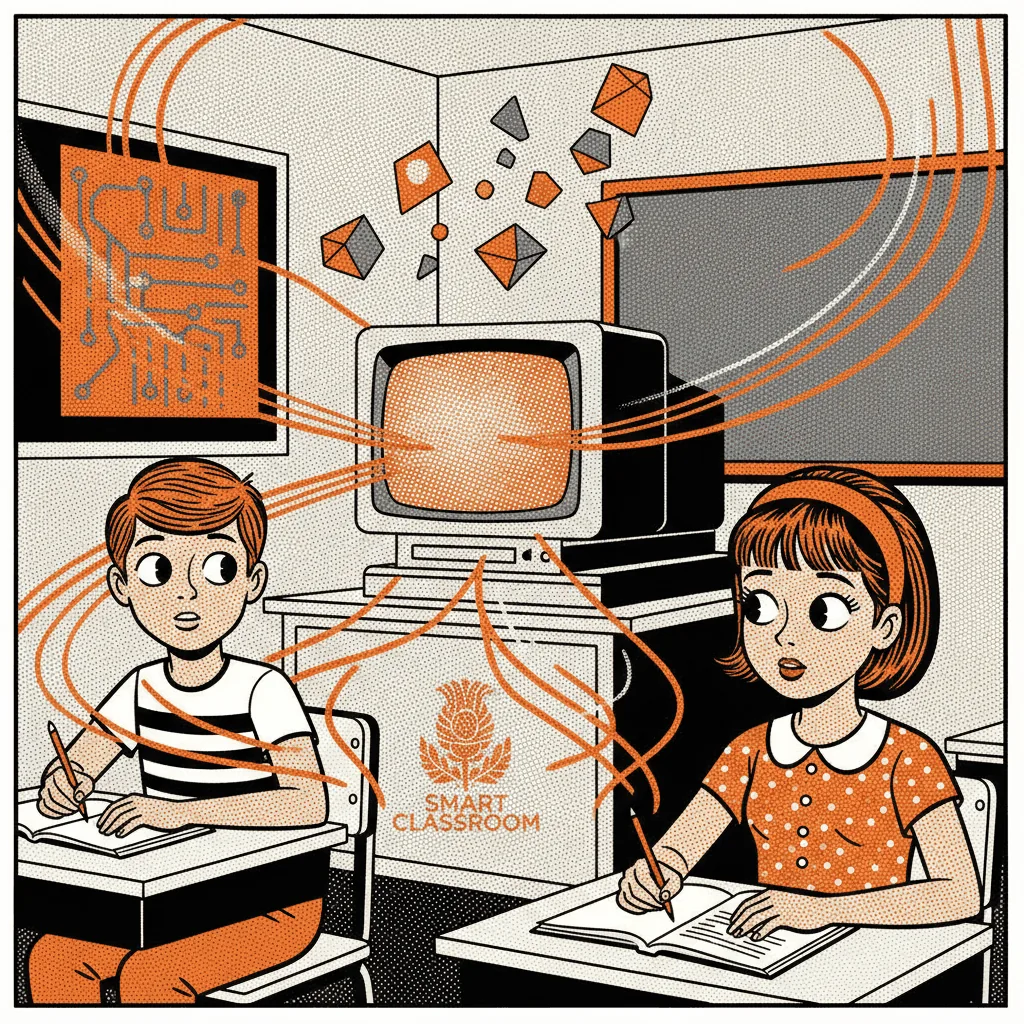
Ambient AI is distinct from the chatbots and generative tools that have dominated education headlines for the past two years. Where tools like ChatGPT require a deliberate action, a question typed and a button pressed, ambient AI is designed to operate passively. It listens, observes, and responds to the environment around it without anyone having to initiate a session. Narmeen Makhani, founder of strategic advisory firm AIxecute, puts it plainly: ambient AI "fades into the environment rather than sitting in a visible tool waiting for someone to type a prompt." That distinction matters enormously in a classroom, where a teacher managing thirty pupils has approximately zero spare seconds to interact with a dashboard.
The practical applications being trialled in early-adopter schools include real-time acoustic analysis that detects when classroom noise signals confusion rather than collaboration, automatic transcription of lessons that feeds into personalised revision materials, and systems that alert a teacher, quietly, on a wearable or a corner of a screen, that three pupils in the back row have been disengaged for twelve minutes. None of this requires the teacher to do anything differently. The technology adapts to the room, not the other way around. That is a meaningful reversal of how most school technology has worked to date.
For Scotland specifically, the timing is relevant. The Scottish Government's Digital Learning and Teaching Strategy has committed to embedding technology meaningfully across the curriculum, and Education Scotland has been actively piloting AI literacy programmes in secondary schools. According to the Scottish Government's own figures, closing the attainment gap between pupils from the most and least deprived backgrounds remains a central policy priority. Ambient AI, deployed thoughtfully, has a credible case to make here: if a system can flag early that a pupil is falling behind before that pupil has raised their hand or failed an assessment, that is an intervention that scales in a way no individual teacher, however skilled, can match alone.
The caution worth applying is around data. Ambient systems, by definition, are always on. That raises legitimate questions about what is being recorded, where it is stored, who owns it, and how long it is retained. The Information Commissioner's Office has published guidance on AI in educational settings, and Scotland's own data protection obligations under UK GDPR mean any procurement decision needs legal review before a pilot goes live. Research from the Alan Turing Institute has consistently flagged that the governance frameworks for AI in public sector environments are lagging behind the technology itself. That gap needs to close before ambient AI becomes standard classroom infrastructure, not after.
For Scottish schools and local authorities currently reviewing EdTech procurement, the practical question is not whether to engage with ambient AI but how to evaluate it honestly. Vendors will arrive with polished demos. The right questions are: what data leaves the building, what happens to it, can it be audited, and what does the teacher actually gain in time and insight, measured, not projected? The schools that get this right in the next two years will have a significant head start on the ones still debating whether AI belongs in the classroom at all.