

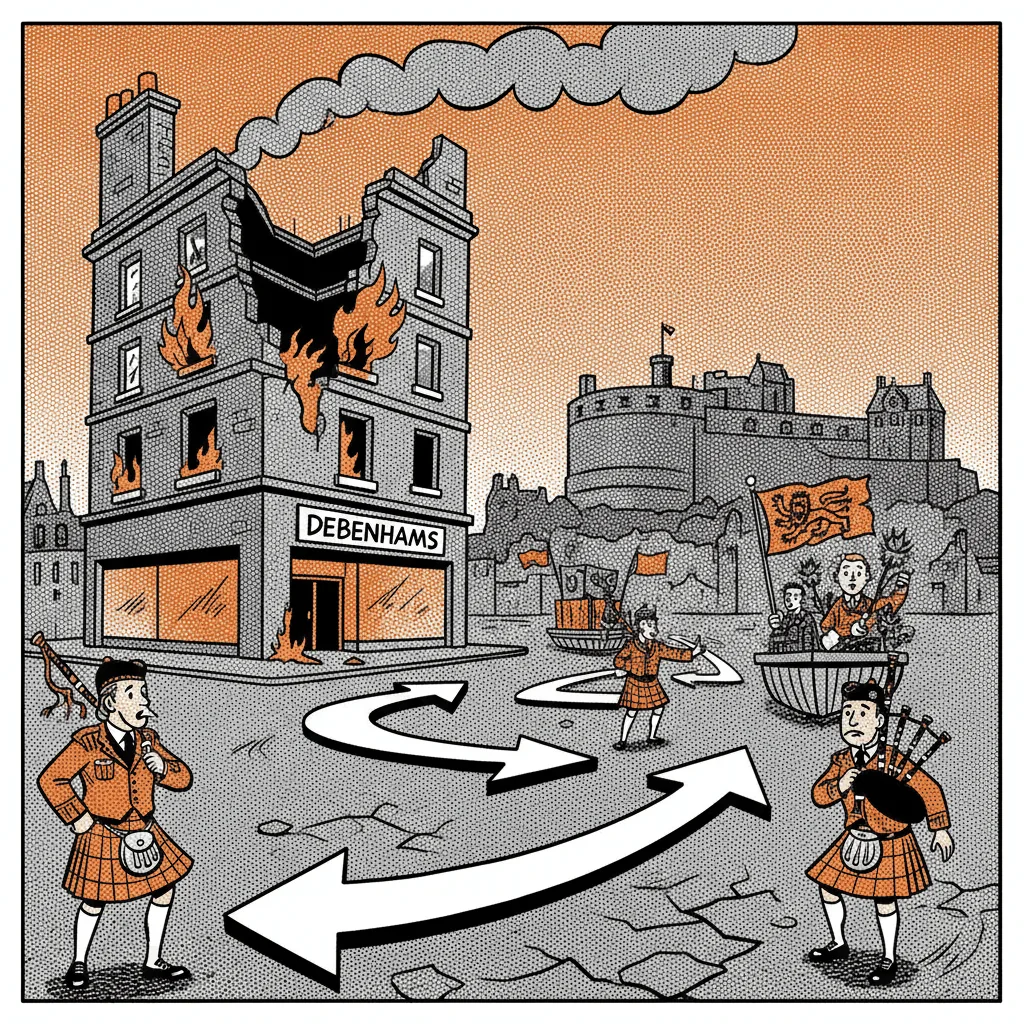
Princes Street between South Charlotte Street and Frederick Street is closed, and will stay closed for weeks. The fire that tore through the former Debenhams building last Thursday caused extensive structural damage, and Edinburgh City Council has confirmed the cordon isn't lifting any time soon. For a city about to host one of the world's great cultural gatherings, that's a serious logistical problem sitting right in the middle of the map.
The Festival Carnival organisers have responded the way Edinburgh tends to respond to things going wrong: quietly, practically, and without drama. The route has been adjusted, the show is going ahead, and the city gets its annual procession of colour, music, and noise regardless. According to the Edinburgh Reporter, the altered route keeps the event intact for the thousands of locals and visitors who turn up every year to mark the opening of festival season.
It is worth saying plainly: this is what resilience looks like in practice. Not a press release about resilience. The actual thing. A community event absorbing a major disruption, adapting within days, and delivering anyway. Edinburgh's festival infrastructure, built over decades, has enough flex in it to handle a closed street. That flexibility was earned, not assumed.
For businesses trading on or near Princes Street, the picture is harder. VisitScotland estimates the Edinburgh festivals inject around £280 million into the Scottish economy each year, and a significant chunk of that flows through footfall on and around Princes Street during July and August. A closed section during peak season is real lost revenue for retailers, hospitality businesses, and anyone who depends on passing trade. Business interruption insurance exists precisely for moments like this; if you haven't checked your policy recently, now is a reasonable time to do it.
The broader season opens regardless. The Fringe, the International Festival, the Book Festival, the Art Festival, the full machine cranks up across the city, and Edinburgh will be full. Visitors will find alternative routes. Businesses further from the cordon may even benefit from redirected foot traffic. The city has absorbed disruptions before and come out the other side having sold a great deal of coffee and theatre tickets. This summer will be no different.