

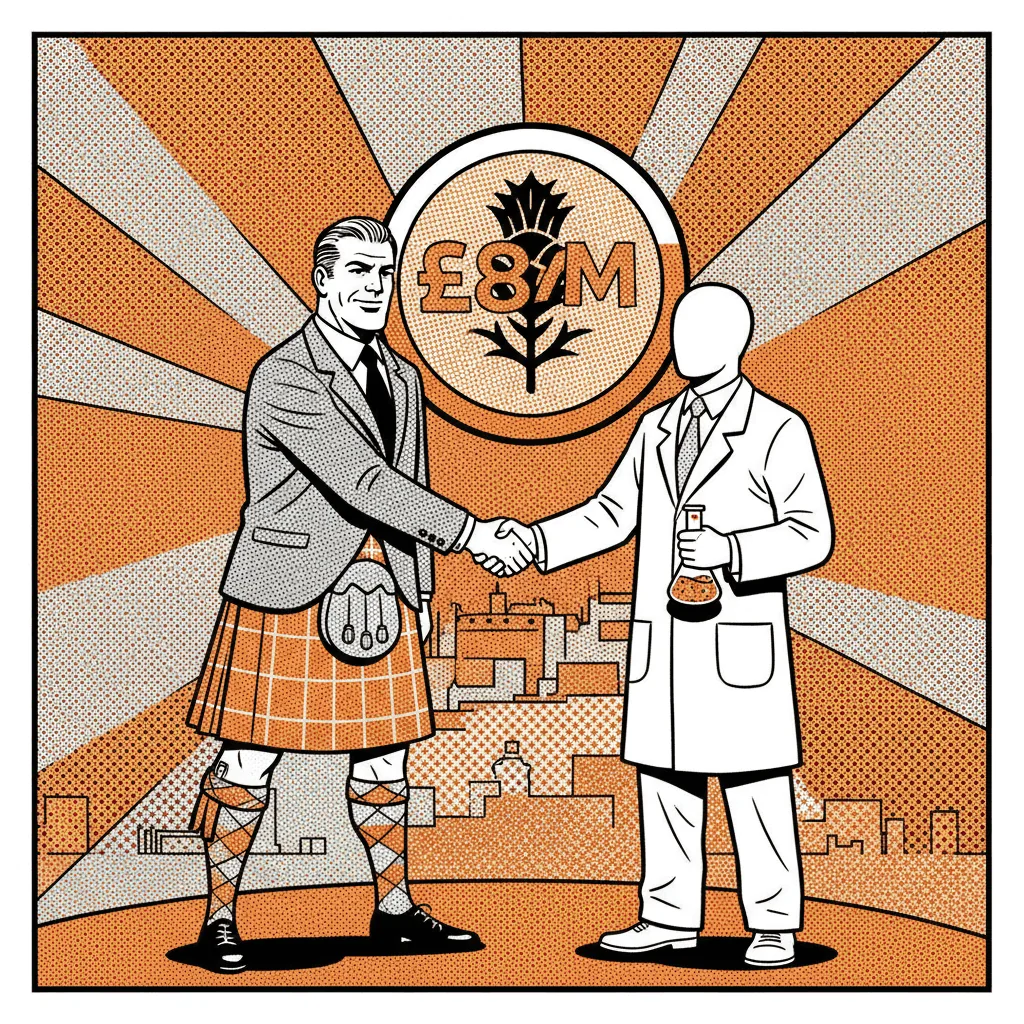
The headline number is £8 million. That is the sum raised by a Scottish diagnostics firm in a funding round sealed by investor Thomson, as reported by the Daily Business Group this week. The details of the company's specific technology are still emerging, but the round size places it firmly among the more significant Scottish health-tech raises of 2026, and the sector backing speaks volumes about where smart money is moving.
Scottish diagnostics and medtech have been quietly building a credible cluster for years. Scottish Enterprise has consistently identified life sciences as a priority sector, and its investment through the Scottish Investment Bank has helped underpin early-stage companies that might otherwise have had to relocate south to access capital. According to Scottish Enterprise's life sciences sector data, Scotland is home to more than 750 life sciences organisations, employing around 40,000 people and generating over £2 billion in turnover annually. An £8m raise into that ecosystem is not an outlier; it is a confirmation that the infrastructure is working.
The involvement of a named lead investor matters here. When a recognised figure or fund puts their name to a diagnostics round of this size, it sends a clear signal to co-investors, partners, and acquirers that the company has passed credible scrutiny. According to Beauhurst, which tracks UK private company investment, Scottish health-tech deal volume has held steadier than many expected through 2024 and into 2025, even as broader venture markets tightened. Rounds like this one reinforce that pattern.
For context, diagnostics is not a glamorous corner of health-tech, but it is arguably the most consequential. Early, accurate diagnosis drives better patient outcomes, reduces NHS costs, and shortens the clinical pathway from symptom to treatment. The Scottish Government's NHS Recovery Plan has flagged diagnostic capacity as a critical pressure point, meaning companies that can demonstrably shorten waiting times or improve test accuracy are pushing at an open door with commissioners and procurement teams across NHSScotland.
The broader implication for Scotland's startup ecosystem is straightforward: this is the kind of deal that attracts the next deal. Investors watch each other. A well-structured £8m raise in a credible sector, backed by a serious name, makes the next Scottish health-tech founder's pitch slightly easier to land. Scottish EDGE, Techscaler, and the Investors in Scotland network all operate in this connective tissue between early capital and growth rounds. Founders working in adjacent spaces, from wearables to clinical AI to remote monitoring, should be watching this deal closely and thinking about how to position their own raises in its wake.