

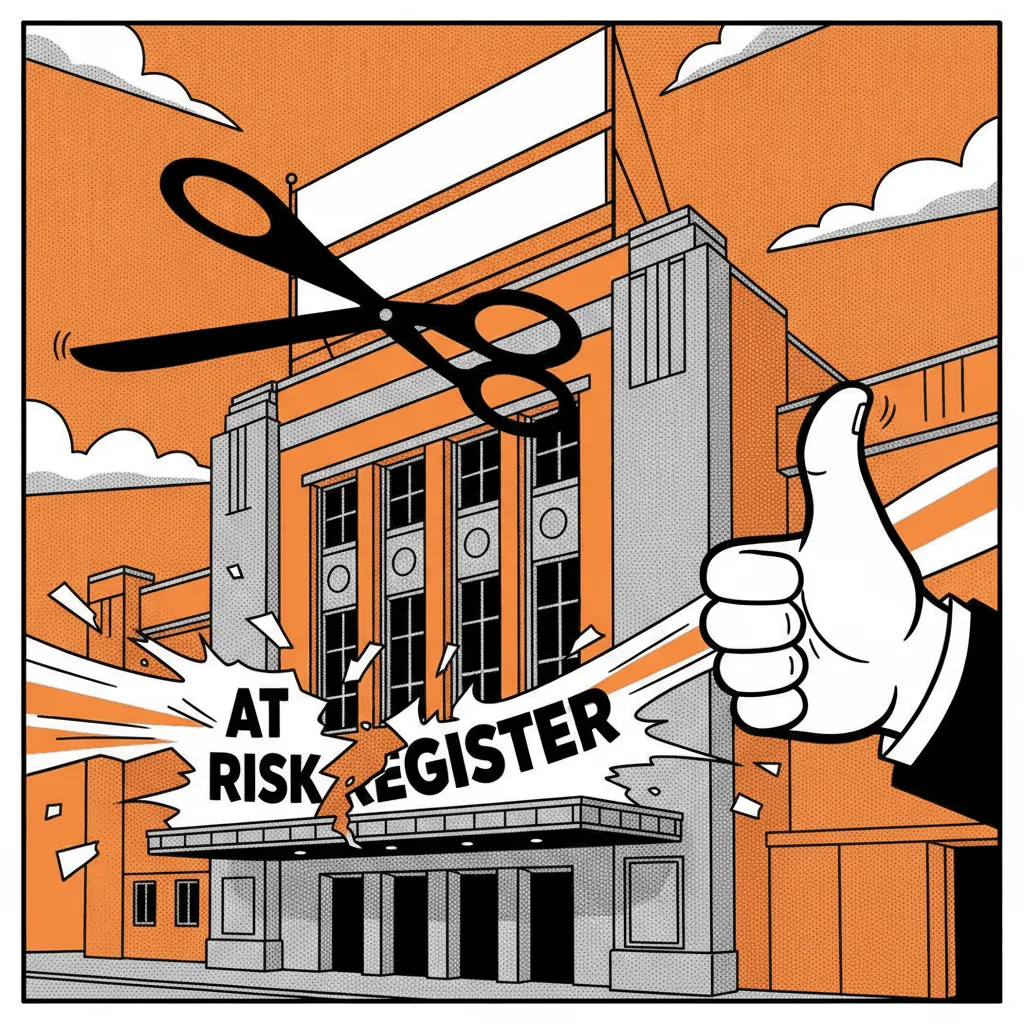
Leith Theatre has been taken off the UK's Theatres at Risk Register, according to the Theatres Trust, the national advisory body that published its 2026 register this week. Thirty-nine theatres across the UK remain on that list. Leith is no longer one of them.
The building on Ferry Road has had a complicated few decades. Opened in 1932 and once the beating cultural heart of Leith, it sat largely unused for years, its ornate interiors gathering dust while the surrounding neighbourhood transformed around it. The Theatres Trust placed it on the at-risk register as a formal warning that without intervention, the building's future was in serious doubt.
What changed was a combination of community tenacity, targeted funding, and a clear vision. The Leith Theatre Trust, the charity that took on stewardship of the building, has worked methodically through restoration phases, securing grants and partnerships to stabilise the structure and restore key spaces. According to Historic Environment Scotland, which has supported the project, the theatre represents a rare example of intact 1930s civic architecture, a designation that brought both weight and funding leverage to the campaign.
The Theatres Trust's register exists precisely to apply pressure and unlock support. Removal from it signals not just physical progress, but institutional confidence that the building has a credible path forward. As the Trust itself notes, the register is not a death sentence, it's a tool. Leith Theatre is proof the tool works when the right people pick it up and use it.
For Edinburgh, this matters beyond the building itself. Leith has spent the better part of two decades redefining itself: the Shore, the food scene, the creative studios, the influx of independent businesses. A fully restored theatre anchors that identity with something permanent and genuinely historic. It gives the neighbourhood a cultural institution that belongs to it, not imported, not corporate, not temporary.