

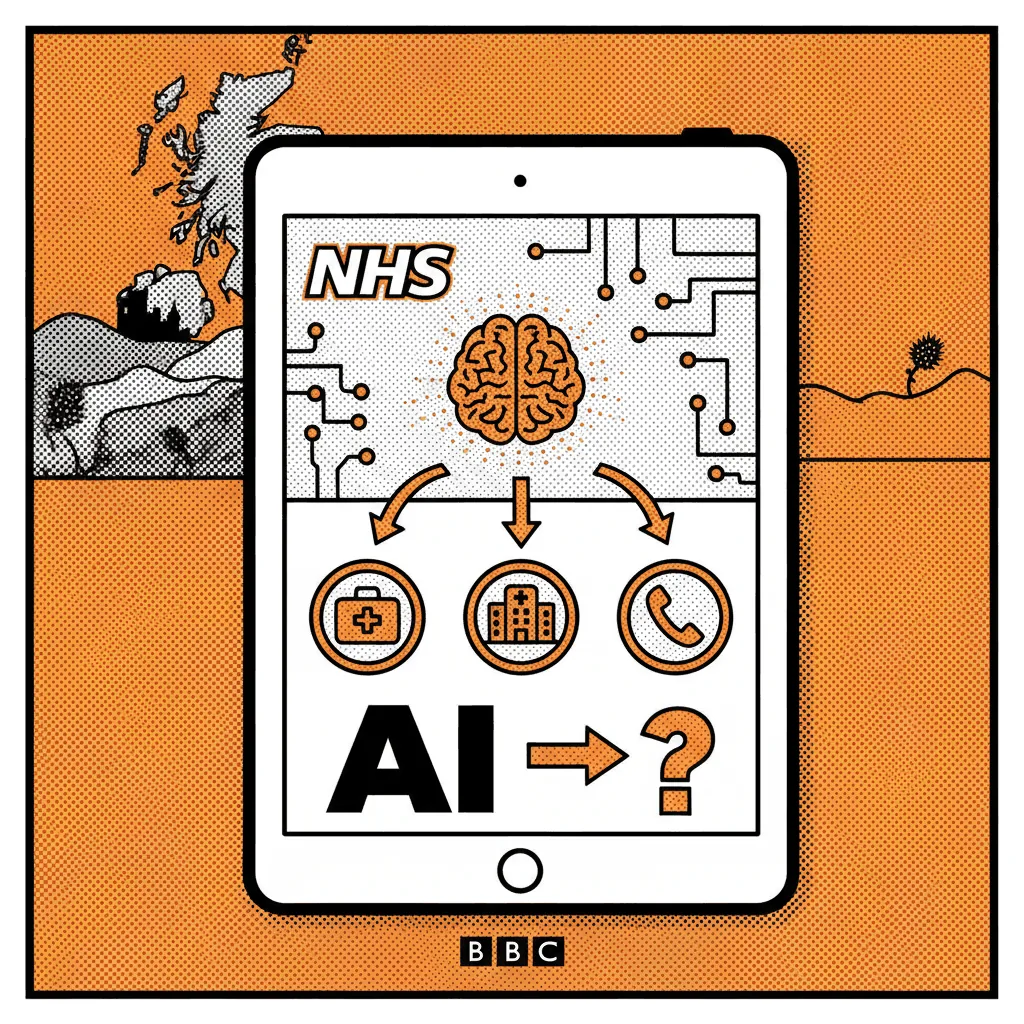
The NHS app, already used by tens of millions of patients across the UK, is being upgraded with an AI triage layer that will assess symptoms and route patients to the most appropriate service, whether that is a GP, a pharmacist, an urgent care centre, or self-care guidance at home. The move is designed to reduce the pressure on front-line GP surgeries, where demand has outpaced capacity for years. According to NHS England, the average GP practice now handles over 1.3 million consultations every working day across England alone.
The mechanics matter here. The AI does not diagnose. It listens, assesses, and directs, acting as a highly capable first filter. Patients describe their symptoms through the app; the system cross-references against clinical decision pathways and sends them where they are most likely to get the right help fastest. A sore throat goes to the pharmacist. Chest pain goes to 999. A repeat prescription query goes to the GP receptionist queue, not the appointment book. That distinction, multiplied across millions of interactions, is where the time savings accumulate.
For Scottish healthcare, the implications are real and immediate. NHS Scotland operates under similar capacity pressures, with GP vacancy rates running high across rural boards in particular. The Scottish Government's Digital Health and Care Strategy has committed to expanding digital access and reducing avoidable face-to-face appointments. An AI triage tool embedded in the NHS app aligns directly with that ambition. The question is how quickly NHS Scotland integrates it, given that the app rollout has historically moved faster in England than north of the border.
Research from the Nuffield Trust suggests that up to 30 per cent of GP appointments could be handled more effectively in other settings, from pharmacists to physiotherapists to mental health practitioners. The problem has never been knowing that, it has been building the infrastructure to redirect people reliably and safely. AI triage is that infrastructure. The University of Edinburgh's Usher Institute has been exploring similar digital pathway tools as part of its work on NHS sustainability, and the clinical community is broadly supportive, provided the AI augments rather than replaces clinical judgement.
There is a workforce angle worth naming plainly. Scottish GP practices, many of them running as small businesses employing receptionists, practice nurses, and admin staff, carry an enormous volume of low-acuity demand that consumes time disproportionate to clinical need. If AI triage deflects even 20 per cent of that demand to more appropriate pathways, it does not cut jobs; it frees the people already there to do the work only they can do. That is the story of AI in healthcare, and it is the right one to tell.