

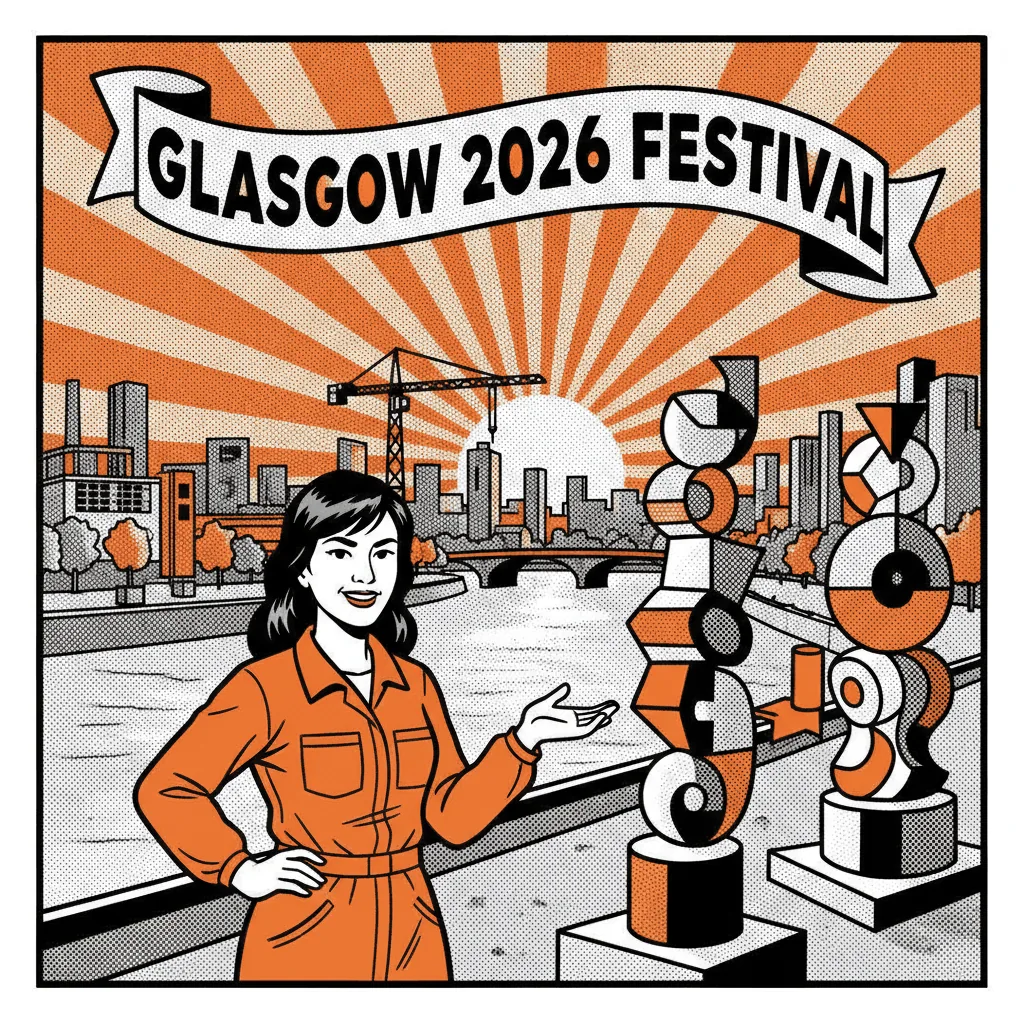
The Glasgow 2026 Commonwealth Games Festival has landed its most striking cultural commission yet. Jasleen Kaur, born in Glasgow to Punjabi parents and now one of the most discussed artists working in Britain today, is creating a series of sculptures responding to the River Clyde, its history, and the communities that have grown alongside it. The works will be presented as part of the Games' wider cultural programme, which runs alongside the sporting events across the summer of 2026.
Kaur won the Turner Prize at Tate Britain in December 2023, with judges citing her ability to weave personal memory, diasporic identity, and collective experience into physical form. Her Clyde commission carries that same sensibility. The river itself is doing a lot of work here: the Clyde is simultaneously a symbol of industrial decline, civic regeneration, and Scottish cultural identity. Handing it to Kaur is a signal that Glasgow 2026 intends its cultural strand to be taken seriously, not treated as a warm-up act for the athletics.
The Commonwealth Games have form as an economic catalyst. According to EventScotland, the 2014 Commonwealth Games in Glasgow generated an estimated £740 million in economic impact for Scotland. The 2026 edition, spread across multiple Scottish venues including Glasgow, is expected to attract tens of thousands of international visitors over the course of the summer, with the cultural festival running longer than the sporting programme itself. Arts commissions like Kaur's are part of what keeps visitors in the city, spending, for days rather than hours.
Creative Scotland and Glasgow Life have both invested in building a cultural programme that functions as a genuine draw, not just a backdrop. According to the Scottish Government's Culture Strategy for Scotland, public investment in cultural events is explicitly linked to tourism revenue, place-making, and community wellbeing outcomes. The Kaur commission fits squarely within that framework, and it is the sort of story that generates international press coverage, which is the kind of marketing no individual business could afford to buy.
For Edinburgh businesses, it is worth noting that visitors who arrive in Scotland for Glasgow 2026 frequently travel between cities. Visit Scotland data has consistently shown that multi-destination itineraries are the norm for international visitors. A Commonwealth Games tourist landing at Glasgow Airport for the athletics and Kaur's sculptures is, within 50 minutes by train, a potential customer in Edinburgh's Old Town, a guest in a Leith hotel, a diner in Stockbridge. The rising tide, to use a tired phrase just this once, does genuinely lift most boats.