

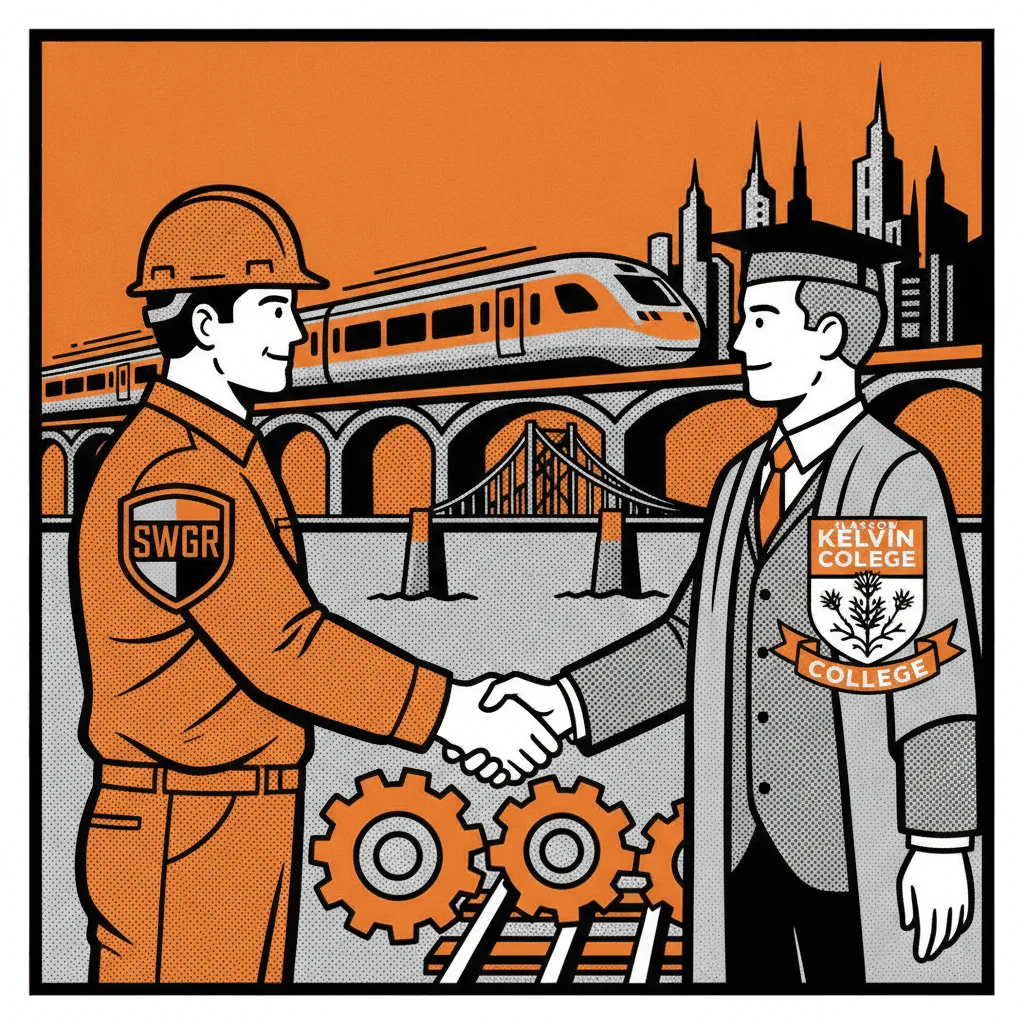
Scotland's railway sector is short of engineers, and it has been for years. The new partnership between SWGR (Scottish and Western Railway Group) and Glasgow Kelvin College is a direct response to that pressure: an industry-led programme that creates a structured route from classroom to trackside, without the detours that leave employers waiting and graduates underemployed. The scheme sits inside a broader national problem. According to the Rail Industry Association, the UK needs to recruit around 120,000 new rail workers by 2030 just to maintain current operations, let alone expand them.
What makes this particular arrangement notable is the architecture. Rather than a standard employer-engagement bolt-on, SWGR is embedded in the curriculum design from the start. That means students learn to the specification the industry actually needs, not a generalised engineering syllabus that requires two years of on-the-job recalibration. Glasgow Kelvin College already runs strong technical and vocational programmes across engineering and construction, and this adds a sector-specific rail track to that provision.
Scotland's infrastructure ambitions give this timing real weight. The Scottish Government's Infrastructure Investment Plan includes billions committed to rail upgrades, electrification, and capacity expansion across the central belt and beyond. Highlands and Islands Enterprise has also flagged connectivity and transport infrastructure as a priority for regional economic development. Without a trained workforce ready to deliver, those plans stay on paper. Partnerships like this one are, in a practical sense, the precondition for the ambitions to land.
For SMEs, the opportunity here is less obvious but very real. Scotland's rail engineering supply chain is not solely made up of Tier 1 contractors. Smaller firms in civils, electrical installation, plant hire, specialist fabrication, and technical inspection all plug into major rail projects. As SWGR scales its pipeline and more graduates enter the sector, sub-contracting demand grows with it. Business Gateway Scotland and Scottish Enterprise both support SMEs looking to enter or expand within infrastructure supply chains, including rail, through dedicated procurement readiness programmes.
There is also a template here for any Scottish business struggling to find trained people. The instinct to wait for colleges to produce the right graduates rarely works. The SWGR model flips it: go into the institution, shape what gets taught, and secure your own pipeline. Several Scottish sectors, from renewables to food manufacturing, are already piloting similar co-design arrangements with further education colleges. If your sector has a skills gap and a college nearby, the conversation is worth starting.