

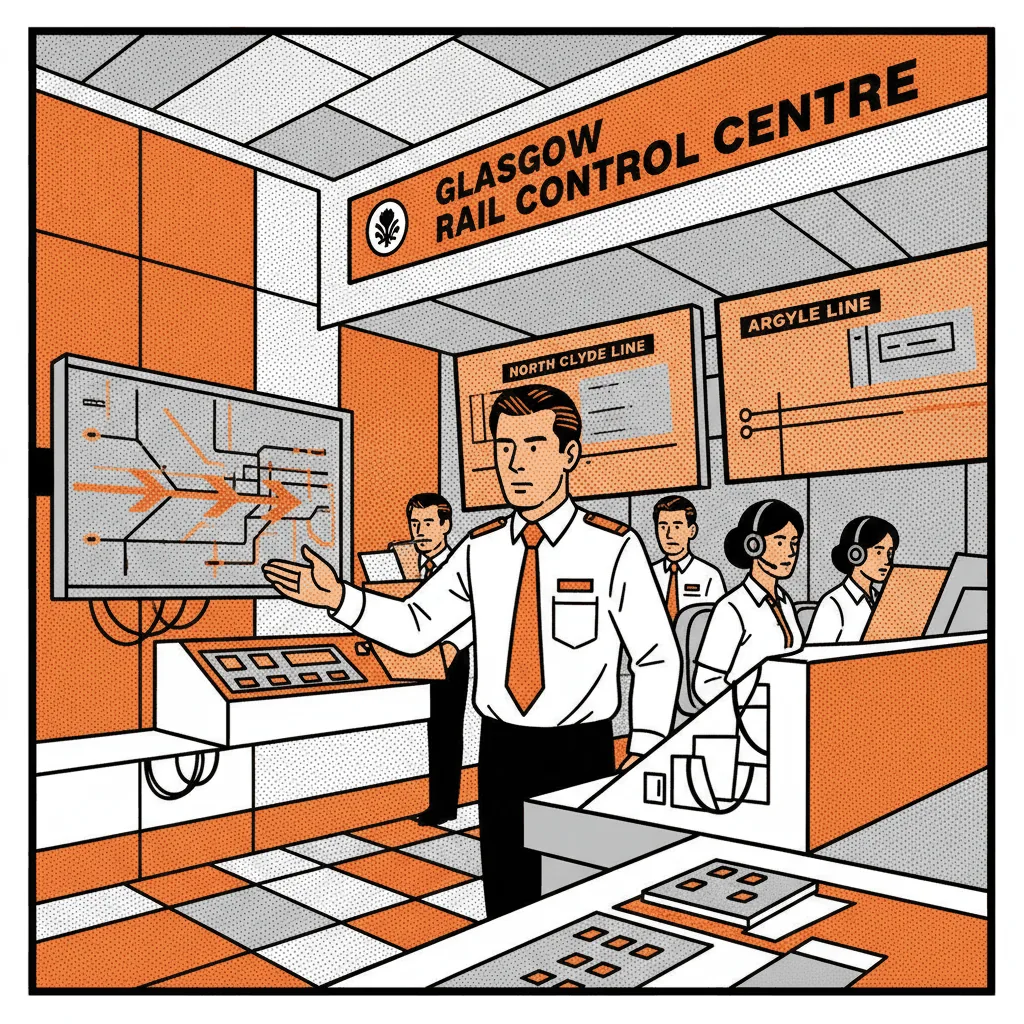
ScotRail has opened a £10 million dedicated control centre in Glasgow focused exclusively on the North Clyde and Argyle lines, the two routes that together carry more passengers than any other corridor on the Scottish rail network. The move separates operations for these lines from the wider ScotRail control function, placing specialist staff on a single task: keeping trains moving.
The logic is straightforward. The North Clyde and Argyle lines serve a dense belt of commuter towns, hospitals, universities, and business districts across central Scotland, from Balloch and Helensburgh in the west through Glasgow's cross-city tunnel to Motherwell, Larkhall, and Lanark in the east. When those lines stall, the ripple hits tens of thousands of journeys. Giving them their own control room, with staff who know every signal and junction on the corridor, is the kind of targeted fix that tends to work.
ScotRail, which returned to public ownership under the Scottish Government in April 2022, has faced sustained pressure to improve punctuality and reliability. Transport Focus figures from 2023 showed Scottish rail satisfaction sitting below the UK average on several key measures, including train punctuality and the ability to get a seat. The new control centre is part of a broader push to change that picture, and the early delay reduction numbers suggest it is doing its job.
For businesses in Edinburgh and across central Scotland, reliable rail is not a background detail. It shapes when staff arrive, whether client meetings run on time, and how viable it is to operate without a city-centre office. According to the Confederation of British Industry Scotland, poor transport connectivity consistently ranks among the top constraints on business productivity cited by Scottish employers. A rail corridor that performs better is, in direct terms, a productivity gain for every business whose people use it.
The Scottish Government has committed to growing rail passenger numbers as part of its National Transport Strategy, which sets a target to reduce car kilometres travelled by 20 per cent by 2030. Infrastructure that works is the foundation of that ambition. A £10 million control centre is not a silver bullet, but it is a concrete, measurable step. Fewer delays, more predictable journeys, and a network that businesses can actually plan around: that is what this is designed to deliver.