

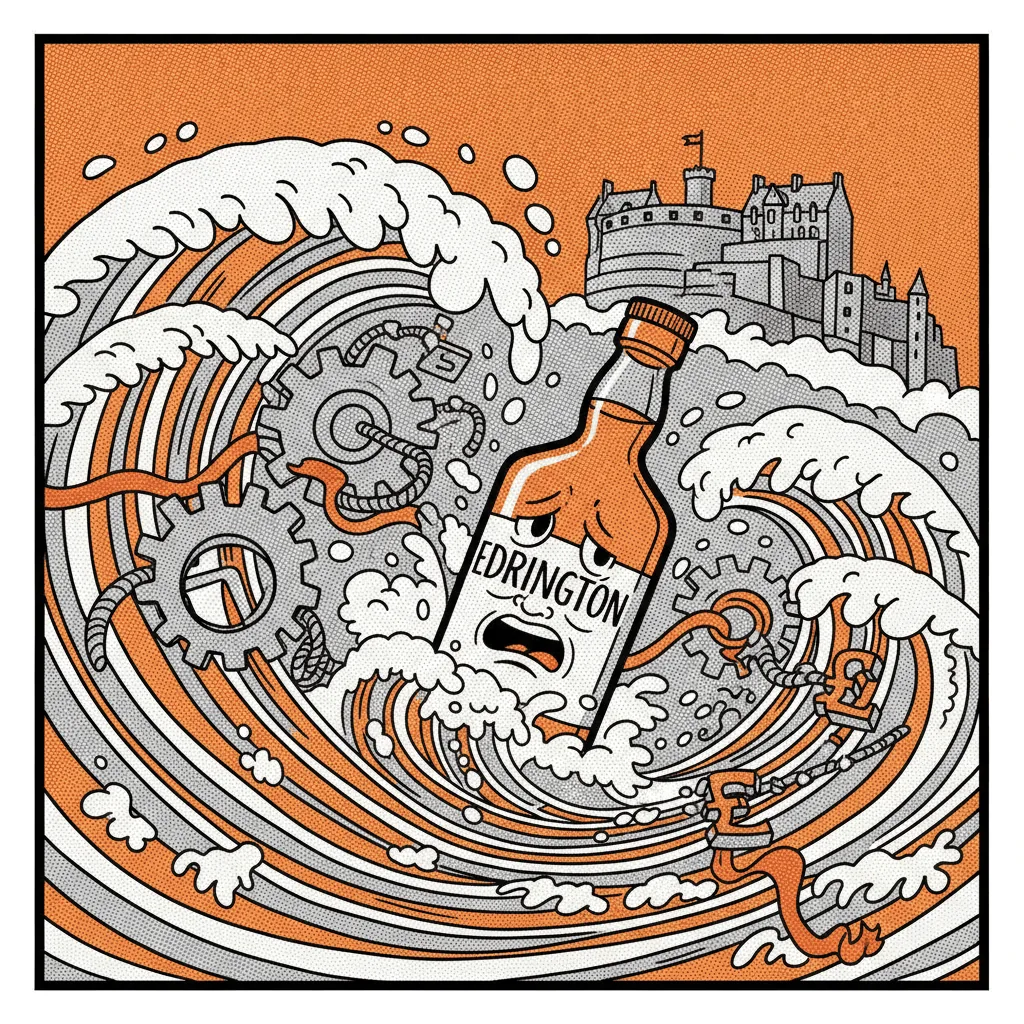
Edrington, the Glasgow-headquartered spirits group behind The Macallan, Famous Grouse, and Highland Park, has issued a frank warning about the compounding weight of rising costs and regulatory complexity facing Scottish business. The company, which generated revenues of over £900 million in its last reported financial year, describes the situation as a 'rising tide', not a single wave, but a sustained, accumulating pressure that is eroding margins and consuming management time across the board.
The pressures Edrington is naming are not abstract. National Insurance contribution increases introduced by the UK Government in April 2025 added billions to employer costs nationally. The Federation of Small Businesses (FSB) Scotland estimated that the NI changes alone would cost Scottish small businesses an average of £3,400 per employee per year at the higher threshold, with hospitality, retail, and food production hit hardest. Edrington operates at scale, but the ratio of pain is the same for a ten-person distillery in Speyside or a food producer in the Borders.
Red tape is the second strand of the complaint, and it carries weight. Post-Brexit trade friction has added labelling requirements, export documentation, and compliance costs that simply did not exist before 2021. The Scotch Whisky Association has repeatedly flagged that exports to the EU, Scotland's single largest whisky market, face administrative burdens that competitors in Ireland and France do not. According to Scottish Government trade data, Scotch whisky exports were worth £5.4 billion in 2023, making this a national economic issue, not a corporate grumble.
For Scottish SMEs, the read-across is direct. The Scottish Chambers of Commerce quarterly economic indicator has shown sustained concern about input costs, employment costs, and compliance burden throughout 2024 and into 2025. What Edrington is articulating publicly, thousands of smaller operators are absorbing quietly. The difference is that Edrington has the profile to say it loudly enough to land in a newspaper. Your average Edinburgh café owner or Dundee manufacturer does not have that platform, but they are fighting the same tide.
There is a political dimension worth naming clearly. Many of the costs creating this pressure are Westminster decisions: NI thresholds, post-Brexit trade architecture, energy levies. The Scottish Government has limited levers to offset them directly, though its non-domestic rates relief schemes, Business Gateway support, and the work of Scottish Enterprise remain relevant tools for eligible businesses. The structural frustration for Scottish operators is that decisions made in London land on Scottish balance sheets, with limited room for Edinburgh to cushion the blow. That is not a partisan observation; it is an accounting one.
What Edrington's statement does, usefully, is give language and visibility to something many Scottish business owners have been navigating in silence. Naming the tide does not stop it. But it does create pressure on policymakers to act, and it reminds every operator in Scotland that they are not misreading their own numbers. The costs are real. The burden is real. And right now, resilience means knowing exactly where your margin is being squeezed and making deliberate choices about which pressures you can absorb, which you can pass on, and which need a harder conversation with your bank, your accountant, or your MSP.