

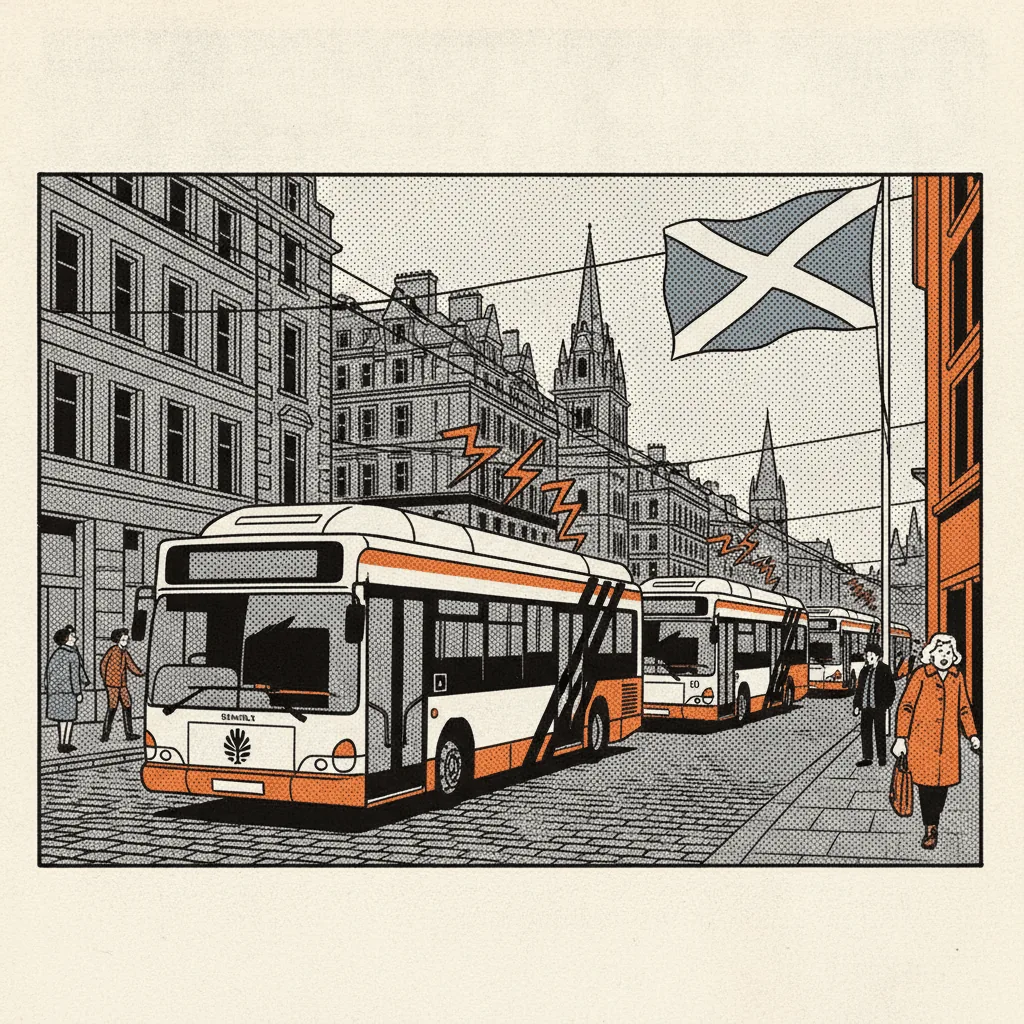
Nine single-deck electric buses are now running on Lothian Buses' service 36, one of Edinburgh's highest-frequency city centre routes, serving communities from Newington through the centre and out towards Granton. The addition marks a meaningful expansion of Lothian's electric fleet and lands at a moment when Edinburgh's net zero commitments are moving from policy documents into actual tarmac.
Lothian Buses operates one of the most extensive municipally owned bus fleets in the UK, and its electrification programme sits within Edinburgh City Council's broader net zero by 2030 target, one of the most ambitious decarbonisation pledges made by any Scottish local authority. According to the Scottish Government's Climate Action Plan, public transport electrification is a cornerstone of Scotland's route to net-zero emissions, with bus fleets identified as a priority because of their high daily mileage and urban air-quality impact.
For businesses along the 36 corridor, cleaner, quieter buses are not just an environmental statement. Research from Transport Scotland has consistently shown that reliable, frequent public transport increases footfall for retail and hospitality businesses along serviced routes. A more modern, dependable fleet reduces service disruption, which is a direct commercial benefit for businesses whose customers and staff depend on the route to get there. Edinburgh's city centre retail and food-and-drink operators have had a rough few years; anything that makes it easier and more pleasant to travel in is worth noting.
There is also a supply-chain story here that Scottish SMEs should pay attention to. The procurement, maintenance, and charging infrastructure behind a nine-vehicle electric fleet creates real commercial opportunities. EV charging infrastructure, specialist fleet maintenance, software monitoring platforms, and grid management services are all growth sectors. According to Scottish Enterprise, Scotland's clean energy and transport sectors are among the highest-priority areas for inward investment and domestic business development, with targeted support available for companies positioning themselves in these supply chains.
Lothian's move also puts competitive pressure on the wider Scottish bus market. First Bus and McGill's have both accelerated electric fleet programmes in the central belt, and the pace of change across the sector is quickening. For Edinburgh-based businesses in logistics, facilities management, or corporate transport, the direction of travel is clear: fossil-fuel fleets are becoming a liability, not just an environmental one but a commercial and reputational one as procurement standards tighten and clients increasingly ask about Scope 3 emissions.
The service 36 upgrade is incremental, nine buses on one route, but it is the kind of incremental that compounds. Lothian has signalled this is part of a longer electrification programme, not a one-off purchase. Edinburgh is building the infrastructure, the expertise, and the institutional muscle to run a fully electric city bus network. The businesses that align with that trajectory early, whether as suppliers, partners, or simply operators with cleaner fleets themselves, are the ones who will find doors opening as public sector contracts increasingly require green credentials.