

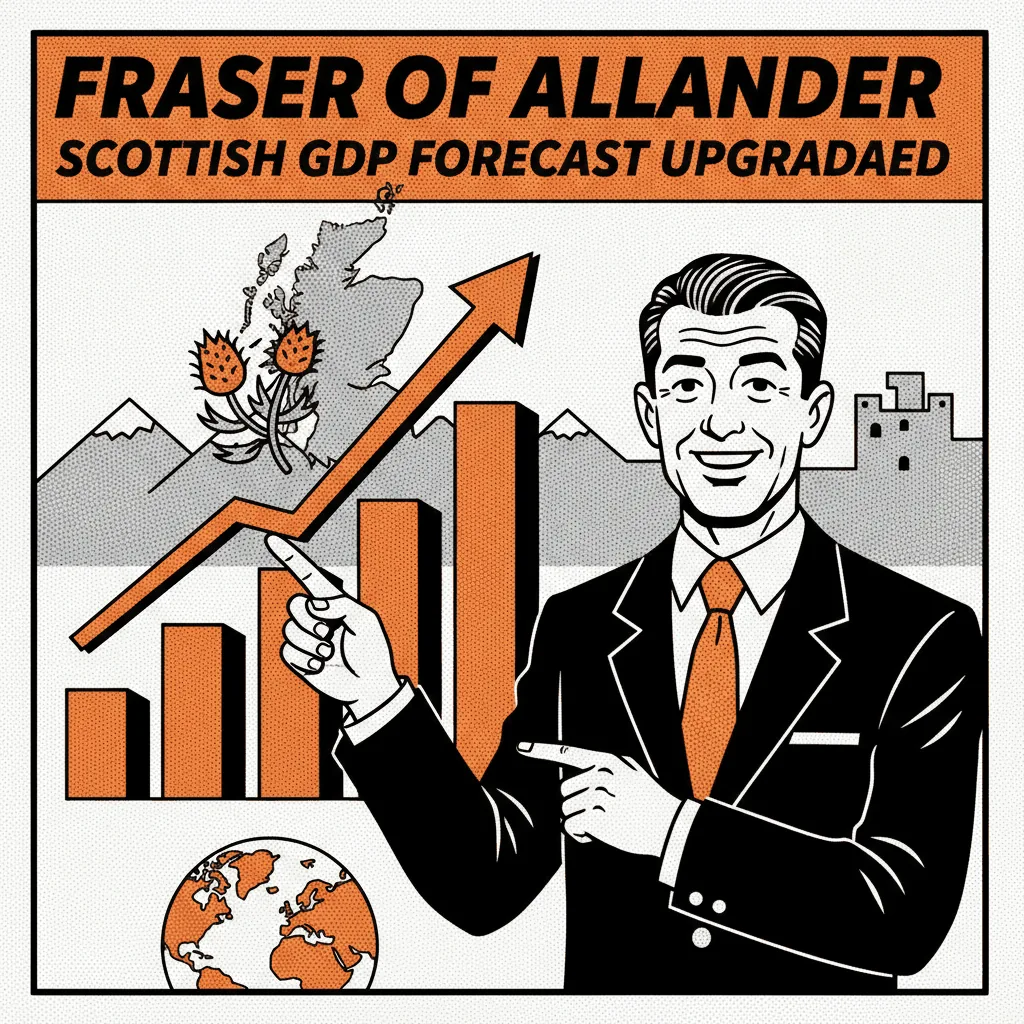
The Fraser of Allander Institute, Scotland's most authoritative independent economic research body based at the University of Strathclyde, has revised its Scottish GDP forecast upward. It is not a dramatic revision, but in a period when business owners have been reading mixed signals from every direction, an upgrade from a credible, data-driven source carries real weight. When Fraser of Allander moves its numbers, people notice.
The Institute has consistently been the benchmark for Scottish economic analysis, and its quarterly forecasts are used by the Scottish Government, business representative bodies, and lenders across the country to calibrate decisions. An upward revision suggests the Institute is seeing enough momentum in consumption, output, or both to warrant greater confidence in near-term growth than it held in its previous assessment.
This matters against a broader backdrop that has been, at best, complicated. The Office for National Statistics has recorded patchy UK-wide growth through the first half of 2026, and global headwinds, including trade friction from US tariff policy and persistent cost pressures in energy and labour, have kept many Scottish business owners cautious. A domestic signal pointing upward cuts through some of that noise.
Scottish Enterprise and Business Gateway have both been flagging increased enquiries around growth support and capital investment in 2026, which aligns with a picture of improving confidence even before this revision landed. The Scottish Government's economic strategy has placed significant weight on growing the country's productivity base, and an upgraded GDP forecast suggests at least some of that policy direction is running with the current rather than against it.
For Edinburgh specifically, the services and professional sector, which drives a significant share of the capital's economic output, tends to respond quickly when sentiment improves. Faster GDP growth typically flows into commercial activity within two to three quarters, according to research from the David Hume Institute, which tracks Edinburgh's business environment closely. If that pattern holds, the autumn trading period could look considerably better than the spring.