

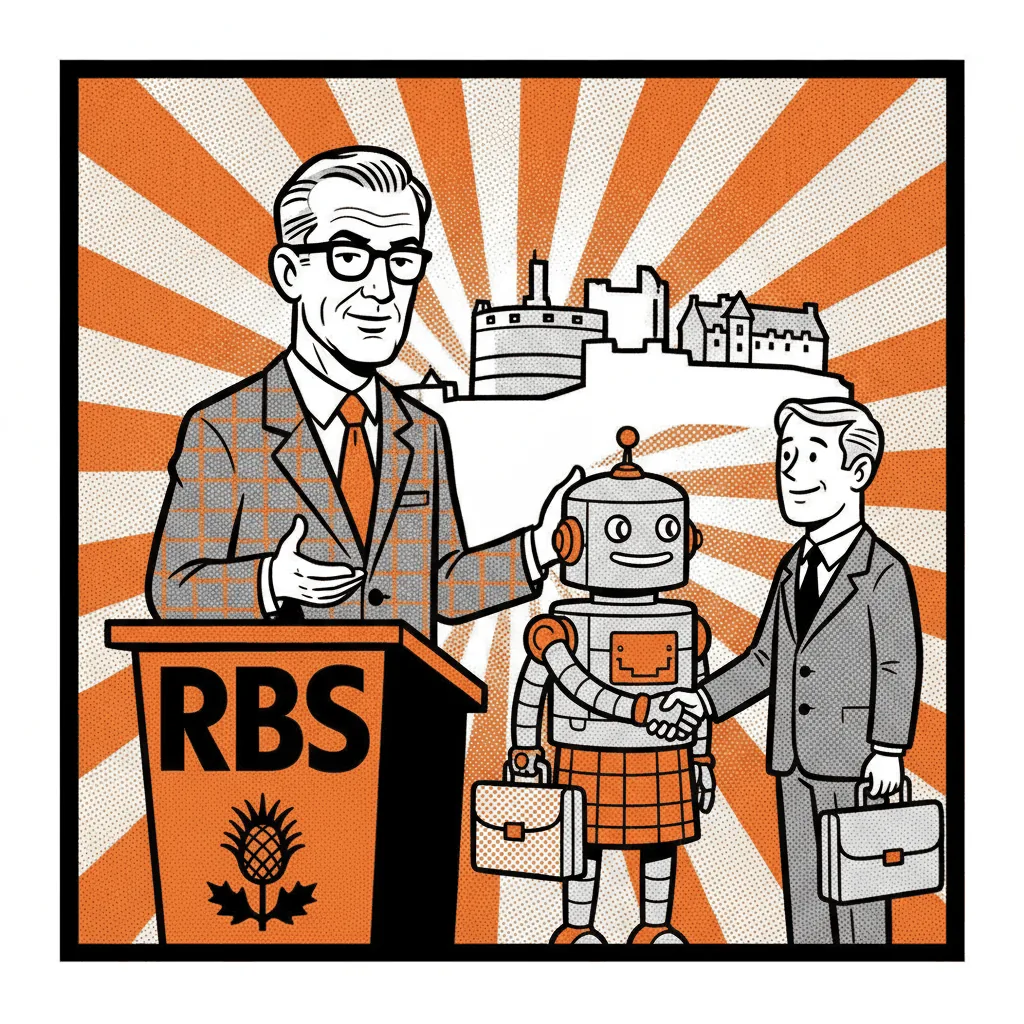
The headline fear around artificial intelligence has always been the same: robots take jobs, humans suffer. An economist at Royal Bank of Scotland is now pushing back on that story with something more useful than opinion, evidence. According to the bank's analysis, Scottish and UK businesses adopting AI are not deploying it as a tool for redundancy rounds. They are using it to do more with the teams they already have.
This tracks with what the broader research is showing. The OECD's 2024 Employment Outlook found that AI adoption in small and medium-sized enterprises is most commonly associated with productivity gains and revenue growth rather than workforce reduction. Firms that automate repetitive tasks tend to redeploy staff into higher-value work, not show them the door. The University of Edinburgh's Bayes Centre has made a similar observation in its work on AI and the Scottish labour market: the risk is not mass unemployment, it is the skills gap that opens up when businesses fail to retrain.
For Scottish SME owners, this reframing matters. The fear that introducing an AI tool to your business means betraying your team has been one of the quiet brakes on adoption. If your accountant, your operations manager, or your front-of-house coordinator worries that a new piece of software makes them redundant, they will resist it, consciously or not. What the RBS economist's position does is give business owners a cleaner internal narrative: AI is a capacity tool, not a replacement strategy.
Scottish Enterprise has been making this argument through its Productivity Club and its Digital Boost programme, which offers funded digital consultancy to SMEs across Scotland. Business Gateway runs similar diagnostic sessions specifically designed to help small business owners identify where AI tools can absorb admin burden, freeing up existing staff for client-facing or creative work. These are live programmes with real funding behind them, available right now to businesses in Edinburgh and beyond.
The practical picture for a small team is straightforward. An eight-person architecture practice in Leith does not need a generative AI tool to fire a draughtsperson. It needs one to cut the time spent writing planning application cover letters, drafting client updates, and summarising consultant reports. A two-person GP practice management team does not use AI to eliminate a receptionist. It uses it so the receptionist stops spending three hours a day on referral paperwork. That is the real-world adoption story, and it is the one the RBS data appears to support.