

The shift to electric vehicles is not optional for most Scottish businesses. The UK Government's Zero Emission Vehicle mandate requires 80% of new van sales to be electric by 2030, and the Scottish Government has set its own target of phasing out new petrol and diesel car and van sales by the same date. The question is no longer whether to switch. It is which vehicles to switch first, and in what order, without breaking your operation or your cashflow.
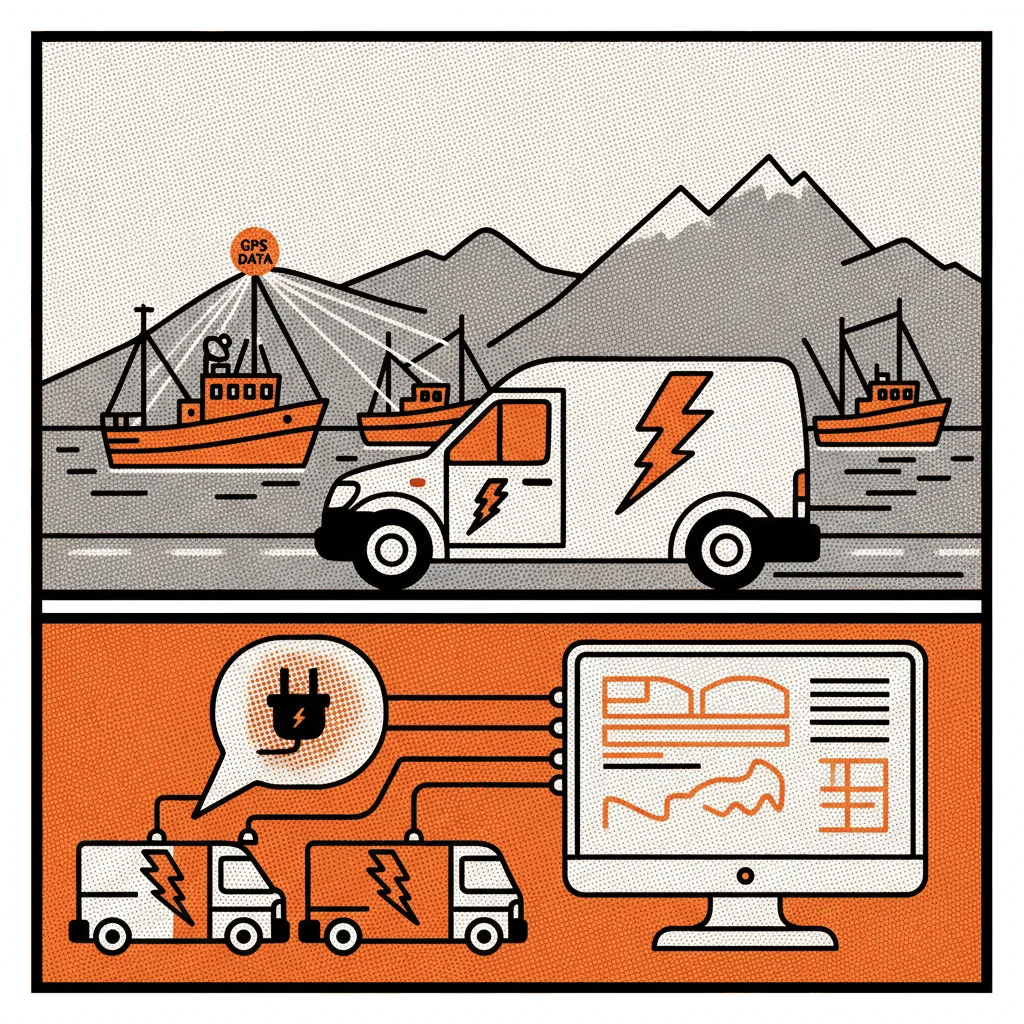
What Scottish fleet operators are now doing is straightforward and replicable. They are pulling 12 months of GPS telematics data from their existing vehicles, running it against the real-world range profiles of available electric vans, and identifying which routes and drivers are already operating comfortably within EV range. A van doing daily runs of 60 to 80 miles in and around Edinburgh or Glasgow, returning to a depot each night, is a near-perfect candidate. A van doing 200-mile rural runs in Argyll or Caithness, with no reliable rapid charging en route, is not, yet. That distinction, made with data rather than guesswork, is the entire point.
The tools doing this work range from enterprise telematics platforms like Webfleet and Samsara to more accessible SME-focused services such as Quartix, which is widely used by smaller Scottish operators. According to the Energy Saving Trust's Fleet Services team, which supports Scottish businesses through Transport Scotland's programme, even a basic telematics export can be enough to start this analysis if you know what you are looking for: daily mileage, dwell time at base, peak usage patterns, and seasonal variation. Winter range loss on electric vans, typically 15 to 25% in Scottish conditions according to data from Zap-Map's UK charging network research, is a factor that catches operators out if they only model summer performance.
The financial logic is pressing. Fuel and maintenance savings on electric vans are well documented. Figures from the Society of Motor Manufacturers and Traders put the average fuel cost per mile for a diesel van at roughly three to four times that of an equivalent electric, at current energy prices. For a small Edinburgh trades business running three vans doing 15,000 miles a year each, the saving can exceed £6,000 annually once charging infrastructure is in place. Business Gateway Scotland lists van electrification under its net zero support guides, and there are still grant-backed EV charging installation schemes available through the Energy Saving Trust for Scottish SMEs that want to add a charge point at their premises.
The smarter operators are not waiting for a government deadline to force their hand. They are treating their GPS data as a business asset right now, using it to sequence their fleet transition in a way that captures the savings early, on the easiest routes, while keeping diesel vehicles in service where the operational case for electric is not yet there. That is the practical version of a net zero strategy: not a pledge on a website, but a spreadsheet that tells you which van to order next and exactly what it will save you.