

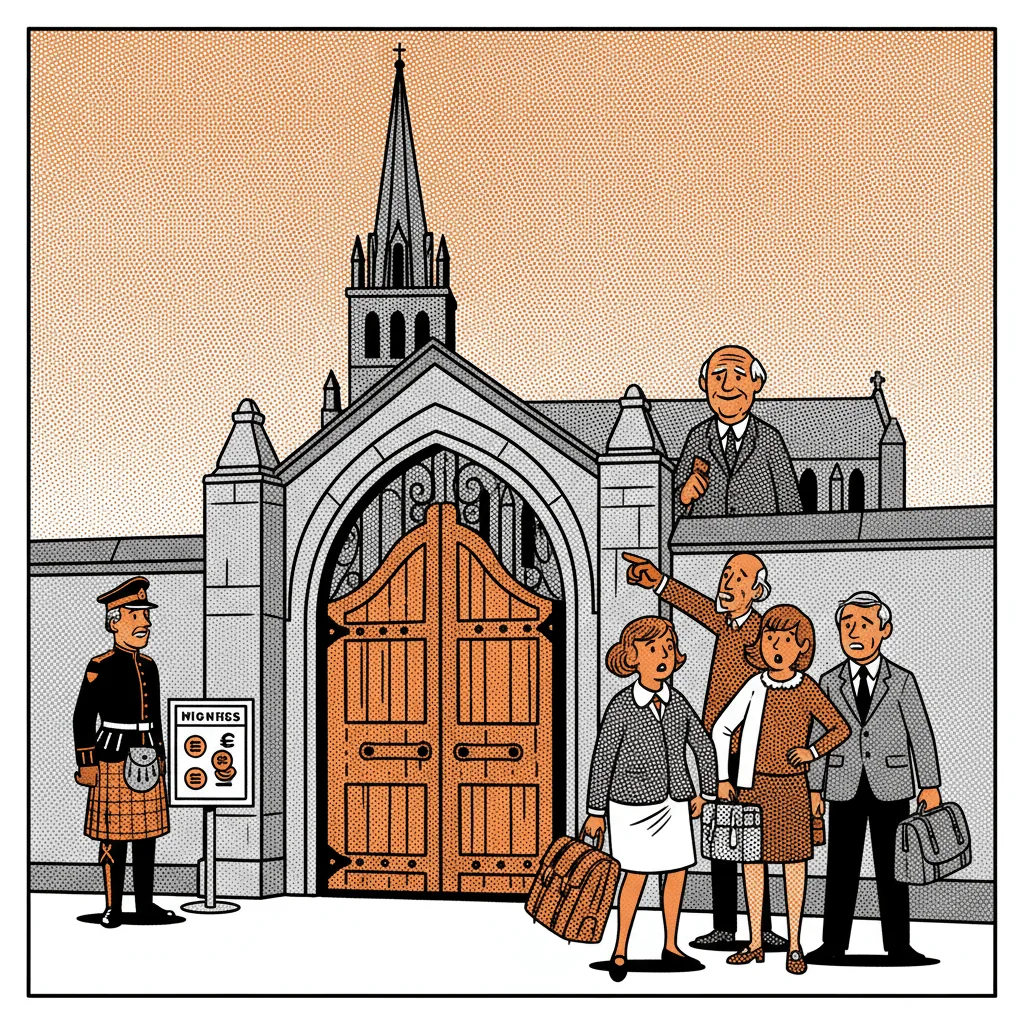
St Giles' Cathedral, which has stood at the heart of Edinburgh's Old Town since the 12th century, is charging non-Scottish visitors an entry fee for the first time in its 900-year history. The cathedral's management says the move is necessary to ensure the long-term survival of the building, which attracts hundreds of thousands of visitors each year but has faced mounting maintenance and operational costs. Scottish residents continue to enter free of charge.
The decision places St Giles' in company with a growing number of European heritage sites that have shifted to a two-tier pricing model distinguishing between residents and tourists. According to VisitScotland, international visitors contributed approximately £3.1 billion to the Scottish economy in 2023, with Edinburgh accounting for the largest share of that spend. The cathedral sits on one of the busiest tourist corridors in the UK, and how visitors respond to the new fee will be felt well beyond its doors.
The commercial logic is straightforward. Heritage buildings are expensive to maintain, grant funding is under pressure across the board, and visitor numbers have rebounded strongly since the pandemic. The Association of Scottish Visitor Attractions has noted that many of its members are exploring new revenue models precisely because public subsidy is no longer a reliable base. A modest entry fee, applied selectively, is one of the cleaner solutions available.
For Edinburgh's hospitality and tourism businesses, the change introduces a variable worth factoring in. Tour operators who package Old Town walking experiences, hotels that recommend the cathedral as a free highlight, and guides who build itineraries around landmark visits will all need to update their materials and conversations with clients. A visitor who encounters an unexpected charge at the door is a visitor who may reassess the afternoon's plan, and that reassessment has a geography: the surrounding cafes, shops, and attractions feel it first.
There is also a broader question about Edinburgh's identity as an open, walkable city where history is freely accessible. The Scottish Government's tourism strategy, outlined in its 2023 visitor economy framework, emphasises inclusive access to culture and heritage as a draw in itself. Charging at the door is a legitimate funding tool, but the city's hospitality businesses have a stake in how it is communicated, packaged, and ultimately perceived by the international visitors who choose Edinburgh over Amsterdam, Prague, or Lisbon.