

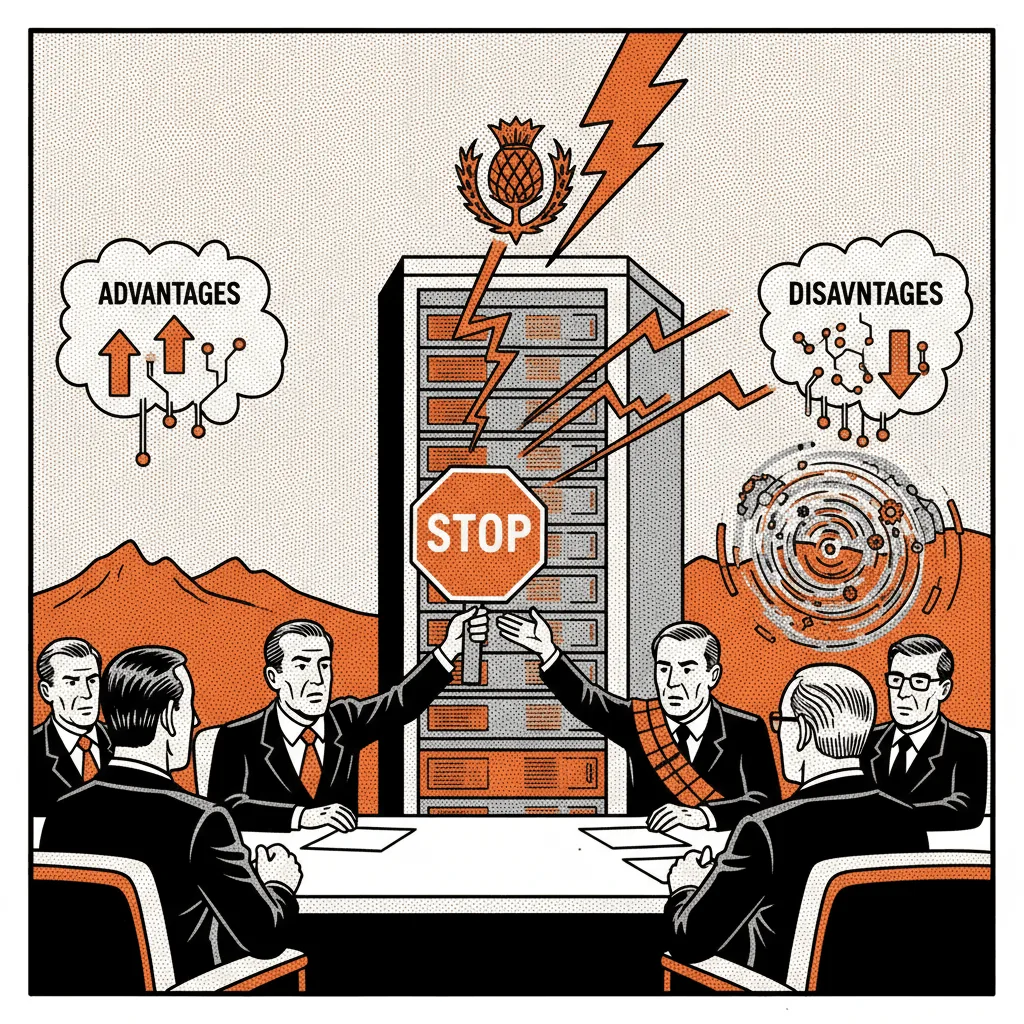
Scotland is sitting on one of the most valuable combinations of conditions in the world for AI infrastructure: a renewable energy grid that regularly produces surplus power, a cold climate that cuts cooling costs dramatically, available land, and a government that has at least gestured at digital ambition. BBC Scotland has reported that MSPs are now being asked to pause the country's AI data centre expansion while policymakers catch up with the pace of growth. That is a reasonable instinct dressed up in the wrong conclusion.
The concern from some quarters is legitimate. Data centres are energy-hungry, water-intensive, and have historically been poor neighbours, arriving with promises of jobs and delivering mostly server racks humming behind a fence. According to the International Energy Agency, global data centre electricity consumption is expected to more than double by 2026, and the questions about where that power comes from, and what communities get in return, are fair ones to ask. Scotland should ask them loudly. But asking is different from stalling.
The smarter move is a deal. Scotland's renewable energy sector already generates more electricity than the country consumes in favourable conditions, and the National Grid's own data shows Scottish curtailment, paying wind farms to switch off because the grid cannot absorb the output, cost over £200 million in 2023 alone. That is wasted energy that AI data centres could absorb directly, at scale, stabilising grid economics while powering the compute infrastructure the global economy increasingly depends on. Turning that wasted power into digital output is not a trade-off. It is a circular economy waiting to be built.
There is a second, underreported prize here: waste heat. AI servers run hot. The heat they generate can be captured and fed into district heating networks, agricultural greenhouses, aquaculture facilities, and community swimming pools. Stockholm has been doing exactly this with its data centre waste heat for years, supplying a meaningful share of the city's residential heating. Scotland's Climate Change Committee and the Scottish Government's own Heat in Buildings Strategy both acknowledge the potential of waste heat recovery, and yet UK-level energy policy, shaped in part by lobbying from incumbent energy suppliers who lose revenue when homes stop buying their product, has been slow to create the frameworks that would make this commercially straightforward. Follow the money, as ever.
For Scottish SMEs, the expansion of AI infrastructure is not an abstract political argument. It is the foundation of the services they already use and will use more of. Faster, cheaper, lower-latency AI compute hosted closer to home means better performance on the tools that are already cutting admin time, improving customer service, and letting small teams move like large ones. Research from the Edinburgh Futures Institute at the University of Edinburgh consistently highlights digital infrastructure proximity as a factor in the competitiveness of regional business ecosystems. A Scotland with serious AI infrastructure is a Scotland where a two-person agency in Leith or a GP practice in Inverness can access the same compute firepower as a London hedge fund. That matters.
The MSPs calling for a pause deserve a hearing, but the response from the Scottish Government should not be a moratorium. It should be a framework: community benefit agreements baked into planning conditions, mandatory waste heat recovery where district networks exist or are planned, transparent energy sourcing requirements, and a skills programme that ensures the jobs created are accessible to Scottish workers rather than imported wholesale. Scottish Enterprise and Highlands and Islands Enterprise both have the machinery to make that kind of structured growth happen. This is exactly the moment to use it.
Scotland does not get many shots at being first. This is one of them. The question is not whether to build AI infrastructure here, global capital will build it somewhere regardless. The question is whether Scotland negotiates a deal that heats homes, trains people, stabilises the grid, and builds a lasting industrial base, or simply waves it through and wonders later why the benefits landed elsewhere. The pause lobby is asking the right question. The answer is not to stop. It is to get the terms right, fast.