

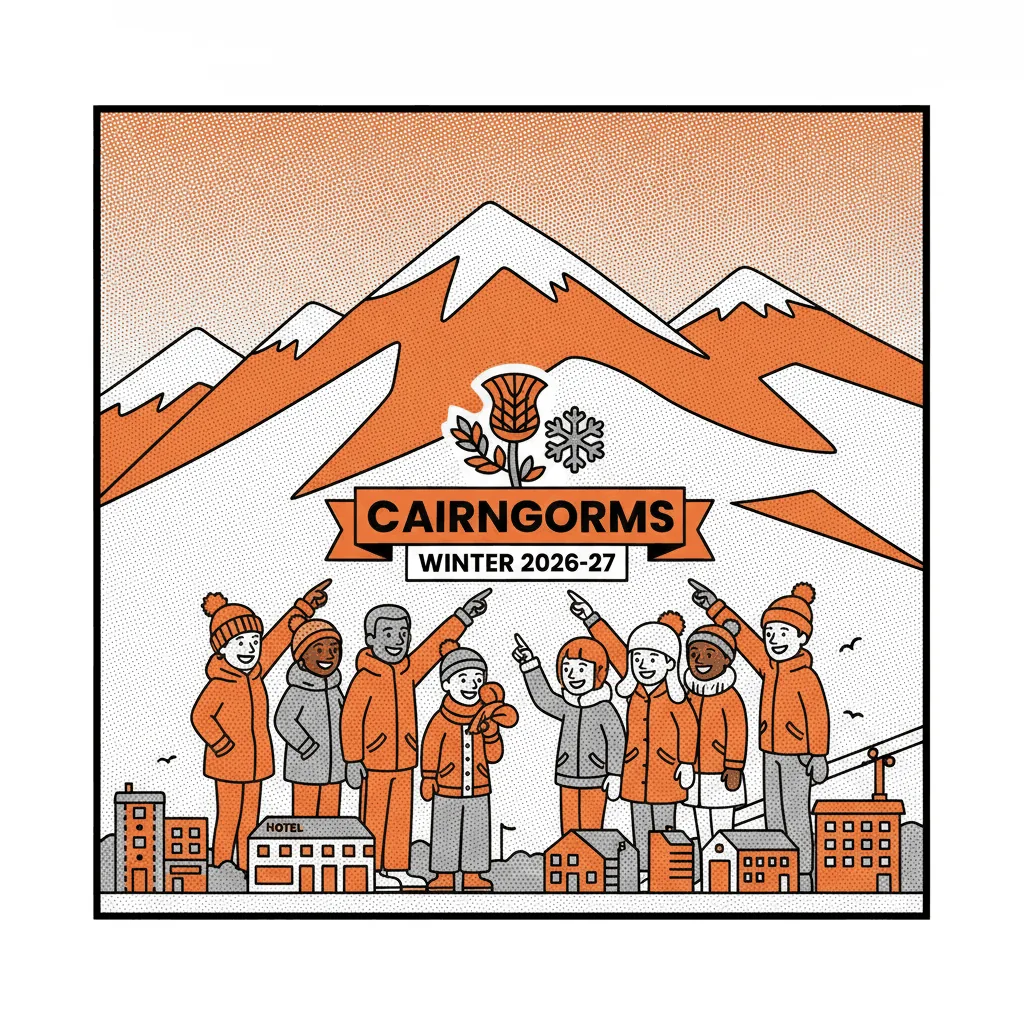
More than 350 tourism businesses across the Cairngorms National Park, the UK's largest, have united behind a single campaign: 'Where Winter Comes to Life!' Led by the Cairngorms Business Partnership (CBP), the push is designed to reposition the park as a serious winter destination rather than a shoulder-season afterthought. That reframing matters economically. According to VisitScotland's own research, seasonal tourism imbalance costs Scottish operators significant revenue each year, with winter spend lagging spring and summer by a substantial margin despite the country's considerable cold-weather appeal.
The CBP model is worth studying closely. Individual tourism firms, particularly small guesthouses, independent guides, and family-run activity operators, rarely have the budget to mount a national travel campaign. But pooled resources change that equation entirely. When 350 businesses co-ordinate messaging, share campaign costs, and present a unified destination brand, they reach audiences that none of them could touch working alone. That is not charity. It is basic competitive logic applied at scale.
Scotland has a strong institutional framework for exactly this kind of collaboration. Business Gateway runs sector networking across every local authority area. Scottish Enterprise actively supports cluster development, and its Collaboration Framework has helped Scottish firms in manufacturing, food and drink, and creative industries build joint market strategies. The Cairngorms campaign fits neatly into that tradition, but it is being driven from the ground up, by operators, not a quango, which arguably makes it more durable.
The timing is shrewd. With inbound UK tourism under pressure from the cost-of-living squeeze, destinations that make a clear, compelling case for a specific season have an edge. Research from the Scottish Tourism Alliance's industry outlook found that differentiation is the single biggest factor driving visitor choice in a price-sensitive market. 'Where Winter Comes to Life!' is a position, not just a tagline. It gives travel media, booking platforms, and social audiences something concrete to repeat and share, which is exactly what small operators cannot generate individually.
For SMEs outside tourism, the principle is identical. Whether you run an independent school, a healthcare clinic, a design studio, or a trades business, there are almost certainly neighbouring firms serving the same client base with no direct competitive overlap. A shared campaign, a joint content series, a co-branded local events guide: these are low-cost, high-reach moves that Business Gateway and local chamber networks can help facilitate. The Cairngorms operators did not wait for a government programme to tell them to collaborate. They built the structure themselves, and 350 businesses worth of momentum is what followed.