

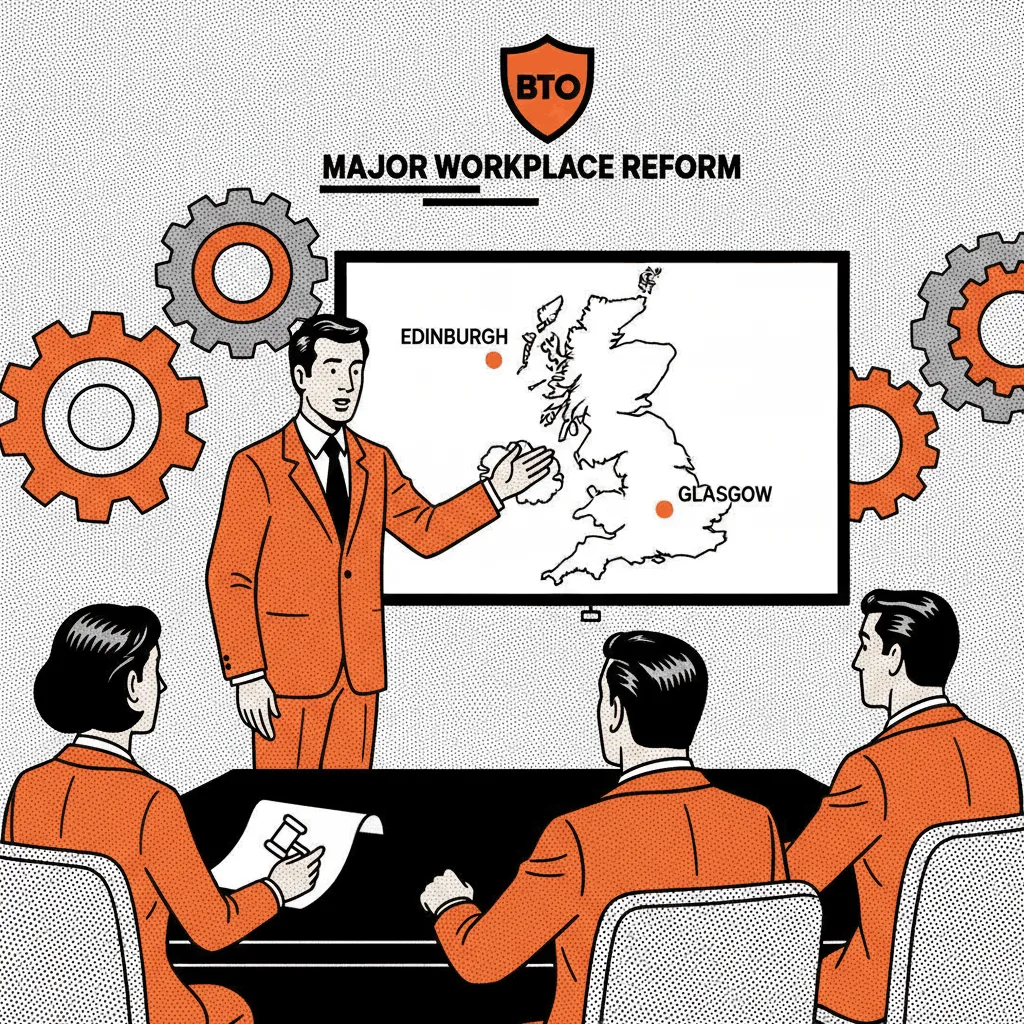
Scotland's SME owners are about to face the most substantial overhaul of UK employment law in decades, and most of them are not ready. The Employment Rights Act 2025 introduces sweeping changes across unfair dismissal protections, flexible working rights, zero-hours contract rules, and collective redundancy obligations, many of which will come into force in stages through 2026 and 2027. Miss the deadlines, and the liability sits squarely with the employer.
BTO Solicitors LLP, one of Scotland's leading employment law practices, is hosting two practical seminars specifically designed for employers who want to get ahead of the changes rather than react to them. The Edinburgh session runs on 15 September; Glasgow follows on 16 September. These are not lecture-hall overviews. BTO's employment team is walking attendees through what actually changes, when it changes, and what contracts, policies, and procedures need to be updated before the law catches up with them.
The scale of reform is significant. According to analysis by the Chartered Institute of Personnel and Development (CIPD), the Act represents the most ambitious reworking of worker protections since the Employment Relations Act 1999. Day-one unfair dismissal rights alone, removing the current two-year qualifying period, will fundamentally change how employers approach probationary periods and early-stage performance management. The CIPD has urged businesses to audit their onboarding and dismissal processes now, rather than waiting for implementation guidance.
For Scottish SMEs, the timing matters. The Scottish Government's Fair Work Framework has already been nudging employers toward stronger worker protections as a condition of public contracts and grant eligibility. The Employment Rights Act 2025 brings UK-wide statute into closer alignment with that direction of travel. Businesses operating in Scotland who have ignored Fair Work criteria may find themselves doubly exposed once the new Act beds in.
The UK Government's own impact assessment, published alongside the Act, estimates compliance costs for smaller businesses will be material, particularly around revised consultation requirements for redundancy and the new obligations on zero-hours workers seeking guaranteed hours. The Federation of Small Businesses (FSB) Scotland has flagged that SMEs with fewer than 50 employees will feel the administrative weight most acutely, given they rarely have in-house HR functions to absorb it. Getting proper legal advice now, before policies need to be rewritten under pressure, is considerably cheaper than a tribunal later.