

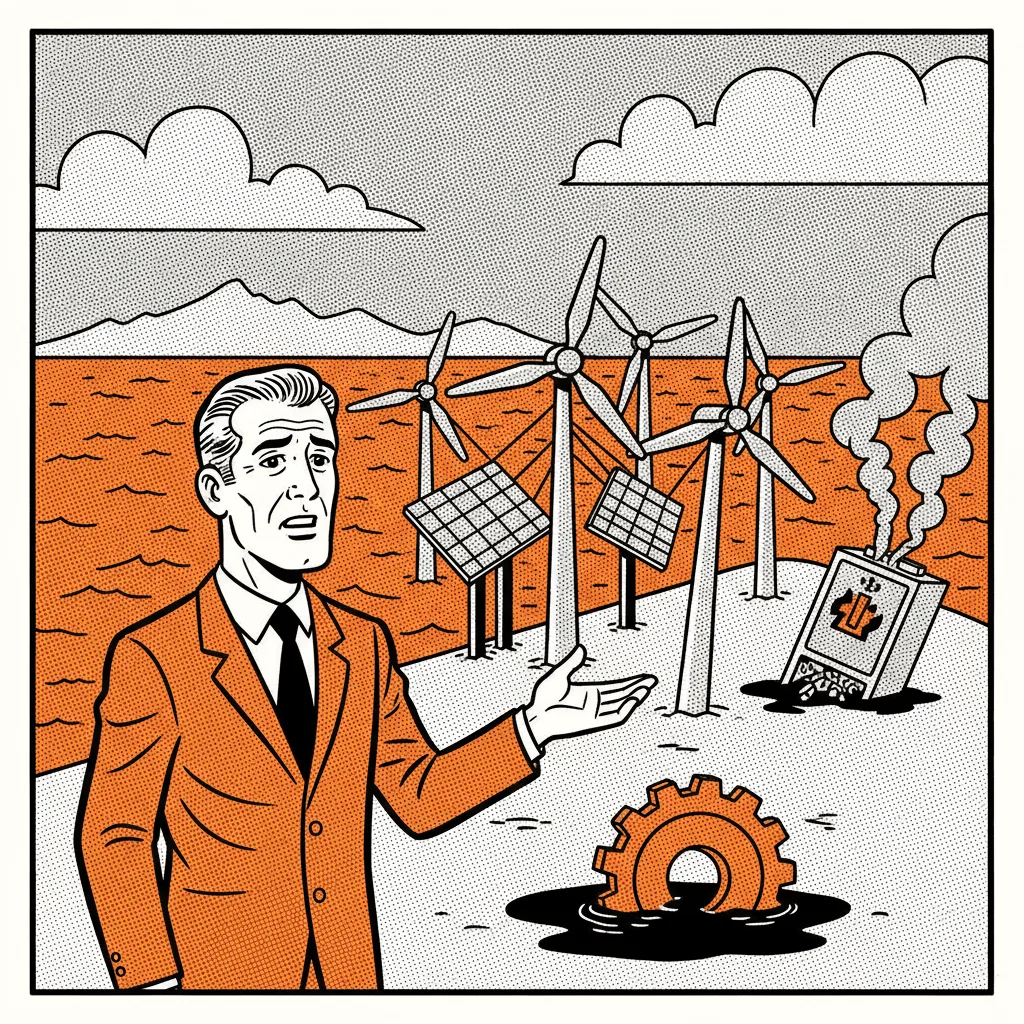
Kate Forbes delivered a blunt assessment this week: Scotland is in danger of botching the energy transition the same way it managed the decline of North Sea oil. The core of her argument is that big promises around green energy jobs and economic renewal are being made without the structural frameworks, local supply chains, or community wealth mechanisms needed to actually deliver them. If she is right, Scottish businesses will feel it in their costs, their hiring pools, and their competitiveness for years to come.
The stakes are considerable. Scotland currently generates the equivalent of more than 100 per cent of its electricity consumption from renewables in an average year, according to figures from the Scottish Government's own energy statistics. It is, on paper, one of the best-positioned economies in the world for a clean energy future. The problem Forbes is pointing at is not the resource. It is the capture of the value. Historically, Scotland has been rich in energy and poor at keeping the economic benefit onshore.
The North Sea comparison is pointed and fair. Research from the University of Strathclyde and others has documented how the oil boom created enormous wealth that flowed largely through London financial markets and to international contractors, while Scottish coastal communities were left with structural unemployment when the contracts dried up. The concern now is that offshore wind, green hydrogen, and the broader renewables buildout could follow the same pattern: assets off the Scottish coast, profits elsewhere, and local SMEs locked out of supply chains dominated by large European energy engineering firms.
For business owners, this has a very direct read-through. Energy costs in Scotland remain stubbornly high despite the renewable surplus, partly because of grid infrastructure bottlenecks and the way UK-wide wholesale pricing works. According to Ofgem data, small commercial energy users in Scotland have faced some of the highest standing charges in Great Britain, a perverse outcome for a country generating clean power at scale. The transition will only help Scottish SMEs if the policy architecture is designed to let them benefit, and Forbes is right to flag that this architecture is currently incomplete.
There is also the waste heat angle, which rarely gets the airtime it deserves. Scotland's renewable energy surplus makes it an ideal location for AI data centre infrastructure, which generates significant heat as a by-product. That heat can be piped into district heating networks, farms, schools, and industrial premises. Countries including Denmark and Finland have built entire community heating systems on this model. Scotland has the land, the cold climate, the renewable grid, and the political will at Holyrood level. What it has lacked is coherent UK-wide policy to incentivise it, a gap that lobbying from traditional energy suppliers has done nothing to close. Forbes's warning about capturing value from energy assets applies here too.
Business Gateway and Scottish Enterprise have both signalled increased support for SMEs navigating energy transition costs, including energy efficiency grants and supply chain development funding. The Scottish Government's Energy Strategy and Just Transition Plan sets out ambitions through to 2045, but Forbes's intervention suggests that even within government there is recognition the delivery machinery needs to be sharper. The plan is available at gov.scot and is worth reading if your business has any exposure to energy costs, construction, engineering, or public sector contracts in the renewables space.
The warning from Forbes is a useful moment of honesty from inside government. Scotland has the assets. The question is whether the policy infrastructure catches up fast enough for businesses here to actually benefit, rather than watching the value sail past on a cable to the south.