

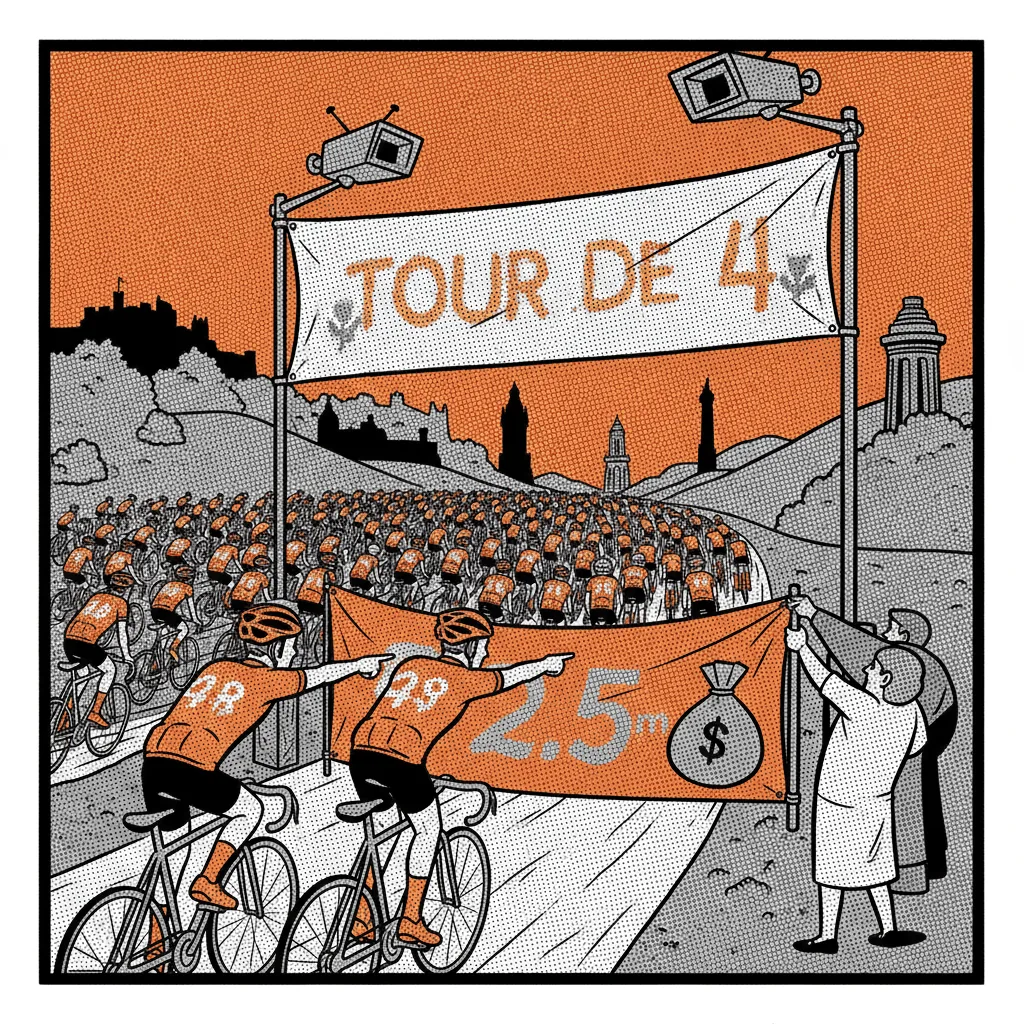
Five thousand people choosing to get on a bike for a cause. That is not a small thing. Sir Chris Hoy's Tour de 4 event drew thousands of cyclists across the route, raising £2.5 million for cancer research and support charities, in what has become one of Scotland's most significant annual fundraising occasions. The scale of it, the fact that it keeps growing, tells you something real about how Edinburgh and its surrounding communities show up when it matters.
Hoy, the six-time Olympic gold medallist who announced his prostate cancer diagnosis in 2024, established the event to channel something useful from a deeply personal fight. According to Cancer Research UK, around 375,000 people are diagnosed with cancer in the UK each year. In Scotland, Macmillan Cancer Support estimates that around 33,000 Scots receive a diagnosis annually. The money raised through events like Tour de 4 directly funds research and care services that the NHS, under sustained pressure, cannot fully carry on its own.
TV personalities and public figures joined the ride this year, paying tribute to colleagues lost to cancer, which added emotional weight to what is already a charged occasion. But the backbone of the event was the 5,000 ordinary participants, many of them from Edinburgh and the Lothians, who trained for months, got sponsors, and turned up. That is community infrastructure working exactly as it should.
For the businesses whose logos appeared on jerseys, water stations, and promotional materials, this was also a masterclass in values-led marketing. According to the Charities Aid Foundation's UK Giving Report, consumers are increasingly likely to support brands that demonstrate genuine community involvement, particularly in the post-pandemic period when local loyalty became a real commercial factor. Sponsoring a charity ride is not altruism versus commerce. Done properly, it is both at once.
Edinburgh has a long tradition of this kind of organised civic generosity, from the Moonwalk to the Kiltwalk, and Tour de 4 sits comfortably in that tradition, albeit with Olympic provenance and a deeply personal founding story behind it. As the event grows, the commercial and community ripple effects will only widen. Watch for the 2026 edition to be bigger still.