

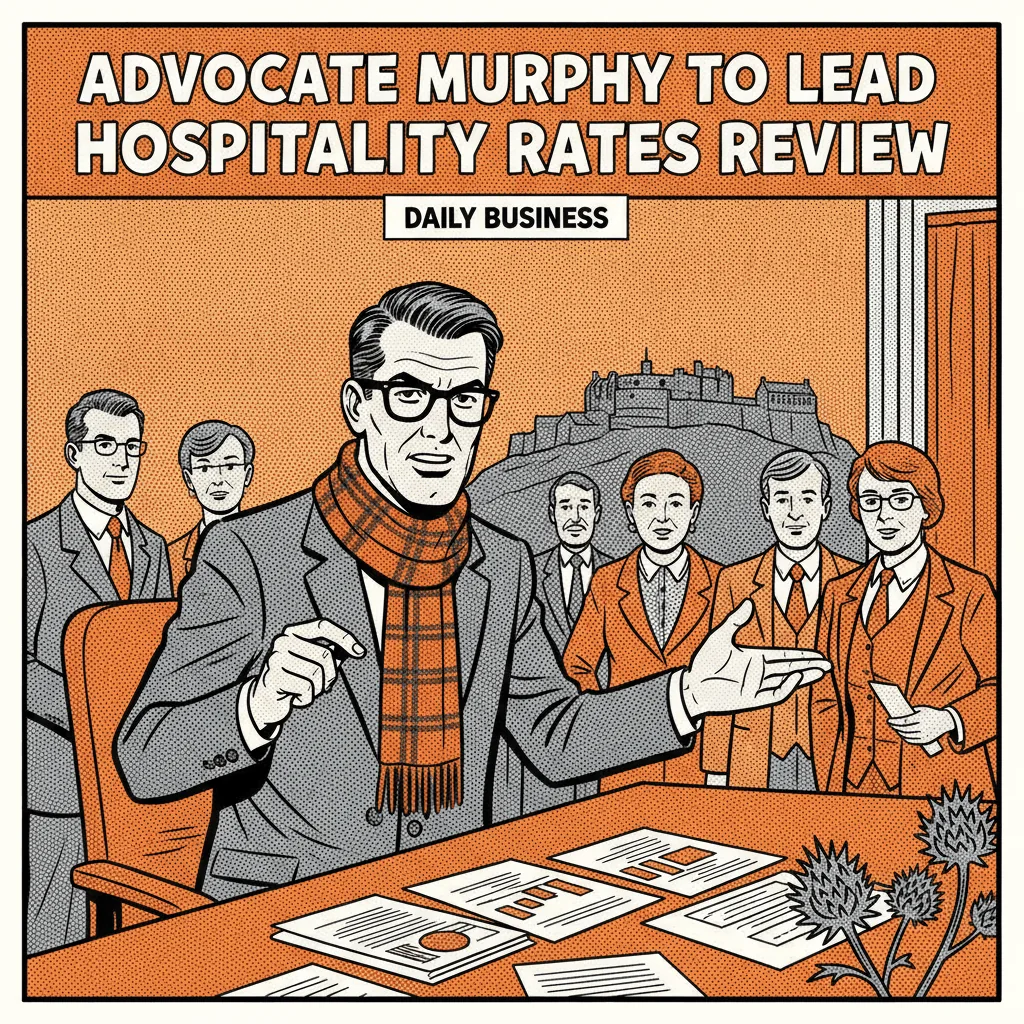
Scotland's hospitality sector has been making the same argument for years: business rates are too high, too blunt, and too disconnected from what a business actually earns. Now someone is being asked to formally listen. The Scottish Government has appointed Advocate Murphy to lead a dedicated review of how non-domestic rates are calculated and applied across hospitality, with the findings expected to shape future policy on one of the sector's biggest fixed costs.
The timing matters. Scotland's hospitality industry is still working through the aftershocks of post-pandemic debt, energy cost spikes, and stubbornly high food inflation. According to UK Hospitality Scotland, the trade body representing thousands of operators across the country, business rates remain one of the top three cost pressures cited by members, sitting alongside labour and energy. For many Edinburgh venues operating on margins of five to eight per cent, a rates bill that doesn't flex with revenue isn't just uncomfortable. It can be terminal.
Edinburgh presents a particular case. The city's tourism economy, Fringe festivals, and year-round footfall make it a high-value location, which also means high rateable values. A gastropub on the Royal Mile or a boutique hotel in Leith can be paying rates assessed against a pre-pandemic property valuation that bears little resemblance to current trading conditions. The Scottish Assessors Association, which oversees rateable value assessments across the country, has faced repeated criticism from operators who say the revaluation cycle is too slow and too blunt to track the real economics of running a hospitality business.
What Advocate Murphy's review is expected to consider is whether the current system, inherited largely from a UK-wide framework, is fit for purpose in a Scottish context, and whether hospitality deserves a distinct treatment rather than being bundled into the same broad commercial property category as warehouses and offices. The Scottish Government has previously shown willingness to diverge from Westminster on rates policy, most notably through the Small Business Bonus Scheme, which according to Scottish Government figures has helped over 100,000 businesses reduce or eliminate their rates bill entirely. A sectoral hospitality relief, or a restructured valuation methodology, would be a further step in that direction.
The review is also happening against a backdrop of political will. The SNP Government has made clear its intention to support the hospitality sector as a driver of Scottish economic identity and rural employment, particularly across Highland and Island communities where a local hotel or inn is often the anchor employer. Business Gateway and Scottish Enterprise have both included hospitality businesses in broader SME support programmes, but structural rates reform would do more than any grant scheme. A lower fixed-cost base changes the economics of every day you open your doors, not just the days you access support.
There is no confirmed timeline for the review's conclusions, and business rates policy changes take time to flow through the system. But consultations of this kind typically invite sector evidence, which means operators have an opportunity to put their numbers in front of the people writing the report. Trade bodies including UK Hospitality Scotland and the Scottish Licensed Trade Association are the natural conduit for that. If you run a hospitality business and you're not already a member of one of them, now is a reasonable moment to reconsider that.