

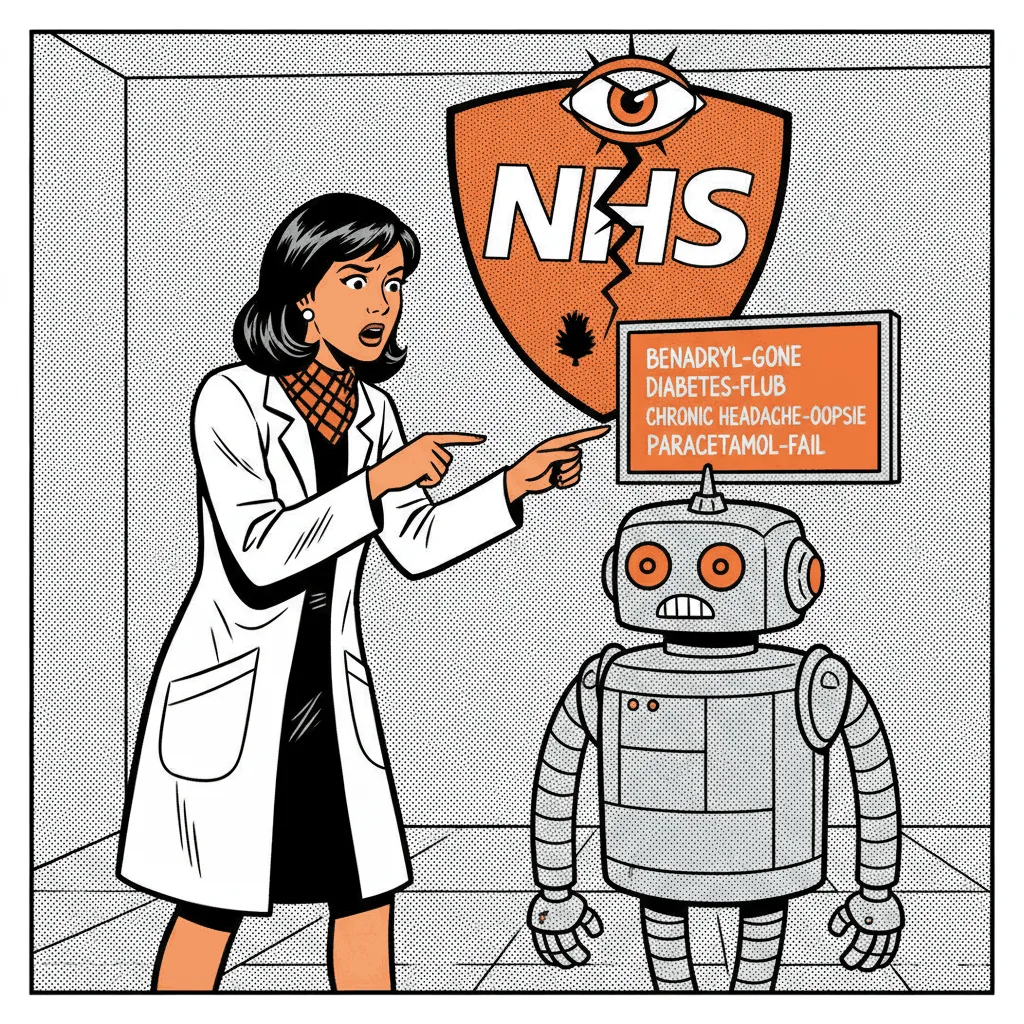
The Care Quality Commission, England's NHS watchdog, has issued a formal warning that AI scribing tools deployed in clinical consultations are producing errors in drug names and diagnoses. These are not minor typos. A misnamed medication or a misrecorded diagnosis sitting in a patient's notes is the kind of error that compounds quietly until it causes real harm. The CQC's alert is directed at GP practices and hospital trusts currently using or piloting these tools without adequate human oversight built into the workflow.
AI scribes, software that listens to a consultation and generates clinical notes automatically, have been adopted with genuine enthusiasm across NHS settings. The appeal is obvious. According to NHS England's own workforce data, GPs spend on average 11 hours per week on admin tasks, with clinical documentation accounting for a significant share of that burden. Tools that promise to reclaim those hours are not a luxury; they are a survival mechanism for overstretched practices. In Scotland, NHS boards including NHS Lothian and NHS Grampian have been exploring AI-assisted documentation as part of broader digital transformation programmes backed by the Scottish Government's Digital Health and Care Strategy.
The problem the CQC has identified is not that AI scribes are fundamentally broken. It is that they are being used without sufficient verification steps. Clinicians, under time pressure, are approving AI-generated notes too quickly. The models hallucinate, producing plausible-sounding but incorrect drug names, dosages, or diagnostic terms. Research published in the journal npj Digital Medicine in 2024 found that large language models used in clinical contexts can achieve high overall accuracy while still generating critical errors in a small but meaningful percentage of outputs. In medicine, a small percentage of errors is not acceptable when the absolute number of patient records runs into the millions.
This is not a signal to abandon AI in clinical settings. It is a signal to design the human-in-the-loop more deliberately. The Scottish Government's Health and Social Care Directorate has previously noted that AI tools in NHS Scotland must meet robust clinical governance standards before deployment. That framework exists precisely for moments like this. The fix is not removing AI from the consultation room; it is ensuring every clinician using an AI scribe treats the generated notes as a first draft requiring active review, not a finished record requiring a rubber stamp.
For practices in Edinburgh and across Scotland, the practical question is whether your AI tool, if you are using one, has been through a proper procurement and governance process, and whether your clinical team has been trained not just on how to use it but on what to look for when reviewing its output. The Royal College of General Practitioners has published guidance on AI in primary care, including specific flags around documentation tools. That guidance is worth reading before your next procurement decision, not after your first incident report.