

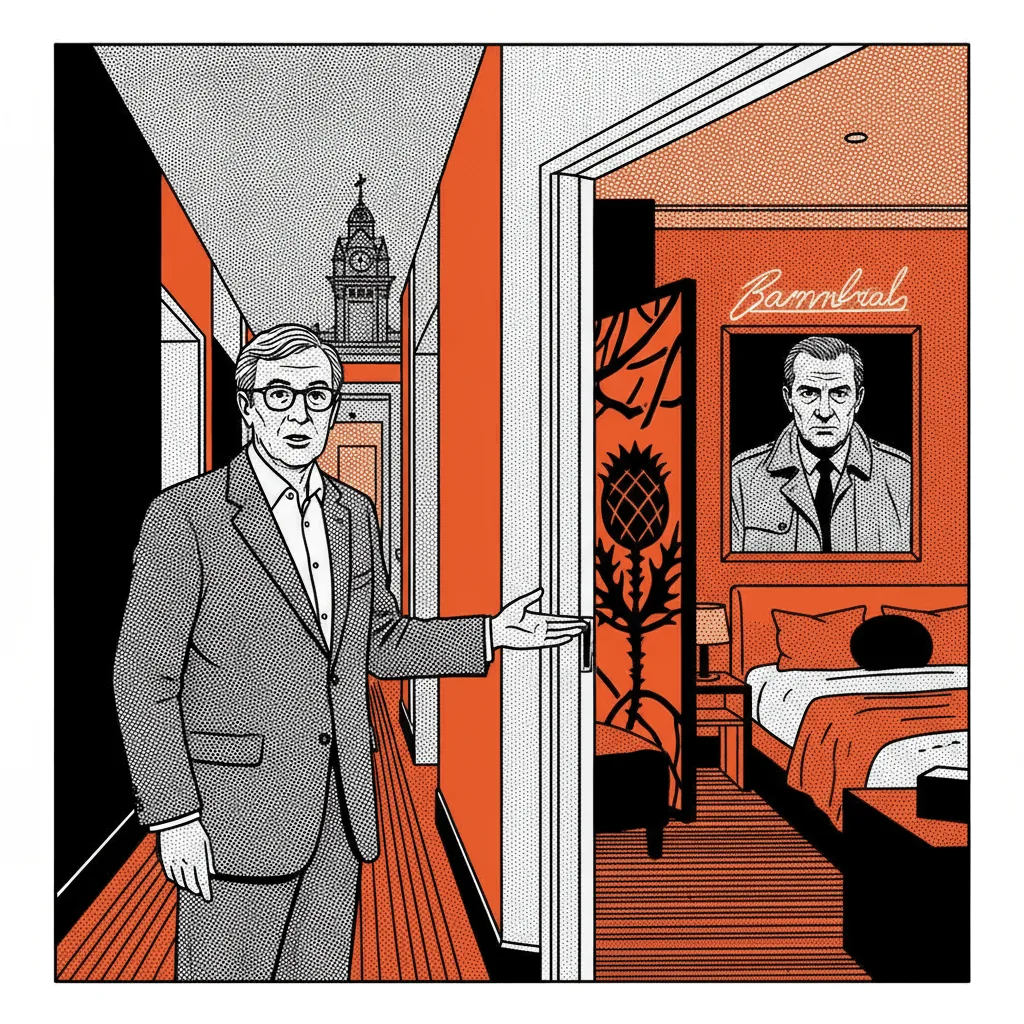
The Balmoral Hotel, that sandstone clock-tower fixture at the east end of Princes Street, rebranded three of its event spaces earlier this summer, giving them the names of Scottish literary icons rather than the usual anonymous suite numbers that blur into one another at every conference hotel in every city on earth. Sir Ian Rankin, creator of Inspector Rebus, discovered the change the way most good things are discovered: by accident, walking past a door with his character's name on it.
It is a small thing. It is also an extremely clever thing. Edinburgh is one of the world's great literary cities, the first UNESCO City of Literature, designated in 2004, and the Balmoral sits at its beating heart. Naming rooms after Rebus, or after other icons of Scottish letters, costs nothing beyond a sign and a decision. What it buys is identity, story, and the kind of shareable moment that no paid campaign can reliably manufacture. Rankin posted about it. People responded. The hotel got coverage it did not have to pay for.
This is place branding working exactly as it should. According to VisitScotland, literary tourism is a significant and growing segment of Scotland's visitor economy, with Edinburgh's annual book festival alone drawing tens of thousands of visitors from across the world each August. The Balmoral's rebrand taps directly into that current rather than swimming against it. It signals to a specific type of guest, the culturally curious, the well-read, the person who chose Edinburgh over a dozen other European city-break options precisely because of what the city means, that they are in the right room.
The lesson for Edinburgh SMEs is not to slap a Rebus quote on your window and call it a strategy. It is subtler than that. The Balmoral identified what its city is genuinely famous for, found the overlap between that and its own offer, and made a quiet, confident editorial choice. No rebrand agency. No six-month brand audit. According to the Edinburgh Tourism Action Group, the visitor economy contributes over £1.8 billion annually to the Edinburgh economy. Any business touching that ecosystem, from independent hotels and restaurants to tour operators, retailers, and event venues, competes partly on the strength of its connection to place. Authentic connection. Not tartan-tin authenticity. Real resonance with what makes Edinburgh, Edinburgh.
Small businesses in this city sit on an asset that most of their competitors in other UK cities would pay handsomely for: a globally recognised cultural identity with deep roots and enormous affection. The Balmoral just reminded everyone that the smartest thing you can do with that asset is use it, openly and without embarrassment, and let the story tell itself.