
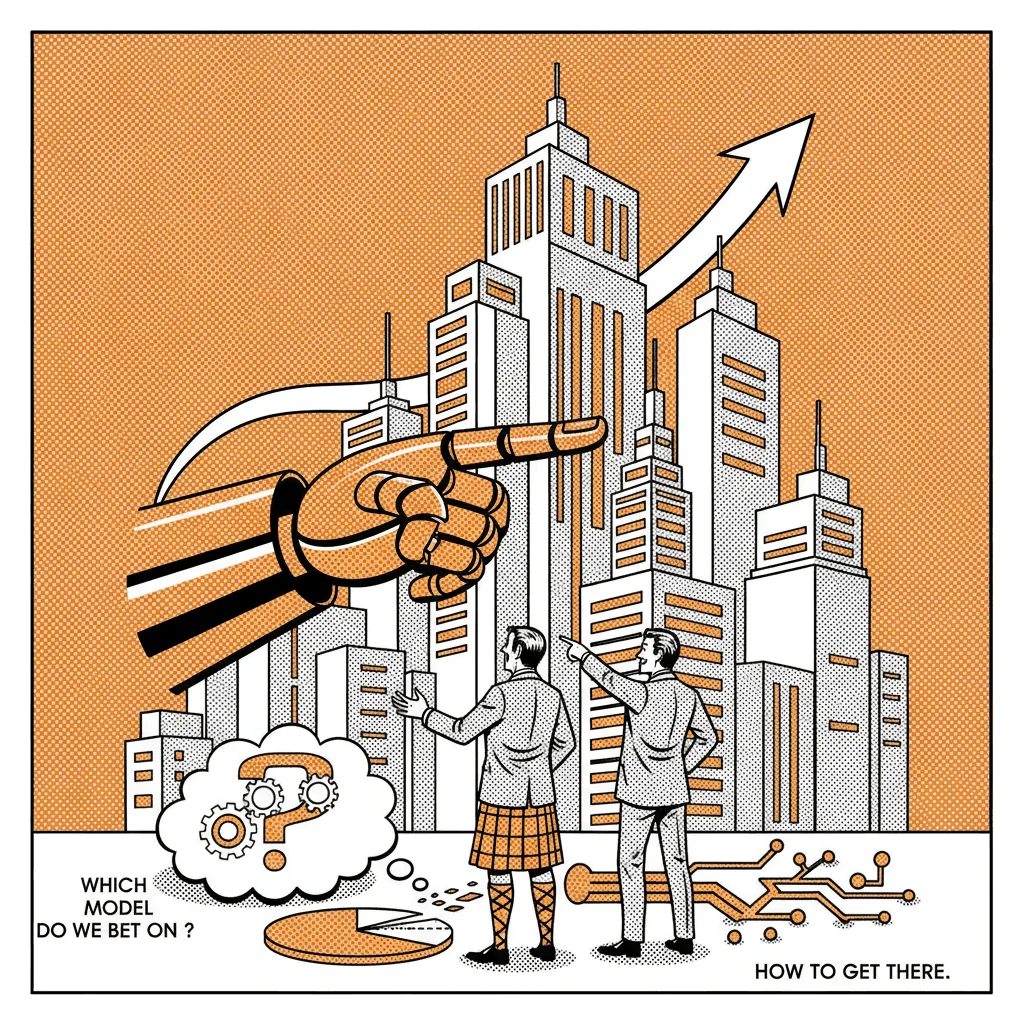
Two years ago, boardrooms were locked in fierce arguments about which large language model deserved their loyalty. Today, that argument has largely dissolved. According to Stanford University's 2026 AI Index, leading AI models have gained roughly 30 percentage points in performance benchmarks over a very short period, pulling so close together that picking a winner is no longer the most useful question to ask.
The conversation is shifting from capability to application. With the raw technology broadly comparable across providers, the competitive edge now lies in how organisations actually deploy AI, the workflows they redesign, the staff they train, and the problems they choose to tackle first. For small and medium-sized enterprises, this is genuinely good news: the pressure to chase the shiniest new model has eased considerably.
What replaces it is a more practical agenda. Business owners are increasingly being asked to think about integration rather than experimentation, embedding AI tools into day-to-day operations in ways that save time, reduce cost, or improve customer experience. The Stanford findings suggest this maturation of the market will only accelerate through the remainder of the decade.
For solopreneurs and SME leaders planning their AI adoption strategy, the takeaway is straightforward: stop waiting for the perfect tool and start building the right habits. The organisations pulling ahead are those treating AI as an operational discipline rather than a technology project.