

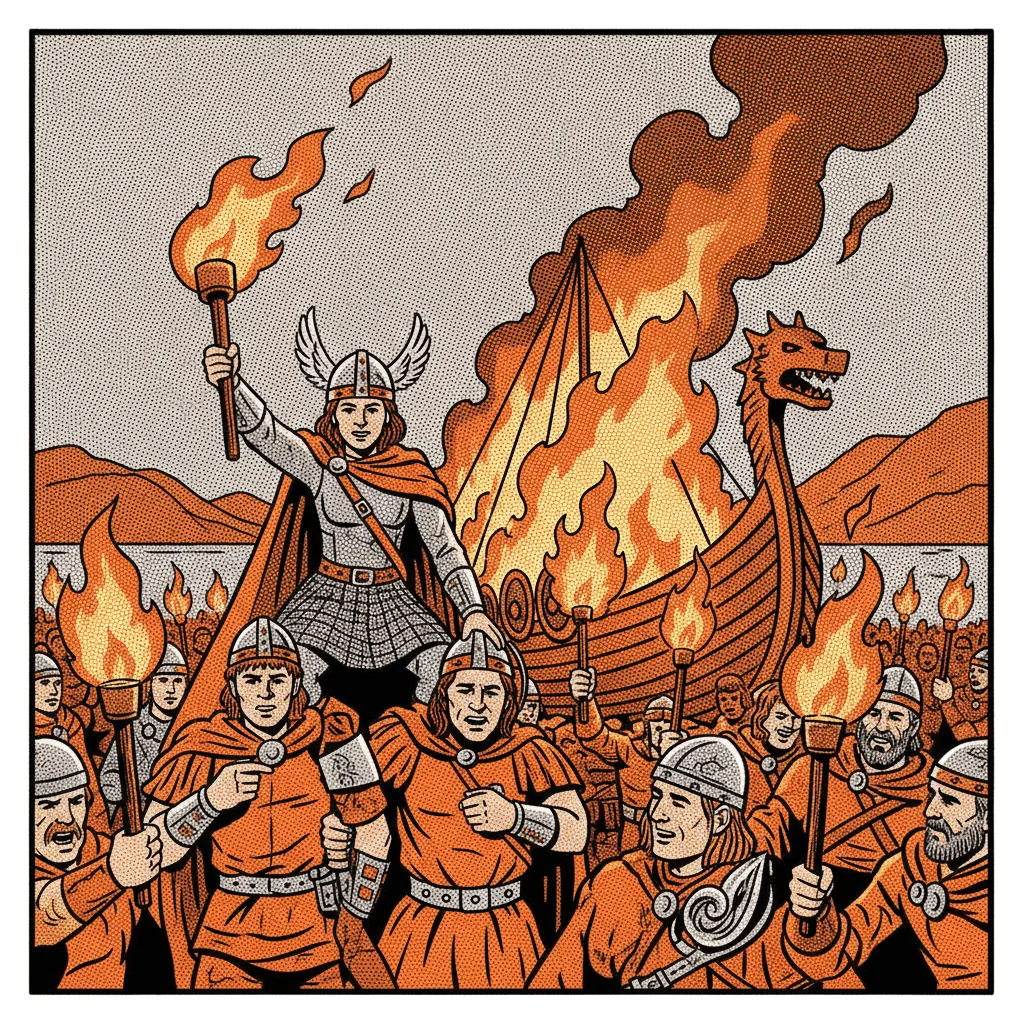
Up Helly Aa has been burning longships on Shetland's dark January streets since the 1880s. The junior jarl squad, a procession of younger participants who march alongside the main event, has existed in its current form since 1956. In all that time, the role of junior jarl had never gone to a girl. Until Erin Harries.
Harries's appointment is not a token gesture or a managed PR moment. It is the festival's own community making a decision, quietly and without fanfare, that the torch should be passed without restriction. That is how cultural change tends to stick: not from the top down, but from inside a tradition that decides, on its own terms, to move.
Up Helly Aa draws thousands of visitors to Lerwick each year and has become one of Scotland's most recognisable cultural exports, covered by international press and celebrated by VisitScotland as a centrepiece of the winter tourism calendar. According to Shetland Islands Council, the festival contributes significantly to the local economy at a time of year when visitor numbers would otherwise be thin. The fire and the spectacle are the draw. The community and its evolving story are what make people return.
Scotland has a deep well of living tradition, from the Common Ridings of the Borders to the Braemar Gathering to the Edinburgh festivals themselves. What makes those traditions durable is not that they stay frozen, but that the communities around them keep finding ways to make them mean something new. Harries carrying the title of junior jarl in 2025 is exactly that kind of renewal. It doesn't break the festival. It extends it.
For anyone watching from Edinburgh or the Central Belt, this is a reminder that Scotland's cultural calendar is full of moments that deserve proper attention, not just a retweet during January. These festivals are alive, locally funded, and run almost entirely by volunteers. They are community infrastructure as much as they are spectacle, and they are worth celebrating on their own terms.