

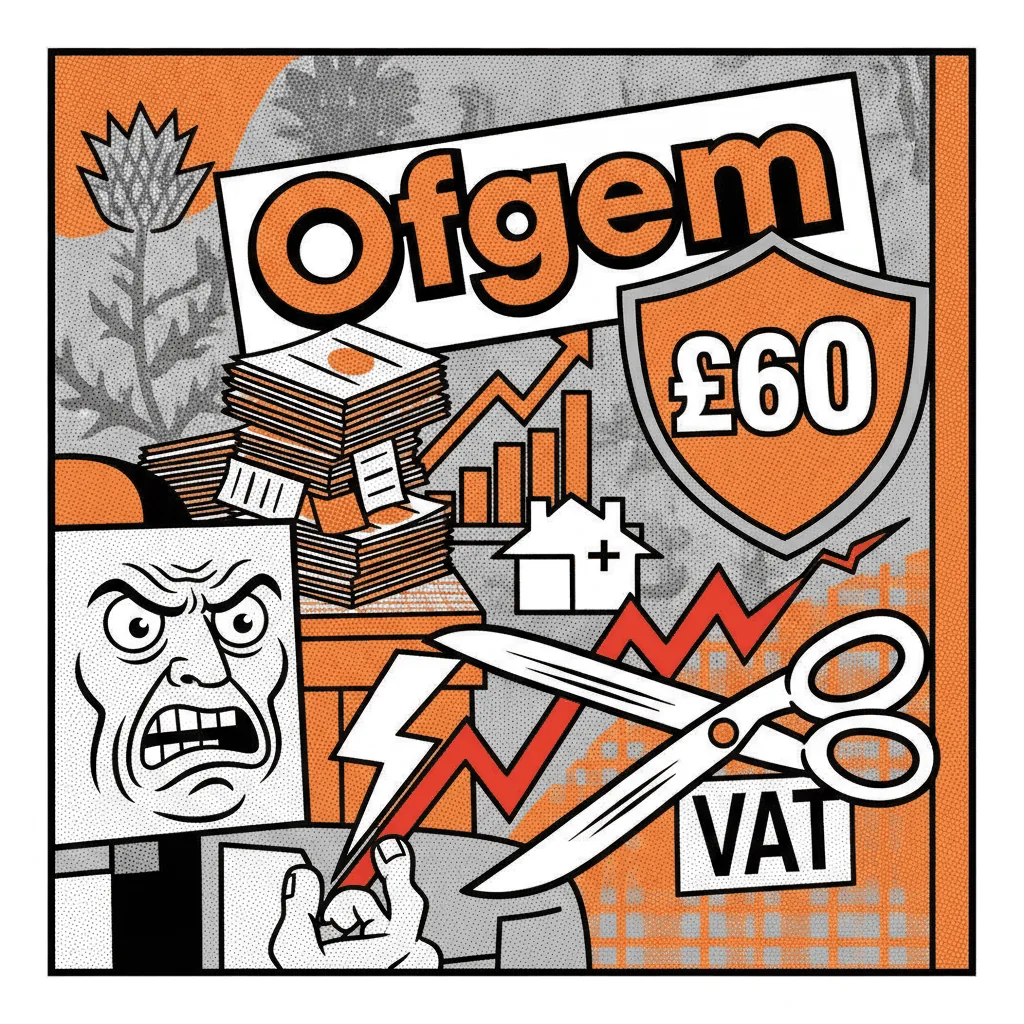
Ofgem confirmed this week that the energy price cap will rise by 4% for Q4 2026, covering the three months from 1st October to 31st December. A typical household on a default direct debit tariff will see their annual bill climb by around £60, according to the regulator's own figures. That is the headline number, cushioned somewhat by a reduction in VAT on domestic energy that the government applied to limit the political damage. Without it, the rise would have been steeper.
For Scottish SMEs, the picture is different from the household figure in one important respect: business energy contracts are not protected by the price cap. Ofgem's cap applies to domestic default tariffs, not commercial ones. But the cap moves are a reliable leading indicator of where the wholesale market is heading, and business tariffs follow the same underlying pressure. The University of Strathclyde's Fraser of Allander Institute has consistently noted that energy costs represent a disproportionate burden for Scottish manufacturers, hospitality businesses, and rural enterprises compared with their counterparts in warmer, more urban parts of Britain.
Scotland's climate means heating costs land harder here than in the south of England. A café in Edinburgh's New Town, a workshop in Leith, a clinic in Dalkeith, all of them burn more energy per square metre across the October to December window than equivalent premises in Bristol or Birmingham. The Scottish Government's Energy Efficiency Business Support scheme exists precisely because this asymmetry is real and documented, offering grants and interest-free loans to help businesses cut consumption. If you have not checked your eligibility recently, that is worth doing before winter contracts are locked in.
The timing matters for planning. Q4 contract renewals typically need to be agreed in late summer. Energy consultants consistently advise locking in fixed-rate commercial deals before the cap announcement lands in the press, because suppliers reprice quickly once the direction of travel is clear. With October's cap now confirmed as a 4% rise, the window for securing a better deal on Q4 and Q1 supply is narrowing. According to the Energy Savings Trust Scotland, businesses that actively manage their energy procurement save an average of 10 to 15% compared with those who roll onto variable or out-of-contract rates.
The longer structural story here is one The Loop has covered before: Scotland sits on a renewable energy surplus, and AI infrastructure investment could turn that surplus into a community heating asset. Waste heat from server farms, paired with district heating networks, could blunt exactly this kind of price cap volatility for businesses and homes across the central belt. The technology exists. The renewable capacity exists. What is missing is a Westminster policy framework that allows it to compete with conventional gas supply. Until that changes, Scottish SMEs will keep absorbing price cap rises that a smarter energy system would make largely irrelevant.
For now, the practical reality is a cost line going up in October and a contracting window that closes before most people finish their summer holidays. The businesses that will feel it least are the ones that act in the next six to eight weeks, whether that means switching broker, renegotiating supply, investing in insulation under an existing grant scheme, or simply auditing which premises are wasting heat they are already paying for.