

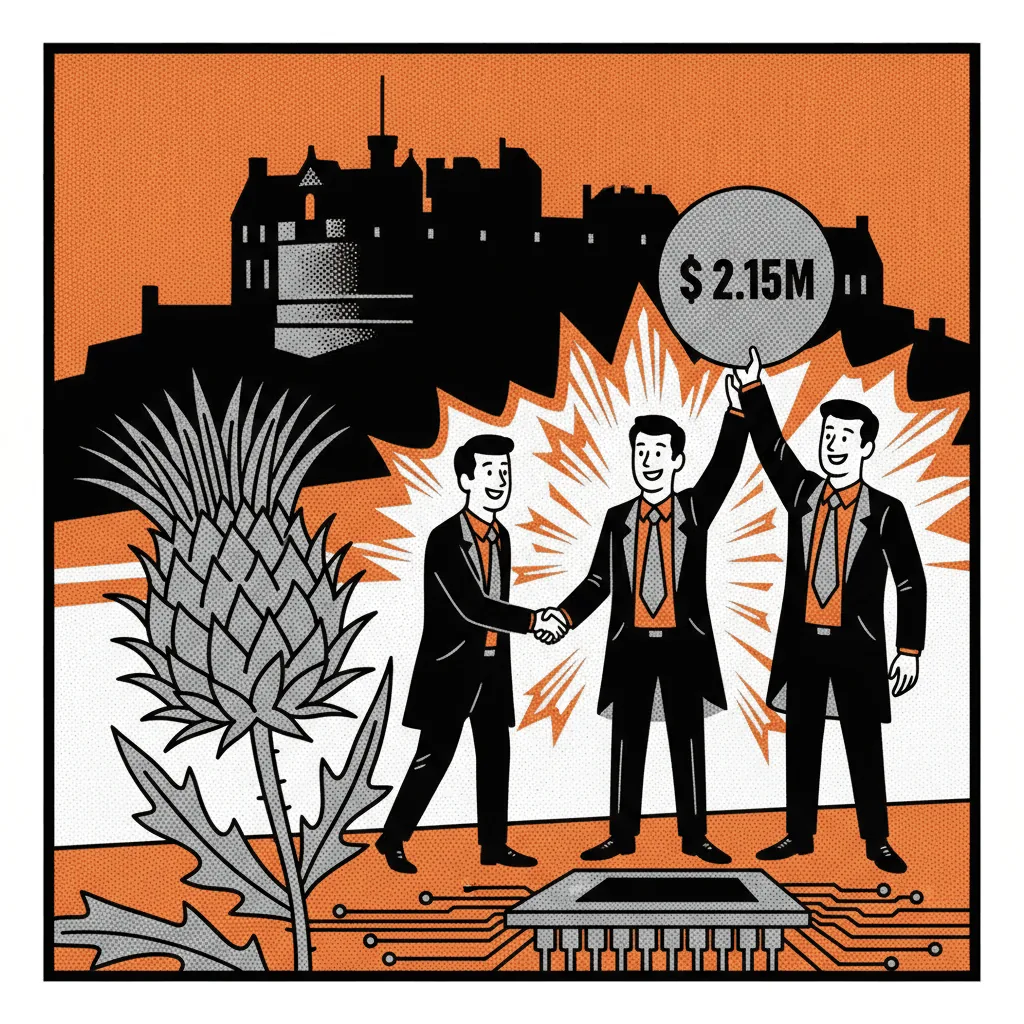
Singular Photonics, headquartered in Edinburgh, has secured $2.15 million in seed funding, according to a report in digit.fyi. The company operates in photonics, the science of generating, detecting, and controlling light, a field with deep applications in communications, medical diagnostics, sensing, and quantum computing. It is precisely the kind of deep-tech bet that long-term investors make when they believe a city has the research infrastructure to back it up.
Edinburgh does. The University of Edinburgh and Heriot-Watt University between them run some of the strongest photonics and quantum research programmes in Europe. According to Scottish Enterprise, Edinburgh's tech ecosystem generated over £1 billion in venture investment in the five years to 2023, with deep-tech and life sciences increasingly driving that figure. Singular Photonics is not an anomaly, it is a data point in a pattern.
The raise also reflects a broader shift in early-stage investor appetite. While consumer apps and SaaS platforms dominated seed rounds a decade ago, capital is now flowing into hardware, photonics, quantum, and climate tech. Research from Beauhurst, which tracks UK private company investment, shows that Scottish deep-tech firms attracted record seed-stage interest in 2023, with university spinouts accounting for a growing share of that activity.
For Edinburgh specifically, this matters. Every funding round at this level validates the city as a credible destination for technical founders and the investors who back them. Business Gateway and Scottish Enterprise both run dedicated programmes to support spinouts through exactly this stage, connecting early-stage science companies with commercialisation expertise, match funding, and networks that would otherwise take years to build independently. The infrastructure is there. Singular Photonics used it.
The wider read for Edinburgh's SME and startup community is straightforward: deep-tech is no longer the exclusive territory of well-funded London or Silicon Valley labs. A city with world-class universities, a growing investor network, and active public-sector support bodies can produce globally competitive science companies. Scotland is producing them. This is one more proof point.