

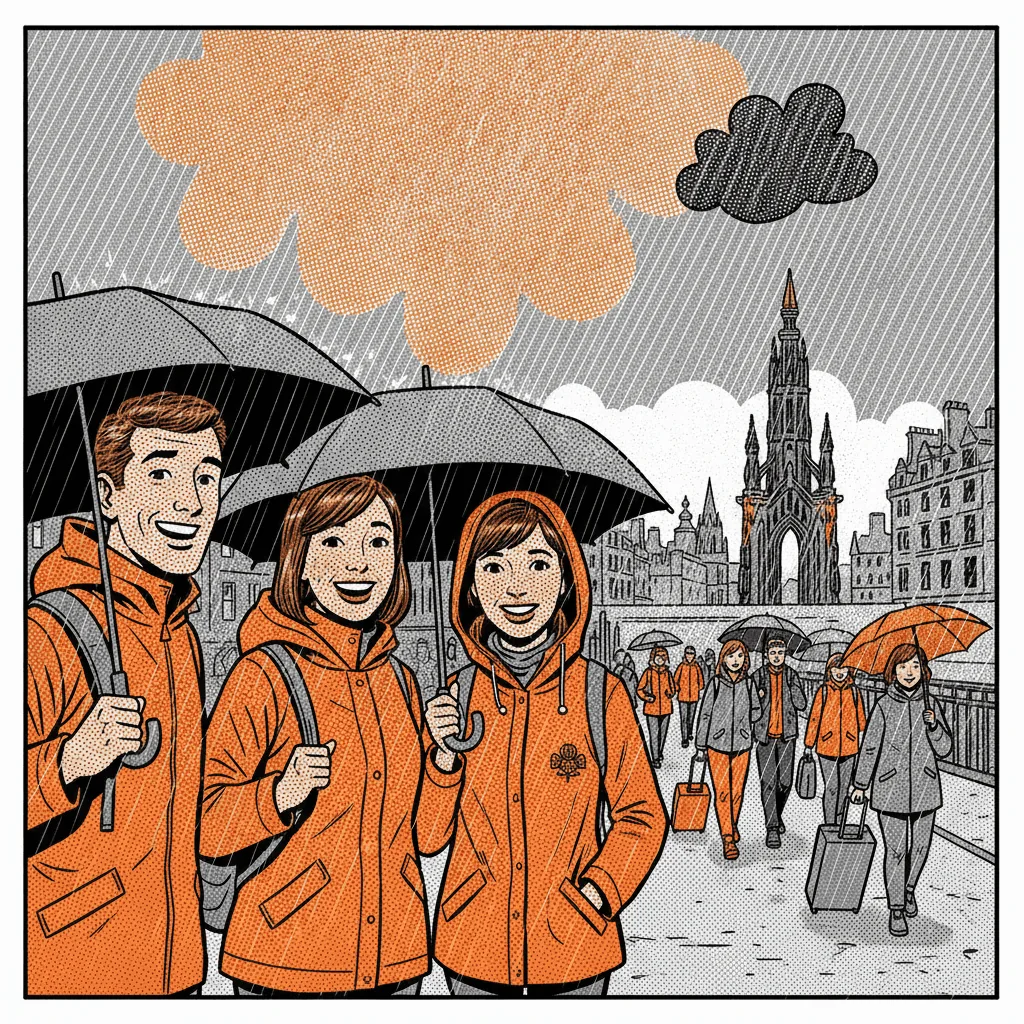
For decades, Scottish hoteliers quietly endured the same routine: apologise for the drizzle, blame the midges, offer a dram as compensation. That script is being rewritten. According to reporting by BBC Scotland, visitors from England and further south are now actively choosing Scotland precisely because of its cool, wet summers, not despite them. The phrase doing the rounds is 'coolcation,' and it is less a marketing gimmick than a genuine shift in where people want to spend July and August.
The numbers back it up. VisitScotland recorded a strong uplift in domestic visitors during recent summer heatwaves, with enquiries from southern England rising sharply in the weeks following Met Office amber heat warnings. Research from the University of Edinburgh's climate science team has consistently shown that Scotland's average summer temperature runs 4 to 6 degrees cooler than the south-east of England, a gap that felt irrelevant in 2005 and feels enormous in 2025. When London hits 36 degrees and the Borders sit at a breezy 19, the calculation changes fast.
VisitBritain's annual tourism forecast, published earlier this year, flagged climate comfort as an emerging driver of domestic travel decisions, sitting alongside cost and convenience for the first time. That is not a small shift. It means Scottish tourism operators are no longer competing purely on scenery and heritage, they are competing on liveability, on the basic human desire to sleep without a fan pointed at your face.
For Edinburgh specifically, the opportunity is layered. The city already draws enormous summer footfall around the Festival season, but the coolcation traveller is a different beast: less interested in the Royal Mile crowds, more interested in the Pentlands, the coast, a good pub with thick stone walls. Businesses in Portobello, East Lothian, the Borders, and Perthshire are well placed to capture visitors who want genuine escape rather than another city break. The Scottish Tourism Alliance has been pushing a 'shoulder season' agenda for years; the coolcation trend effectively extends the peak window without any extra infrastructure spend.
There is a responsible edge to this story worth naming. Climate change is making Scottish summers more pleasant for visitors partly because it is making southern summers less habitable. That is not a cause for celebration, it is a structural shift with uncomfortable causes. But for businesses that need to fill beds and tables between now and October, the practical reality is that the market is moving north. The question is whether Scottish hospitality operators are ready to meet it with the right messaging, the right packages, and the right digital presence to be found when someone in Bristol types 'somewhere cool to go this August.'