

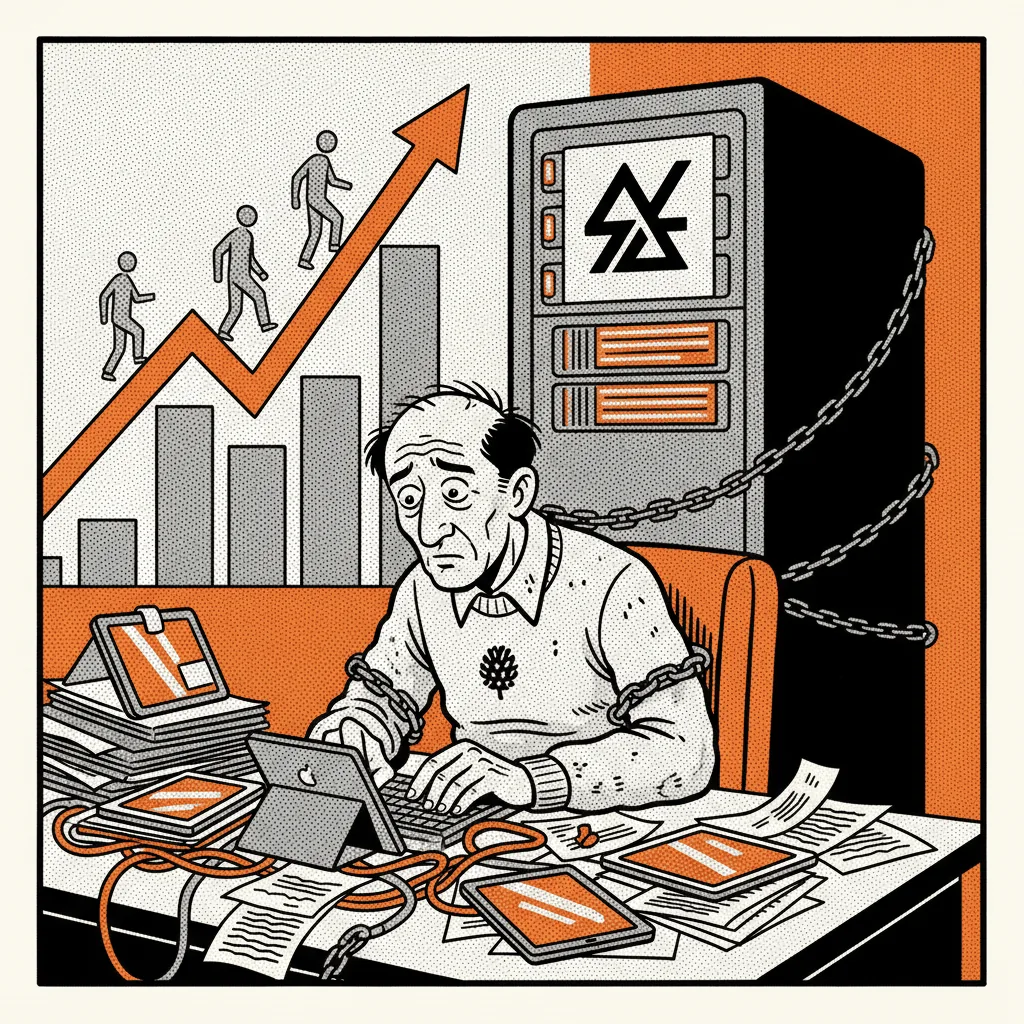
Nearly half of sole traders in the UK are considering quitting their businesses because of Making Tax Digital for Income Tax Self Assessment (MTD for ITSA), according to research published by Startups.co.uk. The policy, which will require self-employed individuals and landlords earning over £50,000 to file quarterly digital tax updates from April 2026, drops to £30,000 the following year. For many one-person operations, that is four times the admin they currently face, with software costs to match.
Scotland has approximately 340,000 self-employed workers, according to Scottish Government labour market statistics, many of them operating as sole traders in construction, creative industries, healthcare, and the rural economy. These are not people with accounts departments. They are people who already work evenings and weekends to keep their books straight. The prospect of quarterly digital submissions to HMRC, on top of an annual return, is not a minor inconvenience, it is a structural change to how they run their lives.
The Federation of Small Businesses has been vocal in its opposition to the pace and scope of the rollout, arguing that the government has consistently underestimated the compliance burden on micro-businesses. FSB Scotland has previously called for a more graduated introduction and stronger free software provision from HMRC. At present, HMRC's own free tools for MTD are limited, and the market is dominated by paid platforms such as QuickBooks, Xero, and FreeAgent, which carry monthly subscription costs that eat directly into the margins of low-turnover sole traders.
This is where AI tools are beginning to matter. Platforms including FreeAgent (which is free to Royal Bank of Scotland and NatWest business account holders), as well as newer AI-native bookkeeping tools, can now automate much of the quarterly categorisation and reconciliation work that MTD demands. A sole trader who previously spent a weekend each January on their tax return may find that AI-assisted bookkeeping reduces that to an ongoing ten minutes a week. The University of Edinburgh's research into digital adoption among Scottish SMEs has consistently found that once small businesses cross the threshold into digital financial tools, their compliance confidence rises significantly.
The harder question is political. MTD for ITSA was originally due to launch in 2018. It has been delayed five times. Each delay has added uncertainty without removing the eventual compliance burden. Business Gateway Scotland and HMRC's own MTD readiness programme have published support materials, but awareness among sole traders remains patchy. If Westminster presses ahead on the current timetable without meaningful free software provision, the 45% considering quitting may find that number climbing. Scotland cannot afford to lose nearly half its sole trader base to a policy design problem that better tooling, or a more sensible implementation window, could solve.