

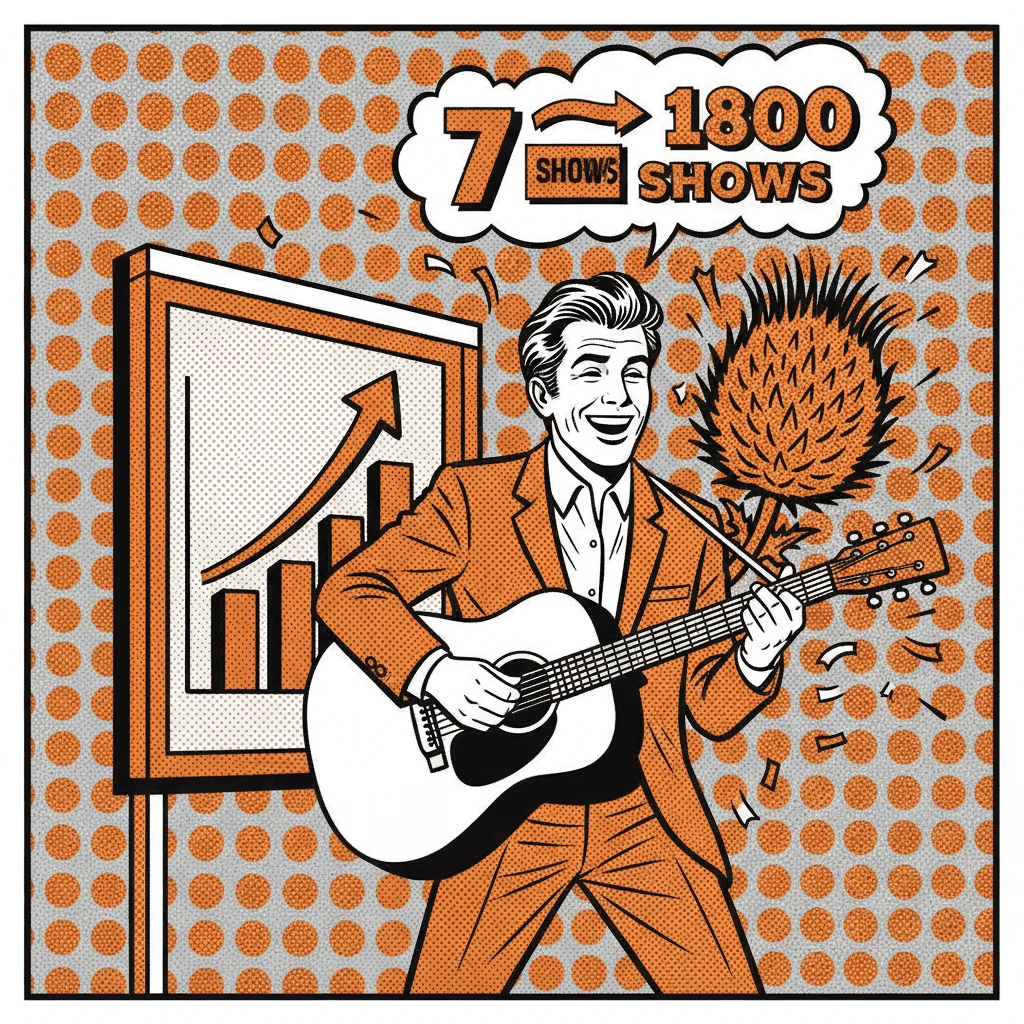
In 2016, Dan Clews did what thousands of performers do every August: he showed up to the Edinburgh Festival Fringe, largely on hope. Seven shows booked. Days spent pressing flyers into the hands of strangers on the Mile. Nights on stage performing his James Taylor tribute to whoever turned up. It is a story so familiar it has almost become a Fringe cliché, except for one detail: Clews kept going, kept building, and turned those seven shows into a global music production company.
Night Owl Shows now operates across multiple countries, books tribute and original music acts, and is set to log its 1,800th Fringe performance this August. That is not a vanity number. It represents a decade of logistics, relationship-building, audience development, and the kind of stubborn commercial discipline that the Fringe does not hand to anyone for free. The festival is one of the most competitive live entertainment markets on earth, attracting over 3,000 shows annually across some 300 venues, according to the Edinburgh Festival Fringe Society's own figures.
What Clews built is, at its core, an SME success story with a cultural wrapper. He identified an underserved niche, quality live music that audiences actually recognise and want to hear, packaged it professionally, and scaled it. The Fringe provided the testing ground; Edinburgh provided the audience; the rest came from showing up year after year and getting better at the business end of the thing.
The trajectory mirrors what researchers at the University of Edinburgh's Business School have described as the "creative economy flywheel": performers who treat their art as a product, invest in brand, and build repeat audiences tend to convert festival presence into sustainable enterprise at a far higher rate than those who treat each appearance as a standalone event. Night Owl is a clean example of that model working in practice, not theory.
Scotland's creative industries contributed over £4.7 billion to the economy in the most recent Scottish Government figures, and the Fringe sits at the beating heart of that ecosystem. It is not just a cultural event; it is a commercial launchpad. Night Owl Shows is proof that the launchpad works, if you treat it like a business from day one and have the nerve to come back every single year until 1,800 starts to feel inevitable.