

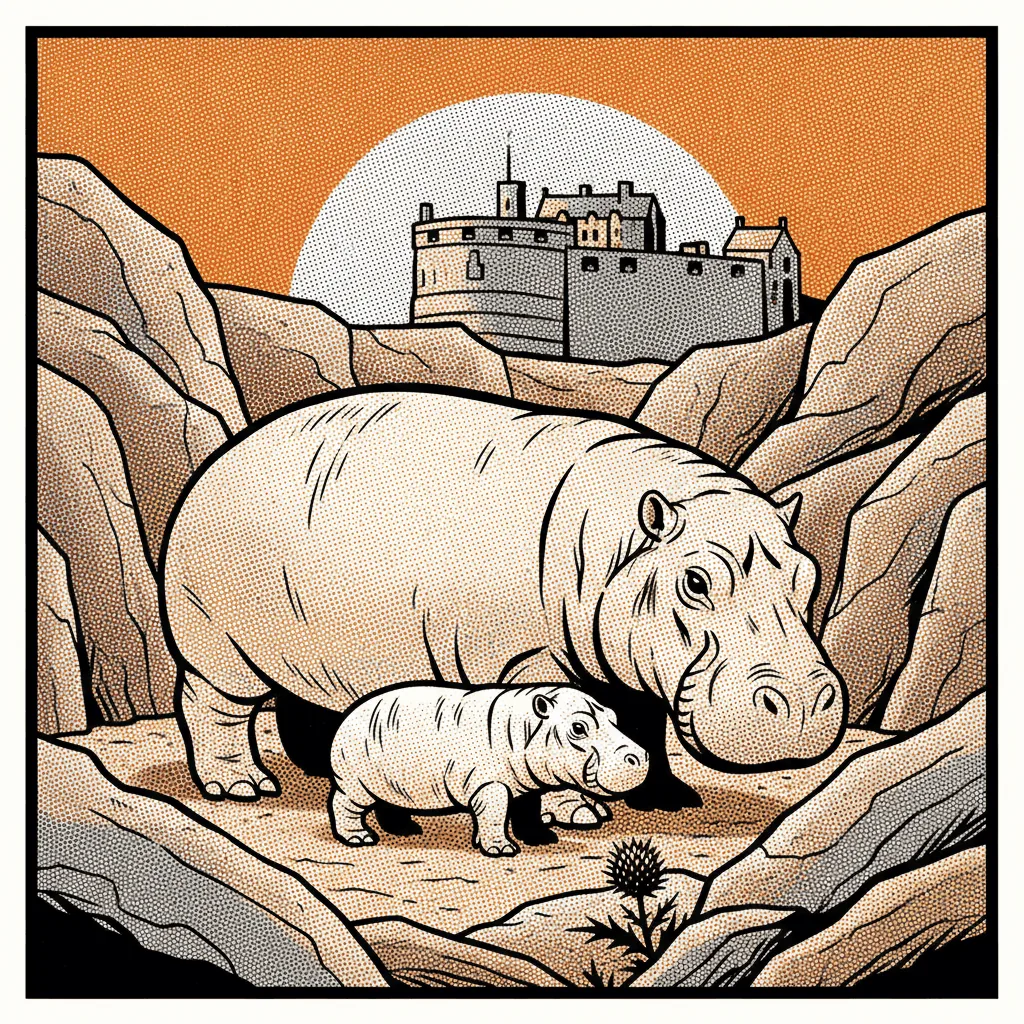
Keepers at Edinburgh Zoo had planned for a few more weeks of anticipation. What they got instead was a Friday morning surprise: a pygmy hippo calf, already born, already beside its mother Gloria, having clearly not read the schedule. The Royal Zoological Society of Scotland announced the pregnancy and the birth on the same day, which is not how these things usually go.
Pygmy hippos are among the rarer sights in global conservation. The International Union for Conservation of Nature lists the species as Endangered, with fewer than 2,500 estimated to remain in the wild, concentrated in West Africa's forests and wetlands. Every birth in a managed care setting matters. Edinburgh Zoo is part of the European Endangered Species Programme, a coordinated breeding network that exists precisely to prevent that number from falling further.
Gloria herself is well established at the zoo. Pygmy hippos are notably more solitary and secretive than their common hippo cousins, which goes some way to explaining how a pregnancy can remain under wraps, even from the people watching daily. The calf is currently off-show while mother and newborn bond and keepers monitor the early days closely. The Royal Zoological Society of Scotland has not yet confirmed the calf's sex or name.
The zoo sits in Corstorphine, a ten-minute drive from the city centre, and draws around 600,000 visitors a year according to RZSS figures, making it one of Scotland's most visited paid attractions. It is also one of the country's significant wildlife conservation operations, funding field projects across Africa and Asia. A pygmy hippo birth does double duty: it is genuinely good conservation news, and it is exactly the kind of moment that reminds people why places like this exist.
The calf will be visible to the public in due course. Until then, Edinburgh has a new resident it did not know about yesterday, which is a perfectly fine way to start a weekend.