

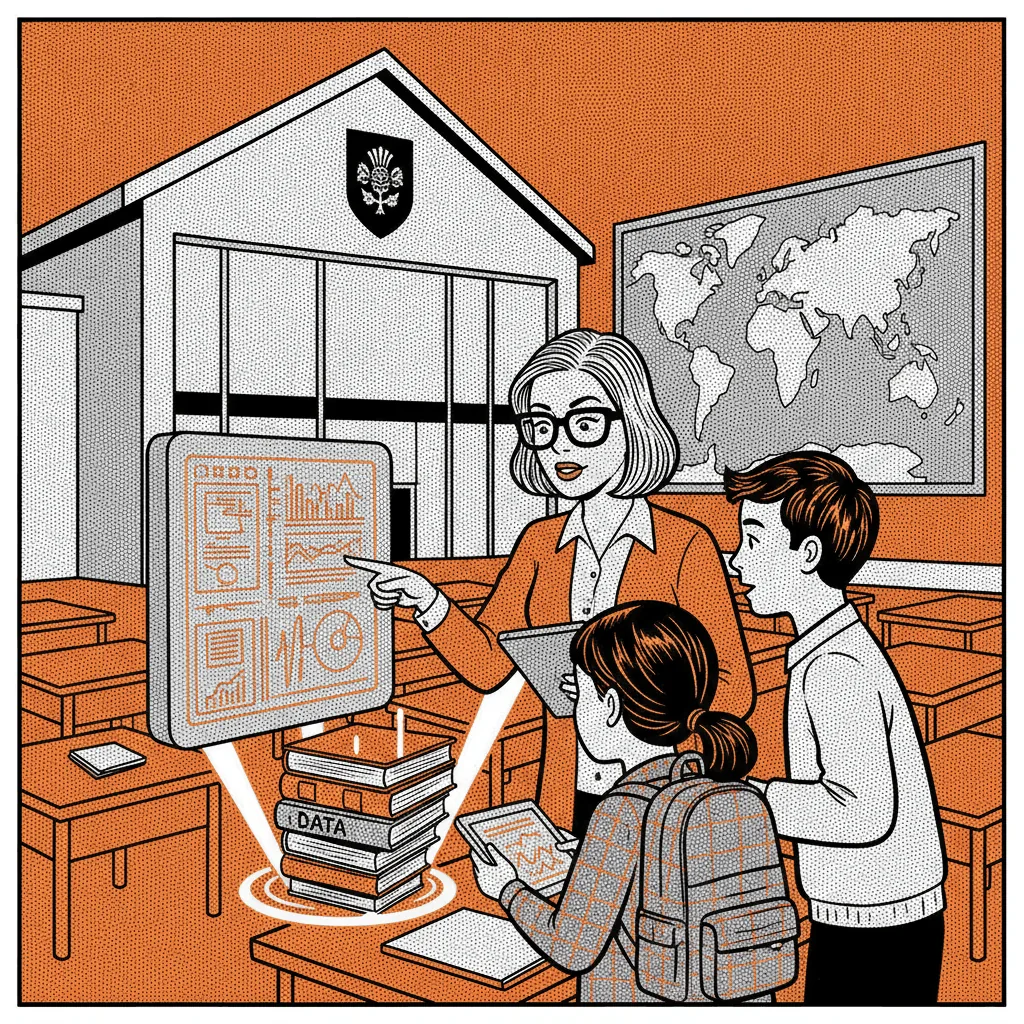
Every school in Scotland is already running a data operation. They just don't know it. Attendance is logged. Grades are recorded. Behavioural incidents are written up. Staffing gaps are tracked through the pain of finding cover teachers. The problem, as Matt Jubelirer, general manager of education at Instructure, explains in a detailed piece for EdTech Magazine, isn't that schools lack data. It's that nobody has had the tools to join the dots in real time. AI is now that tool, and the early results from districts using it are hard to argue with.
The practical application is straightforward. When AI analyses attendance patterns alongside grade trajectories and flags a student who is quietly sliding before a teacher would notice, that is not surveillance. That is early intervention. Research from the Education Endowment Foundation consistently shows that early identification of disengagement is one of the highest-return actions a school can take, with the attainment gap narrowing most when support arrives before a student mentally checks out. The data was always there. The pattern-recognition is what was missing.
Scotland is well-placed to move on this. The Scottish Government's National Improvement Framework already mandates rigorous data collection across all local authorities, from literacy benchmarks to wellbeing indicators. According to Education Scotland, schools operating within the Curriculum for Excellence framework generate substantial longitudinal data on learner progress. The infrastructure exists. What has been lacking is the analytical layer that turns records into decisions. AI provides exactly that layer, at a cost that is now accessible to individual schools rather than only well-resourced academy chains south of the border.
The staffing angle is worth pausing on. Jubelirer highlights substitute teacher data as one example of an underused operational signal. When a school analyses which departments, which days, and which class sizes generate the most cover requirements, it can restructure timetables, target CPD, or address workload imbalances before they become retention problems. The General Teaching Council for Scotland has documented persistent recruitment and retention pressures in secondary STEM subjects and remote local authorities. AI-driven operational analysis gives headteachers a factual basis for workforce planning conversations they previously had to make on gut instinct alone.
The broader point here extends well beyond education. Any organisation collecting data in siloed systems and relying on manual reports to understand what is happening is working harder than it needs to. Schools are simply a vivid illustration because the stakes are obvious and the data is rich. A GP surgery tracking appointment no-shows, referral wait times, and repeat prescription patterns is sitting on the same kind of latent intelligence. So is any Edinburgh SME tracking customer orders, staff hours, and delivery timelines in separate spreadsheets. The AI tools that are unlocking school data are the same tools available to anyone willing to spend a Tuesday afternoon getting started.