

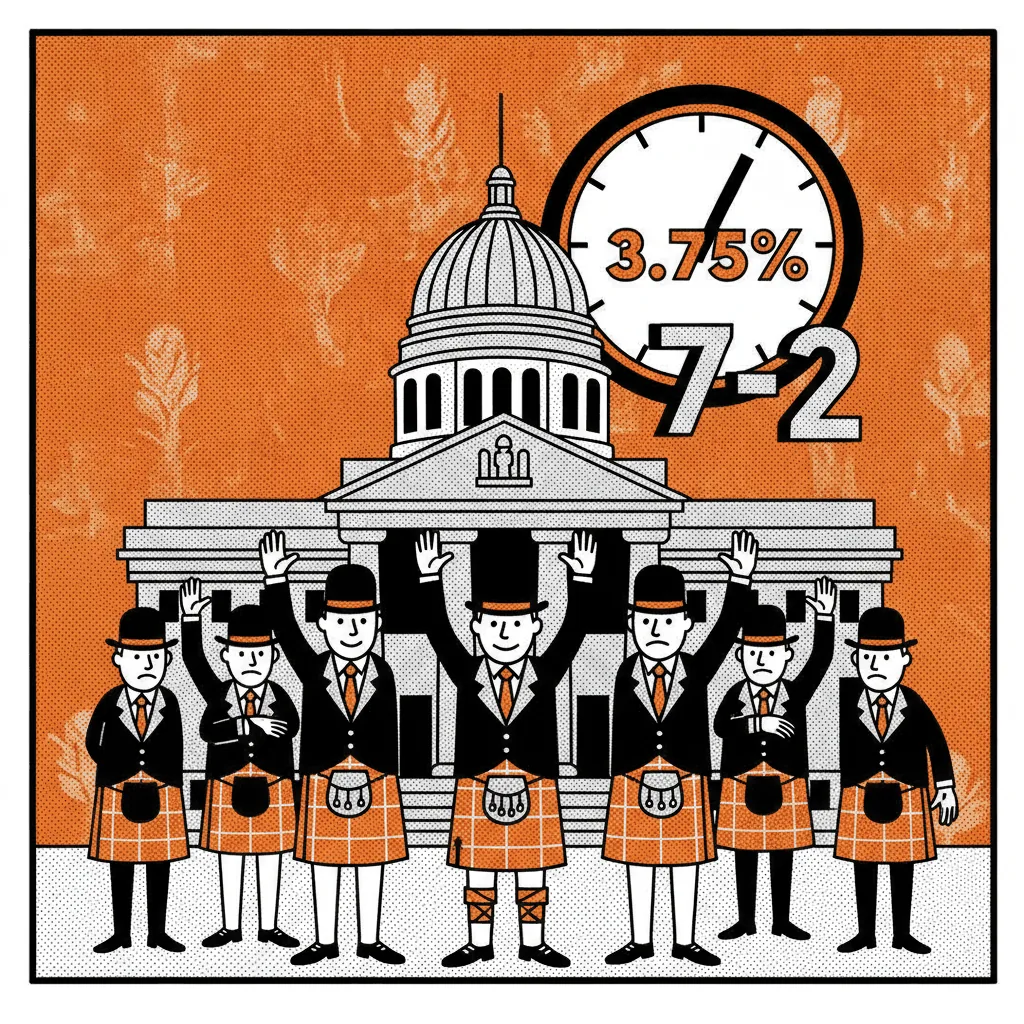
The Bank of England's Monetary Policy Committee is widely forecast to hold the base rate at 3.75%, with analysts predicting the same seven-to-two split that has characterised recent votes. That means borrowing costs stay where they are, at least for now, and Scottish SMEs who have been waiting for meaningful relief on interest payments will need to keep waiting a little longer.
Context matters here. Rates peaked at 5.25% in August 2023 and have been cut in stages since. According to the Office for National Statistics, UK inflation fell to 2.6% in March 2025, closer to the Bank's 2% target but still not there. That gap is what's keeping the MPC cautious. Two of its nine members are pushing for a cut; the other seven are not yet convinced the job is done.
For businesses with variable-rate commercial loans or premises tied to tracker mortgages, the hold means monthly outgoings remain unchanged. That is not necessarily bad news. It is predictable news, and predictability is something small businesses can actually use. The Scottish Chambers of Commerce has consistently flagged that financing costs and cost uncertainty are among the top concerns for Scottish SMEs in 2025, and a stable rate at least removes one variable from the planning spreadsheet.
The picture is more complex for businesses considering new borrowing. UK Finance data shows that SME lending conditions remain tight, with lenders still pricing in risk at margins well above base rate. A hold at 3.75% does not automatically mean affordable credit is flowing. Scottish Business News and business support body ACAS have both noted that many smaller operators are still managing the hangover from the 5.25% peak, particularly those who fixed short-term debt at the top of the cycle and are now rolling it over.
Looking ahead, markets are currently pricing in two or three further cuts before the end of 2025, according to analysis from Pantheon Macroeconomics. If that trajectory holds, Scottish SMEs could be looking at a base rate closer to 3% by winter. That would make a material difference to refinancing decisions, equipment purchases, and premises costs. The operative word, of course, is if. Global trade uncertainty and a domestic wage growth figure that is still running hot means the Bank is not in a hurry to move fast in either direction.
For Edinburgh businesses specifically, the commercial property market is worth watching. Knight Frank's Edinburgh office reported that commercial rental values in the city held firm through late 2024, partly because development slowed during the high-rate period. If cuts do arrive in the second half of 2025, there may be a short window before capital flows back into commercial real estate and lease costs adjust upward. Knowing that window is coming is half the battle.