

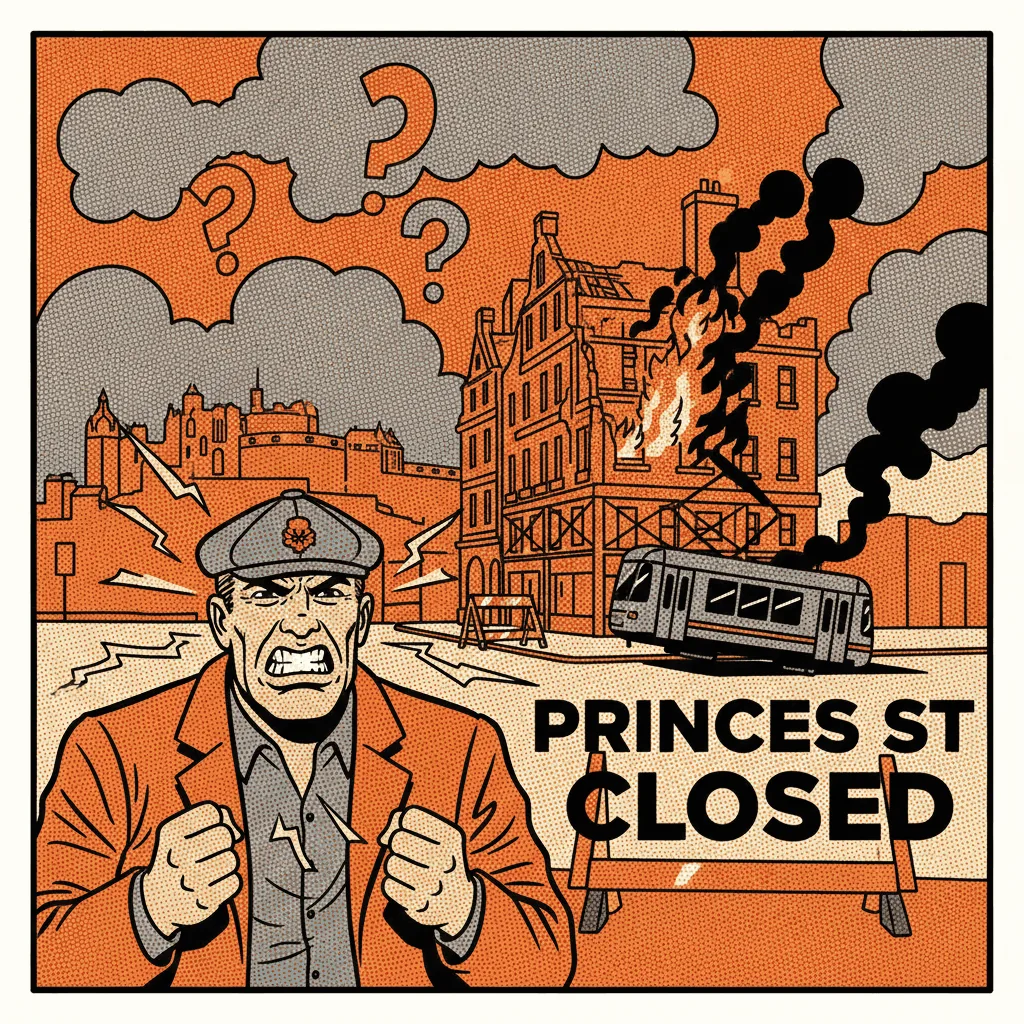
Edinburgh City Council confirmed this week that the cordon around the Princes Street fire site will remain in place for a further three weeks, making it structurally impossible for trams to pass through the affected section. The fire broke out in the early hours of 9 July and caused sufficient damage to a building on the street that engineers cannot yet guarantee safe passage beneath it. That determination is understandable. The timeline, however, is not going down well with the businesses who depend on August foot traffic to carry them through leaner months.
The commercial stakes are significant. Edinburgh's August festivals collectively draw over four million visitors, generating an estimated £280 million for the local economy, according to Edinburgh Festival City figures. Princes Street is not simply a thoroughfare; it is the spine of the city centre retail and hospitality offer. Closing it during peak season is the rough equivalent of closing the M8 the week before Christmas. Every day of cordon is a day of lost footfall that no business can recover.
The tram disruption compounds the damage. Edinburgh Trams carries around 22,000 passengers daily on the Edinburgh Airport to Newhaven route, and the Princes Street section is central to that network. Festival visitors arriving at Edinburgh Airport and heading for city centre accommodation, venues, or restaurants are now navigating a broken link. Diversions add time, confusion, and friction to a journey that should be frictionless. For the visitor economy, first impressions matter. A disrupted tram to a closed street is not the welcome Edinburgh wants to be known for.
What is frustrating traders and observers in equal measure is not the fact of the closure itself, which is a safety matter, but the apparent absence of a clear, publicly communicated plan for reopening. The Edinburgh Reporter notes that it remains difficult to understand why progress is taking this long. That opacity is its own problem. When a business owner cannot get a firm date, they cannot plan stock, staffing, or marketing. Uncertainty is expensive. The council and its engineers need to be talking to traders every day, not issuing broad timelines and hoping for the best.
There is a practical parallel worth drawing here. The 2002 fire at Glasgow's Arnotts building led to a prolonged cordon that devastated nearby retailers for months, several of whom did not survive it. The lesson from that episode, documented by the Scottish Retail Consortium at the time, was that rapid, coordinated business support from the council and Business Gateway made the difference between traders weathering the disruption and closing permanently. Edinburgh City Council and Business Gateway Edinburgh have tools available, including emergency business support referrals and access to hardship funds, and now is exactly the moment to deploy them proactively, before businesses start making irreversible decisions about staffing and stock.
The Scottish Government's commitment to supporting Edinburgh as the country's economic and cultural flagship is not in question. But commitment needs to translate into action on the ground this week, not after the festival season has passed. A coordinated response, a daily communications channel with affected traders, and clear signage directing visitors to alternative routes and open businesses would cost very little and could save a great deal. Edinburgh's independent operators built their businesses on the assumption that August is the month that makes the year. Right now, that assumption is under serious pressure.