

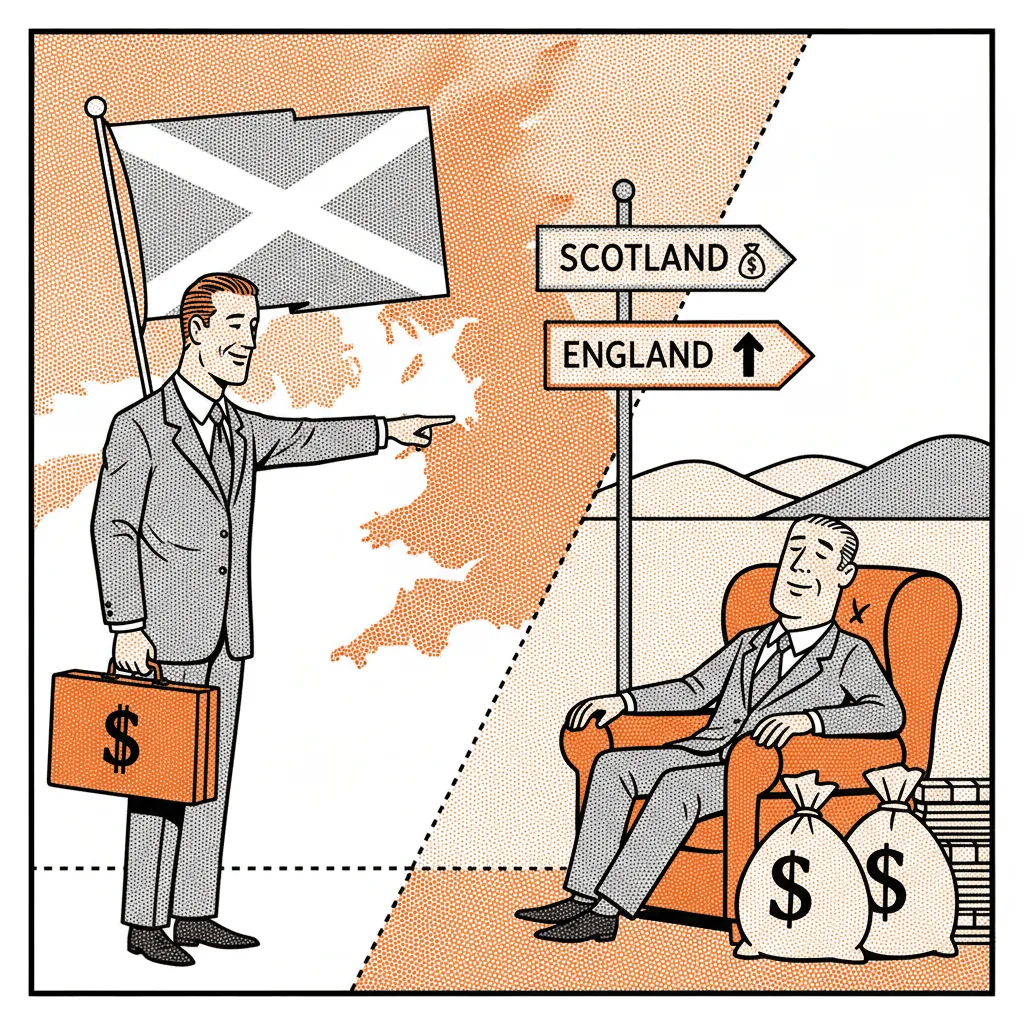
The analysis from Rathbones Group is blunt. A high earner on a salary above £125,140 in Scotland faces a top income tax rate of 48 pence in the pound, compared with 45 pence in England. Stack that difference across five years and the cumulative saving from simply moving south of the border clears £46,000. Rathbones, which manages more assets in Scotland than any other wealth firm in the UK, is not making a political argument. It is making an arithmetic one.
Scotland has diverged significantly from the rest of the UK on income tax since Holyrood gained full rate-setting powers. The Scottish Government introduced a five-band income tax structure, and while the policy intention was to fund public services through a more progressive system, the practical effect at the top end is a meaningful cost differential. According to the Scottish Fiscal Commission's most recent projections, Scottish income tax revenues are expected to run higher per head than the UK average, but the gap in senior talent is harder to price than the gap in receipts.
What makes the Rathbones finding particularly sharp for SME employers is the commuter angle. The analysis specifically flags that some high earners are already considering living just across the English border and commuting to well-paid Scottish roles, which is increasingly viable as hybrid working normalises long-distance arrangements. An Edinburgh-based firm hiring a finance director, a senior clinician moving into a private practice role, or a tech scale-up recruiting an experienced CTO is now effectively competing against the English tax system as well as rival employers. That is a structural disadvantage that no recruitment budget easily absorbs.
The Institute for Fiscal Studies has consistently noted that tax divergence between Scotland and England creates behavioural responses at the margin, particularly among mobile, higher-earning workers who have both the means and the flexibility to act on financial incentives. The concern is not mass exodus; it is the quieter effect on the marginal decision. The candidate who declines to relocate to Scotland. The partner at a professional services firm who factors residency into their next move. The experienced hire who takes the Manchester role instead. These decisions do not make headlines, but they compound.
Scottish Enterprise and the Scottish Government's wider economic strategy rightly emphasise inward investment, skills development, and startup growth, and there is genuine momentum in all three. But talent retention at the senior level is the connective tissue that makes those strategies work. A thriving startup ecosystem needs experienced operators who have done it before. Edinburgh's financial services sector needs senior professionals who choose to be here. If the tax differential continues to widen, or even holds steady at current levels, Scottish SME employers need to be pricing that reality into their hiring strategies today, not after they lose the next shortlisted candidate to a Leeds-based competitor.