

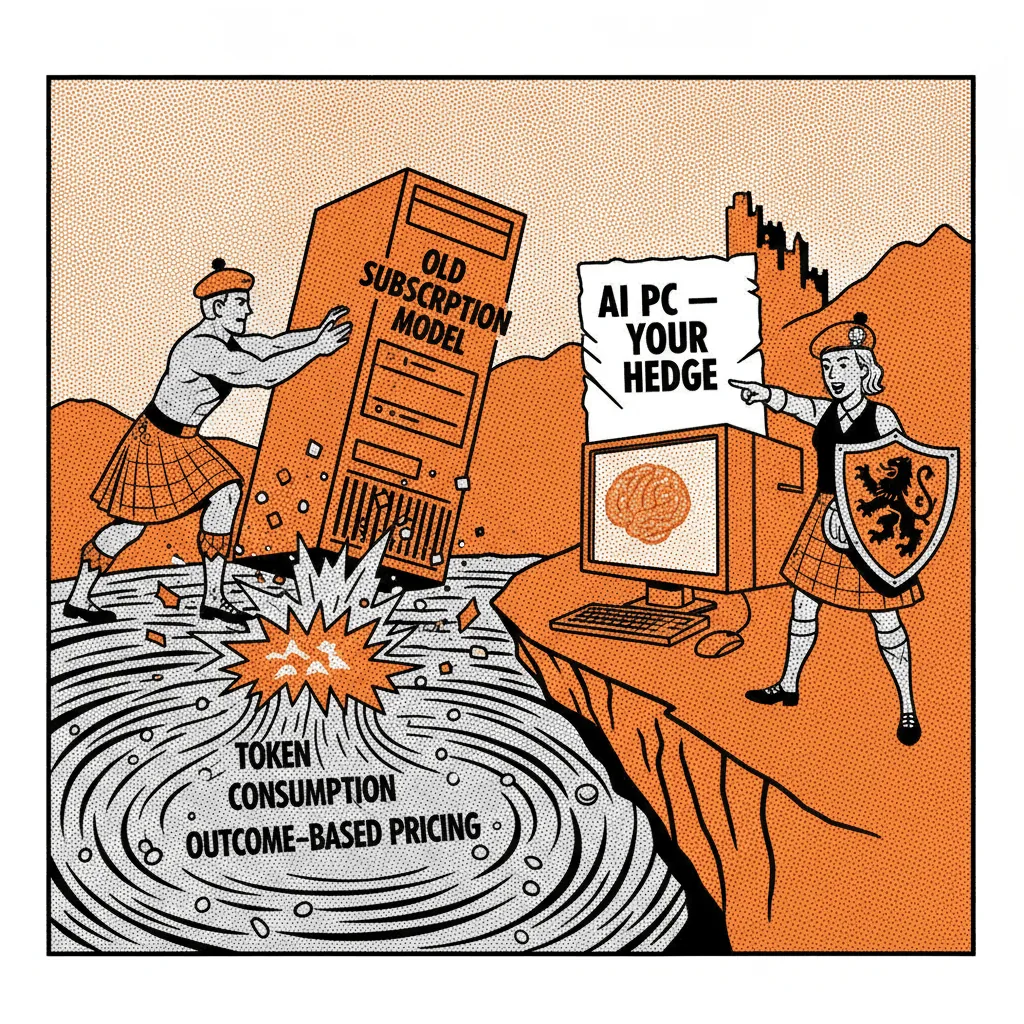
If your business pays a fixed monthly fee for AI tools, enjoy it while it lasts. According to reporting by The Next Web, major software vendors including Microsoft, Salesforce, and a growing list of SaaS providers are moving away from per-seat subscriptions toward token consumption and outcome-based pricing for their AI features. The logic is straightforward: early adopters were brought in cheap, dependency was built, and now it's time to generate actual revenue from that dependency.
For many Scottish SMEs, this shift will land without warning. A flat subscription feels like a known cost. Consumption pricing is a variable one, and variable costs require monitoring, budgeting, and a different kind of discipline. Microsoft has already signalled this direction with its Copilot offering, tiering usage and capping certain AI calls per day on lower plans. Salesforce's Agentforce platform launched in late 2024 on a per-conversation billing model from the outset. The industry is moving in one direction and it is not cheaper.
The scale of the exposure matters here. Research from Gartner projects that by 2027, more than 50 per cent of enterprise software licences will include some form of consumption-based AI pricing component. For a small business running three or four SaaS tools, each with an AI tier bolted on, those incremental costs compound fast. The Scottish Government's Digital Economy Framework, published as part of its wider digital strategy, explicitly identifies cloud cost management as a priority risk for Scottish SMEs adopting AI infrastructure. It is not a theoretical concern.
The hedge that the technology press is quietly discussing is local AI, specifically AI PCs. Machines built around chips like Qualcomm's Snapdragon X Elite or AMD's Ryzen AI series can run capable language models entirely on-device, with no API calls, no token counts, and no monthly bill from a cloud vendor. Tools like Ollama, LM Studio, and Microsoft's own on-device Phi models let a sole trader or small team run a private AI assistant, a document summariser, or a drafting tool without touching the internet. What runs locally costs nothing to run repeatedly.
This is not a call to ditch cloud AI. The cloud versions remain more powerful for complex tasks, and for a small Edinburgh business occasionally using AI to draft a tender or summarise a report, consumption costs will stay modest. The point is awareness. Know which tools you are using, find out whether they have moved or are moving to usage-based billing, and understand what your actual consumption looks like. A single team member using an AI writing tool intensively every day sits in a completely different cost bracket from one who runs five queries a week. According to research from the University of Strathclyde's Institute for Future Cities, SMEs that actively track their digital tool expenditure monthly are significantly better placed to absorb pricing model changes than those who treat SaaS costs as a fixed overhead and review annually. Price shifts are coming. The businesses that will feel them hardest are the ones not watching.