

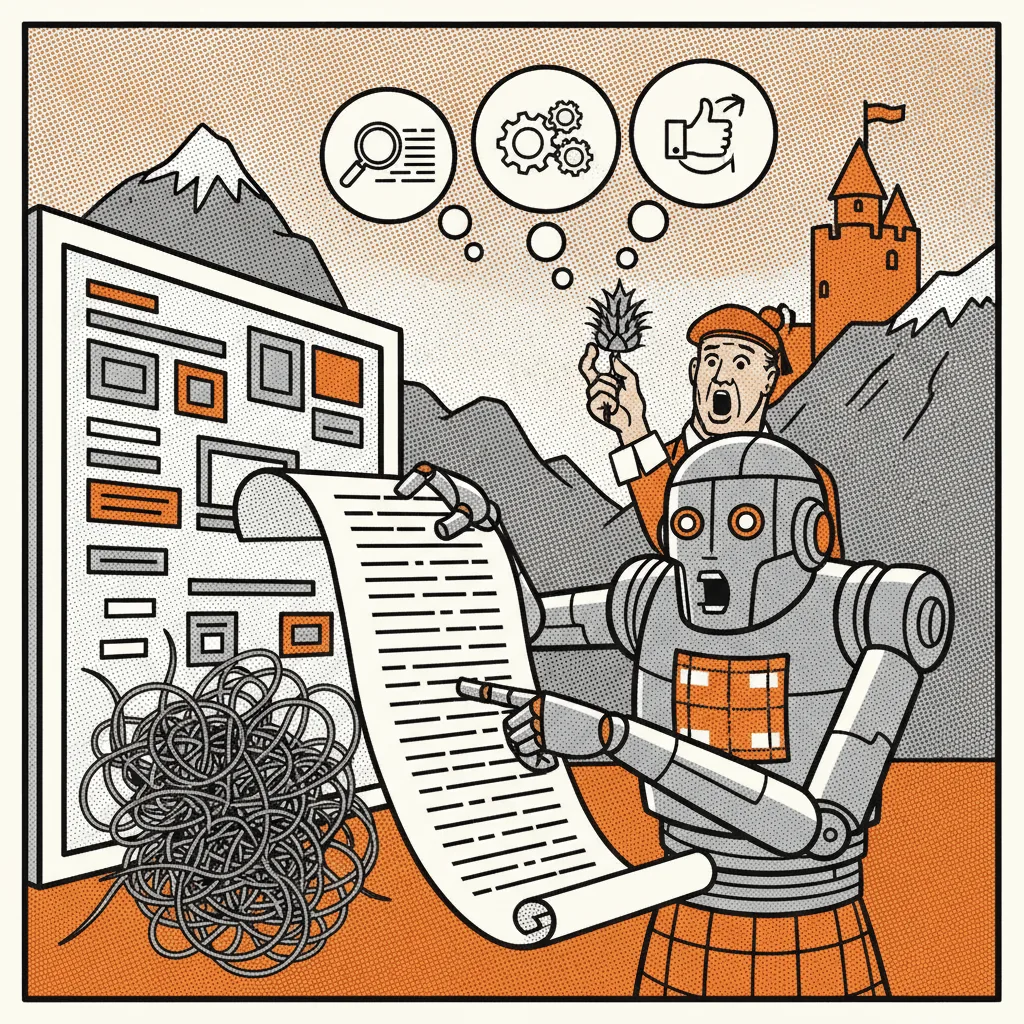
Shopify is not a small business. It powers over two million merchants globally and processes billions in transactions. But when the company started running AI coding agents across its development infrastructure, it ran straight into a problem that will feel familiar to anyone who has inherited a WordPress site from three developers ago, or bolted a CRM onto a bespoke system that nobody has fully documented: the AI couldn't make sense of the code, because the code was barely making sense to humans either.
The finding, reported by The Register, is striking in its simplicity. AI agents perform significantly better when working with clean, well-structured code, explicit contracts between components, and clear feedback loops. In other words, the things that make code readable for a human developer make it legible for an AI agent too. Shopify's response was to treat AI adoption not as a bolt-on but as a forcing function: a reason to finally do the maintenance work they already knew was needed. Technical debt, it turns out, is not just a problem for humans.
This matters beyond the world of big tech. According to research from Stack Overflow's 2024 Developer Survey, over 75% of professional developers now use or plan to use AI tools in their workflow. Tools like GitHub Copilot, Cursor, and Replit's AI assistant are being used by solo founders and two-person dev teams in Edinburgh and Glasgow, not just engineering departments at Shopify. If your code is poorly documented, inconsistently structured, or full of undeclared dependencies, those tools will underperform. The AI is only as useful as the environment it works in.
The Scottish tech ecosystem has been growing fast. According to Scottish Enterprise, tech and digital businesses now account for a significant and growing share of Scotland's export economy, with companies across Edinburgh, Dundee, and the Central Belt scaling products that live entirely in code. Many of those businesses are small teams moving quickly, which is exactly where technical shortcuts tend to accumulate. The Shopify lesson isn't a criticism of that pace. It's a practical argument for building in a code review habit before the AI agents arrive, not after.
The practical implication is this: if you're planning to introduce AI coding tools into your business, whether you're a solo developer, a founder with a freelance dev, or a small in-house team, audit your codebase first. Not a full rewrite. Just honest documentation, clear naming conventions, and explicit records of what each component is supposed to do. The University of Edinburgh's School of Informatics has published guidance on software maintainability practices that's freely available and worth an afternoon of anyone's time. The AI tools are ready. The question is whether your code is ready for them.