

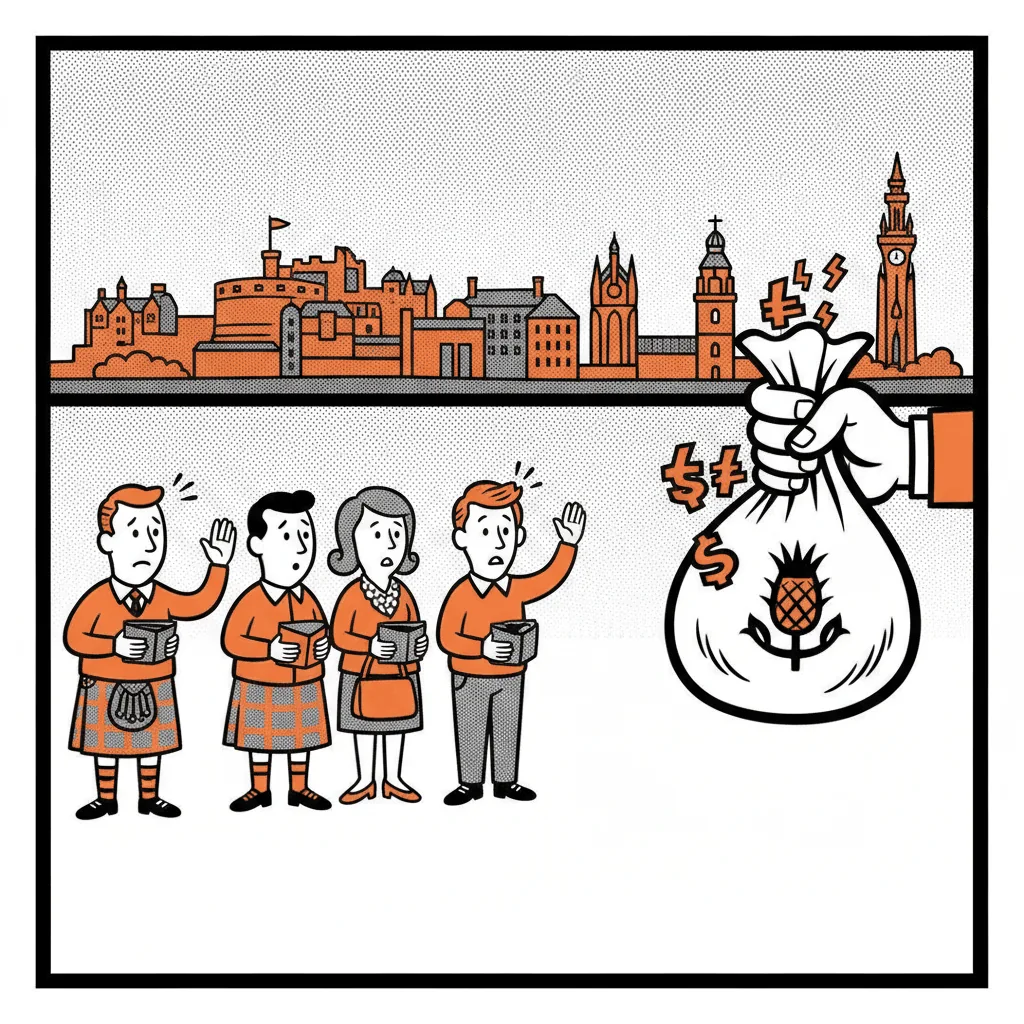
From this Friday, every overnight visitor to Edinburgh will pay a £2 per room, per night levy on top of their accommodation bill. Edinburgh is the first city in the UK to implement such a charge, and the City of Edinburgh Council projects it will generate just under £50 million annually by 2028/29. That is not a rounding error. It is a new financial architecture for one of Europe's busiest tourist cities.
The levy applies to all paid overnight accommodation in Edinburgh, including hotels, guesthouses, B&Bs, hostels, and short-term lets. Accommodation providers are responsible for collecting the charge and passing it to the council. The funds are ringfenced for tourism-related expenditure, which in practice means infrastructure, events, and the broader visitor economy. According to the City of Edinburgh Council, a Visitor Levy Spending Panel will oversee how the money is allocated, with input from the tourism and hospitality sector itself.
Edinburgh's move follows a well-established model used across European cities. Amsterdam charges €3 per night plus a percentage of the room rate. Barcelona levies up to €6.75 in peak season. Paris has operated a taxe de séjour since 1910. The Scottish Government's Visitor Levy (Scotland) Act 2024 gave Scottish councils the power to introduce the charge, and Edinburgh was always the obvious first mover, given it receives somewhere in the region of 15 million visitors a year, according to figures from VisitScotland. The tourism sector contributes an estimated £1.9 billion to the Edinburgh economy annually.
The business community's response has been mixed, and that is the honest read. UK Hospitality Scotland has acknowledged the potential upside of reinvesting levy revenue into the visitor experience, but has also flagged concerns about administrative burden on smaller operators and the risk of Edinburgh pricing itself out of the short-break market at a time when household budgets remain squeezed. The Federation of Small Businesses has made similar points at UK level, noting that compliance costs fall disproportionately on independent operators who lack the back-office infrastructure of large hotel chains. Neither organisation opposes the principle; both want the mechanics to be workable for small businesses.
For Edinburgh SMEs, the immediate practical reality is this: if you collect overnight payments, you are now a tax collector. You must add the levy to bookings, account for it separately, and remit it to the council on the schedule they require. If you operate a business that is adjacent to tourism, say a restaurant, tour operator, or retail outlet dependent on visitor spend, the levy itself does not fall on you directly. But any softening of visitor volumes or length of stay caused by a higher total cost of visiting Edinburgh will land on your revenue. Watch your numbers through the summer season carefully. It is the first real-world test of how price-sensitive Edinburgh's visitor mix actually is.