

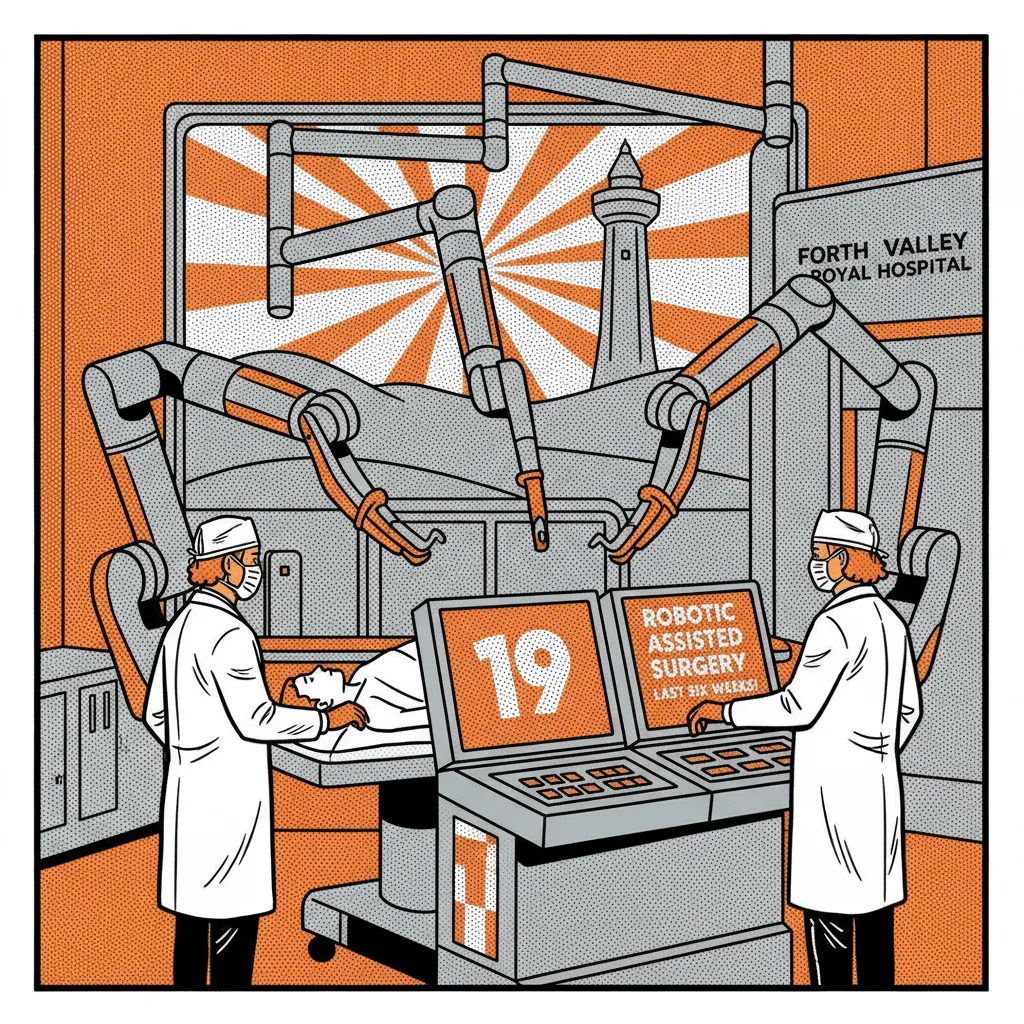
Nineteen patients have already been through robotic-assisted surgery at Forth Valley Royal Hospital since the programme launched, making it one of the faster early adoption stories in Scottish NHS history. The procedures use the da Vinci surgical system, the robotics platform that has become the benchmark for minimally invasive surgery globally, giving surgeons enhanced precision, a wider range of motion, and a magnified three-dimensional view of the operating field that no human eye alone can match.
The clinical gains are not marginal. According to NHS data published by the Royal College of Surgeons of England, robotic-assisted procedures typically result in shorter hospital stays, reduced blood loss, lower infection rates, and faster return to normal activity compared with open surgery. For a health board already managing waiting list pressure, those are not just patient outcomes, they are system outcomes. Fewer bed nights per patient means more patients through the door.
Scotland has been building its robotic surgery footprint steadily. NHS Greater Glasgow and Clyde and NHS Lothian have had programmes running for several years, and the Scottish Government's National Robotics Programme has been working to expand access beyond the central belt. Forth Valley joining that network is a meaningful step. According to the Scottish Government's Health and Social Care Delivery Plan, reducing variation in access to specialist treatment across health boards is a stated priority, and robotics capability is now part of that conversation.
What makes this story worth watching beyond the clinical detail is the model it represents. A relatively small health board, serving a population of around 310,000 people across Falkirk, Clackmannanshire, and Stirling, has integrated a genuinely sophisticated technology into live surgical practice in weeks, not years. That pace of adoption matters. It suggests that the infrastructure, training, and institutional will to deploy advanced tools in Scottish public services is there when the conditions are right.
The wider implication for Scotland's tech and innovation ecosystem is straightforward: this is what a healthcare system looks like when it treats technology as a clinical superpower rather than a compliance burden. For companies supplying digital health tools, for medtech startups based in Edinburgh or Glasgow, and for anyone watching how the NHS commissions and integrates new technology, Forth Valley's early numbers are worth noting. Nineteen surgeries in six weeks is not a pilot. That is a programme.