

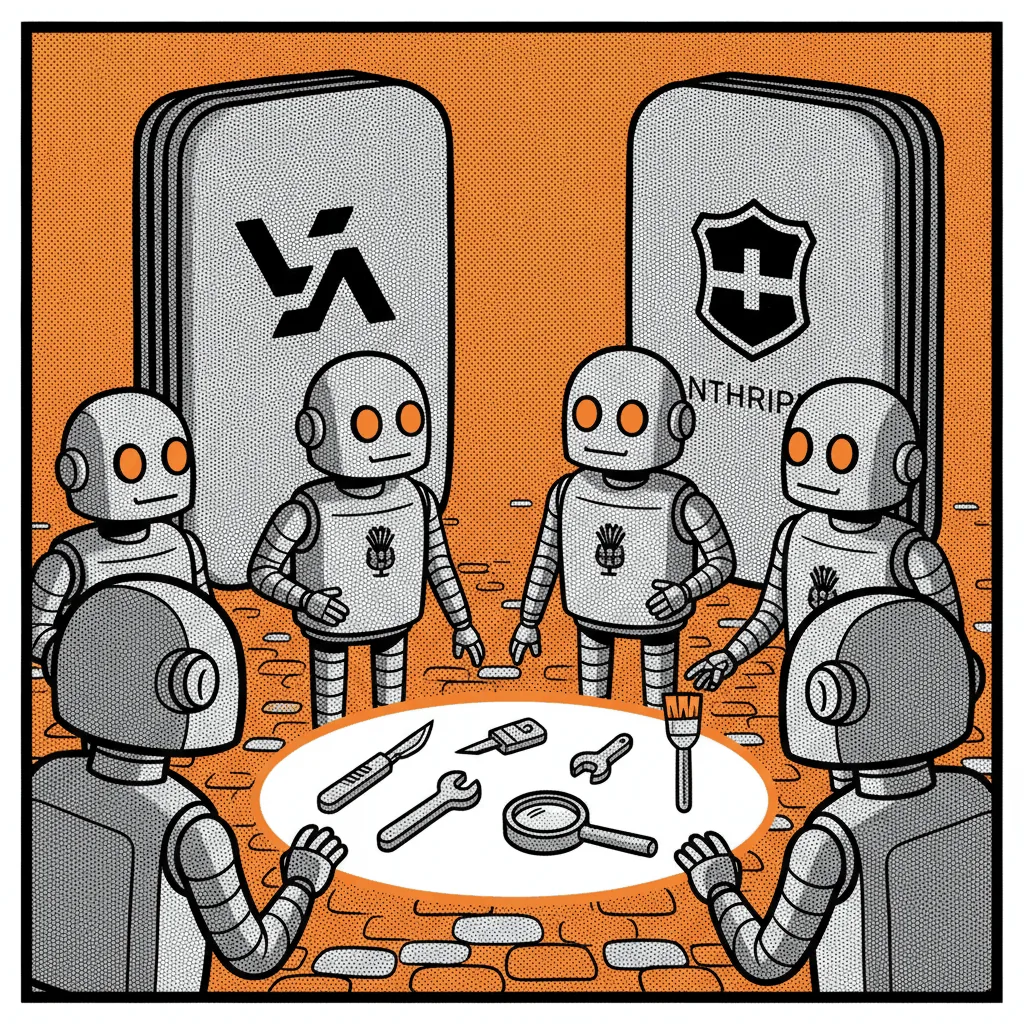
The AI industry spent three years telling you that bigger was better. Bigger models, broader capabilities, more parameters, more power. OpenAI and Anthropic built what The Register this week called AI Swiss Army Knives: general-purpose systems designed to do everything passably well. The market is now pushing back. Enterprise buyers and small business operators alike are turning toward leaner, purpose-built models that do one job exceptionally well, cost less to run, and integrate cleanly into existing workflows.
This matters for Scottish SMEs because the cost and complexity of general-purpose AI has always been the quiet barrier to entry. A tool that does everything is also, almost by definition, optimised for nothing. According to research from Stanford's Human-Centered AI Institute, task-specific models consistently outperform general-purpose models on narrow, defined tasks, and at a fraction of the compute cost. That gap in performance-per-pound is where small businesses win.
Think about what this looks like in practice for an Edinburgh independent professional or a small healthcare clinic. You don't need an AI that can write a novel, debug Python, and analyse geopolitical risk. You need one that drafts accurate patient correspondence. Or one that turns a brief into a social post. Or one that reads an invoice and routes it correctly. Built-for-purpose AI tools for exactly these functions already exist and are getting sharper. Platforms like Notion AI, Fireflies, and sector-specific tools from the likes of Phebi AI (a Scottish-founded voice analytics company) are proof that the niche is where the real utility lives.
The Business Technology section of the Federation of Small Businesses' 2025 report found that SMEs who adopted targeted automation tools, rather than broad AI subscriptions they used sporadically, reported higher satisfaction rates and faster time-to-value. The insight is straightforward: a plumber doesn't buy a full workshop when they need a wrench. The same logic applies to AI procurement. Identify the single task eating the most hours in your week, find the tool built specifically for that task, and deploy it. That's it. That's the whole strategy.
Scottish Enterprise's AI Adopt programme and the national Digital Boost initiative both offer funded consultancy to help SMEs identify exactly where automation creates the most value. These aren't theoretical exercises: they're structured conversations with specialists who can map your workflow and point you at the right tool. The shift in the AI market toward smaller, cheaper, more purposeful models means that by the time you've had that conversation, there will be something built precisely for your use case. The great equaliser keeps getting sharper.