

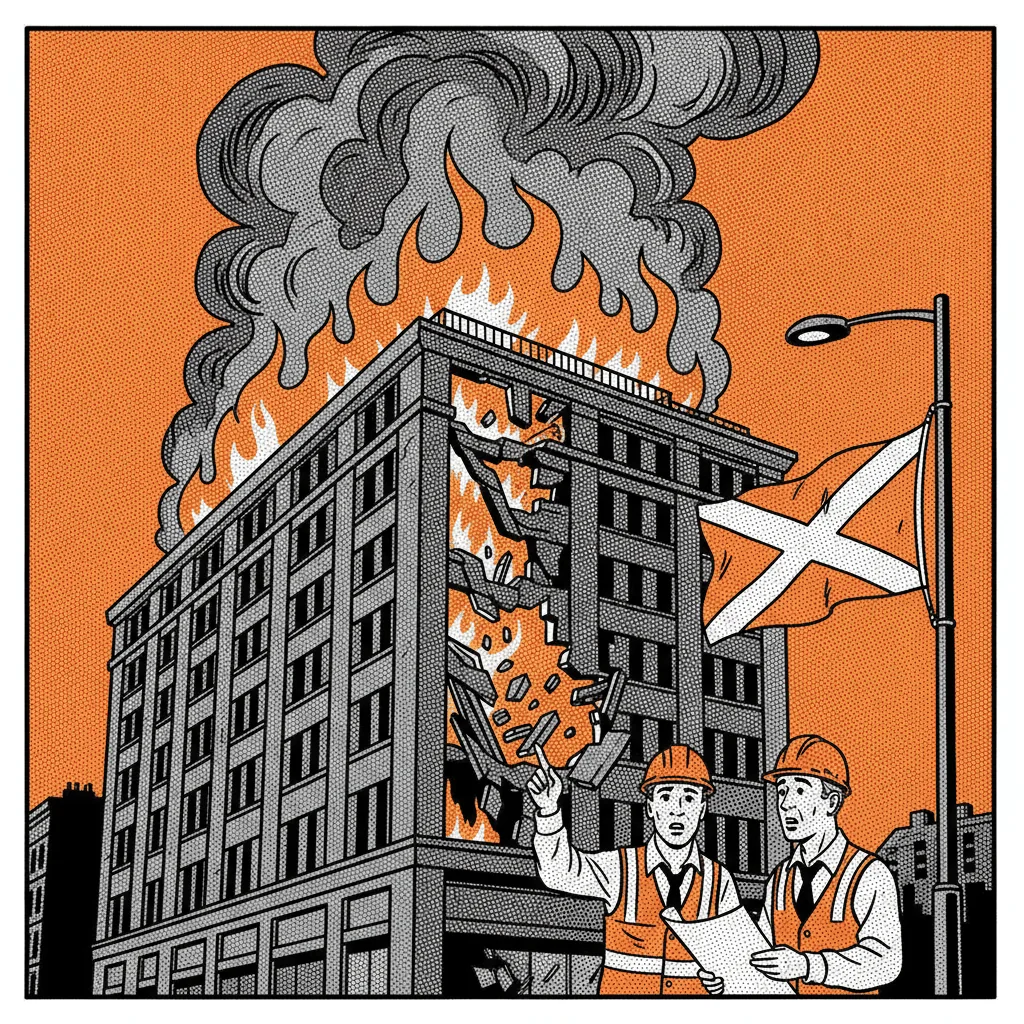
The damage to Edinburgh's most prominent retail block is worse than initially hoped. Structural engineers inspecting the fire-ravaged former Debenhams building on Princes Street have confirmed that the top floors are structurally unsound and must be demolished. The building, which has sat empty since Debenhams collapsed into administration in 2021, was already a symbol of the slow recovery of Scottish high streets. Now it is a construction cordon in the middle of the city's most important trading street.
Roddy Smith, chief executive of Essential Edinburgh, the business improvement district that represents city centre traders, was characteristically direct about the uncertainty ahead. "I don't think anyone can predict what's going to happen with the site," he said. That is not a reassuring sentence for the dozens of businesses operating within cordon distance of a major demolition project on Scotland's most visited retail stretch.
The immediate commercial impact is already being felt. Road closures and pedestrian diversions around the affected section of Princes Street are redirecting foot traffic away from businesses that depend on passing trade. Edinburgh's city centre welcomed more than 14 million visitors in 2023, according to figures from the Association of Town and City Management, and Princes Street accounts for a disproportionate share of that footfall. Any sustained disruption to that flow hits independent retailers, hospitality operators, and service businesses hardest, because they do not have the reserves or the loyalty programmes that national chains lean on during quiet patches.
The broader context matters here. The former Debenhams site is one of several large vacant units that have blighted Princes Street since the pandemic accelerated the collapse of anchor department stores. Scottish Retail Consortium data shows that Scottish footfall has been recovering more slowly than the UK average, with Edinburgh city centre still working through the structural shift in how people shop. A prolonged demolition and rebuild programme on a prime corner of Princes Street will not help that recovery. The Scottish Government's Town Centre Action Plan, which explicitly targets the regeneration of sites like this, will now face a harder test on one of its most visible stages.
For businesses operating nearby, the practical questions are immediate: how long will closures last, what alternative access routes exist, and is there any formal support or business rates relief available during the disruption period? The City of Edinburgh Council has not yet confirmed a timeline for demolition works, and until structural surveys are complete, it is unlikely to do so. Essential Edinburgh is the right first call for affected traders, they have a direct line to the council and a track record of coordinating support during previous city centre disruptions, including the tram works that cost Princes Street businesses an estimated £90 million over several years, according to research cited at the time by Edinburgh Chamber of Commerce.