

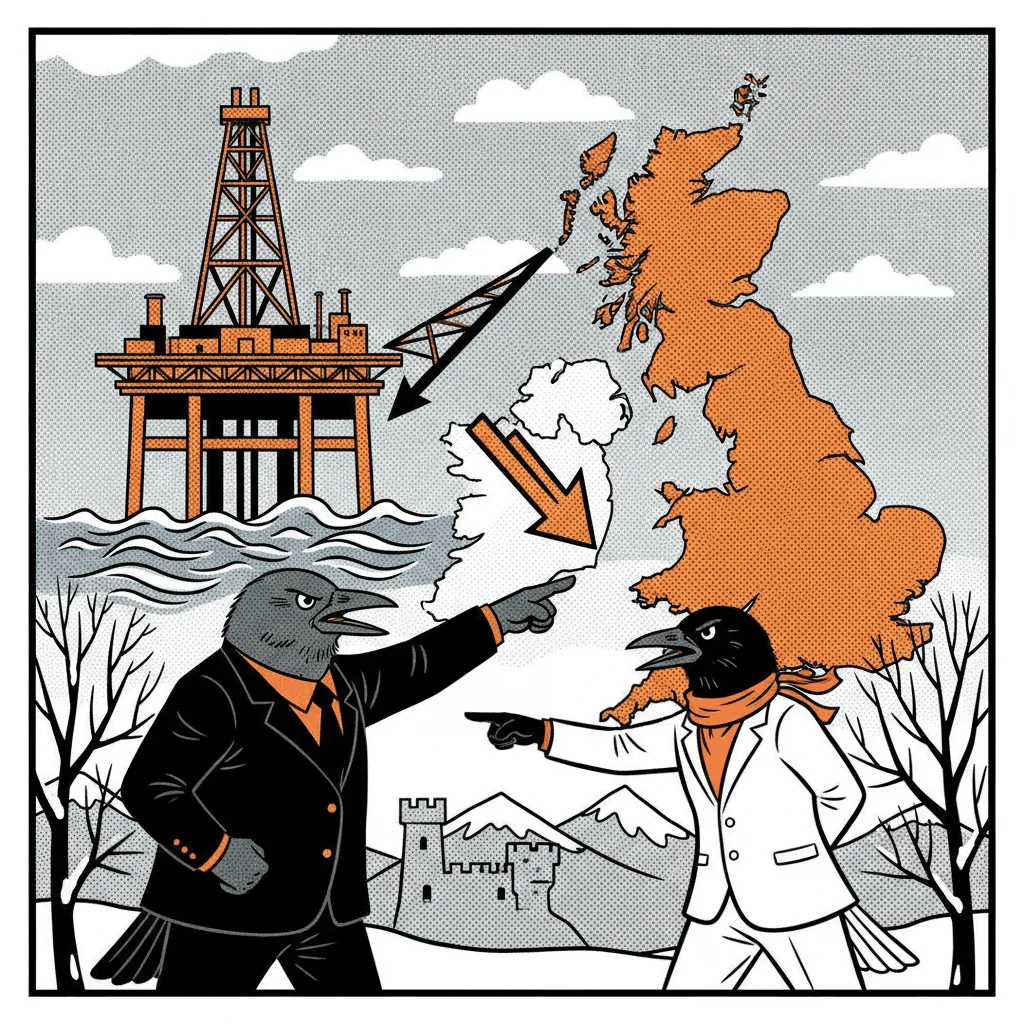
Adura's chief executive has told the UK Government plainly: approve the Jackdaw gas field now, or risk supply shortfalls that push prices up again before spring. The field, located in the central North Sea, has been caught in regulatory limbo since Shell handed back the licence and Adura took it on with ambitions to bring it into production. The message from Adura is that time is running out to get it approved in a window that matters for this coming winter.
The stakes for Scottish businesses are real. According to the Office for National Statistics, small businesses across the UK identified energy costs as one of the top three pressures on profitability through 2023 and into 2024. Energy-intensive operations, hospitality, manufacturing, food production, healthcare facilities, took the sharpest hits when wholesale gas prices spiked following supply disruptions from 2021 onwards. A second tightening of supply, even a moderate one, would land on businesses that have not yet fully recovered their margins.
The broader supply picture is uncomfortable. UK North Sea output has been declining for two decades, and according to the North Sea Transition Authority, production fell by around 9% in 2023 alone. The UK imports a growing share of its gas, much of it as liquefied natural gas from the United States and Qatar, both of which carry a premium over pipeline supply. Fields like Jackdaw are not a long-term answer to the energy transition, but they are, in the near term, a lever on domestic supply and price stability.
Scotland sits at the centre of this tension in a particular way. The country generates more than 100% of its electricity needs from renewables on an annual basis, according to Scottish Government energy statistics, and is serious about decarbonisation. But gas still heats the majority of Scottish homes and commercial premises. Until heat pump infrastructure scales and district heating networks expand, gas supply decisions made in Westminster have direct consequences for heating bills north of the border, whether businesses or governments in Scotland choose that or not.
The decision on Jackdaw sits with the UK Government's North Sea licensing regime, not Holyrood. That is the structural reality. Energy policy remains reserved, which means Scottish businesses are exposed to supply and pricing decisions made in London, with limited levers available to Scottish Government to cushion the impact beyond existing support schemes such as the Warmer Homes Scotland programme and targeted business energy advice from Business Energy Scotland. For SMEs in particular, the practical gap between those schemes and actual cost relief can be significant.
What makes this worth watching is not just one field. Adura's warning is a signal about the broader pipeline of North Sea approvals. If the UK Government delays or declines approvals on fields like Jackdaw for political reasons, the supply tightness compounds. Energy consultancy Cornwall Insight has consistently flagged that wholesale gas price volatility remains the single biggest driver of business energy contract costs in the UK. Scottish SMEs renewing energy contracts in the next six months are pricing that uncertainty right now.