

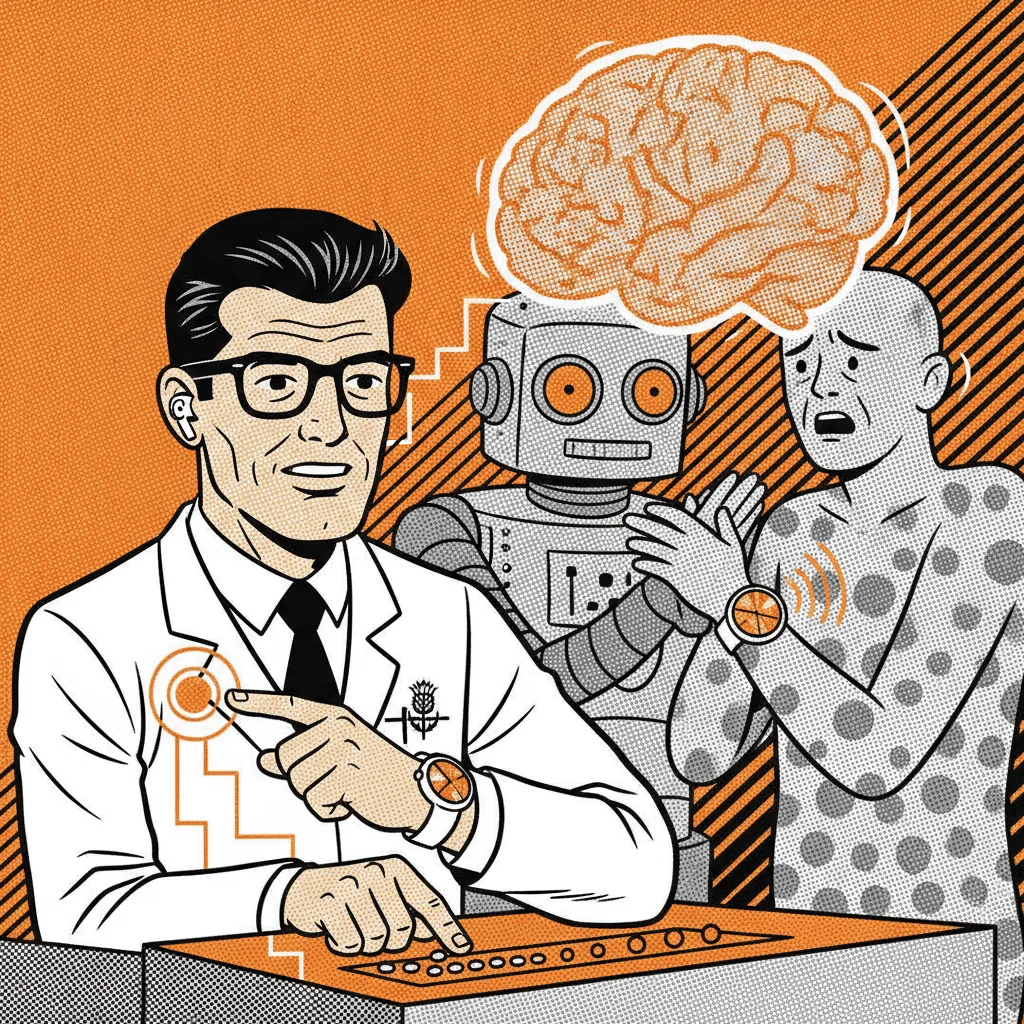
Every mental health chatbot currently on the market shares the same structural flaw: it waits. The user has to reach out, type something, press a button, and admit they are struggling. For anyone who has ever watched stress quietly eat someone alive, you will already see the problem. Researchers at the University of Ottawa are trying to fix this with a system called UbiMyTherapist, an AI assistant that monitors biometric data from consumer wearables, smartwatches and earbuds, and flags emotional distress before the user raises their hand.
The system reads physiological cues, heart rate variability, skin conductance, and vocal tone patterns, and uses them to build a real-time picture of a person's emotional state. When distress signals cross a threshold, UbiMyTherapist initiates contact rather than waiting to be asked. That proactive model is the breakthrough. The technology behind it is not new. What is new is applying it at the intervention layer, removing the single biggest barrier to mental health support: the act of asking for it.
The mental health context in Scotland makes this directly relevant. According to the Scottish Government's Mental Health Strategy 2017,2027, one in three GP appointments in Scotland involves a mental health component, and demand for support services consistently outstrips supply. NHS Scotland has invested significantly in digital mental health tools, including the Living Life programme and the national rollout of online CBT platforms, but all of those tools still depend on self-referral. Research published by the Mental Health Foundation Scotland shows that stigma and the inability to articulate distress are two of the most cited barriers to people seeking help, particularly among men and among younger workers in high-pressure environments.
For occupational health and workplace wellbeing, the shift from reactive to proactive is enormous. The Health and Safety Executive's 2023/24 figures show that work-related stress, depression, and anxiety account for over half of all working days lost to ill health in Great Britain, with 17.1 million days lost in a single year. An AI system that detects stress building in a team member before it becomes a crisis, and does so using a device they are already wearing, could change the economics of workplace mental health entirely. Small employers who cannot afford dedicated occupational health programmes could access this at the infrastructure level, built into wearables their staff already own.
There are genuine questions to work through. Data privacy sits at the top of the list. Biometric monitoring in employment contexts requires careful handling under UK GDPR, and the boundary between supportive intervention and surveillance is one that employers, particularly smaller ones without legal teams, will need to navigate clearly. The Information Commissioner's Office has published guidance on biometric data in the workplace, and any organisation moving in this direction should read it before deploying anything. The University of Ottawa research is still in development, but the direction of travel is clear, and Scotland, with its established NHS digital infrastructure and a strong university research base including the University of Edinburgh's Usher Institute, is well placed to pilot and develop applications of this kind.