

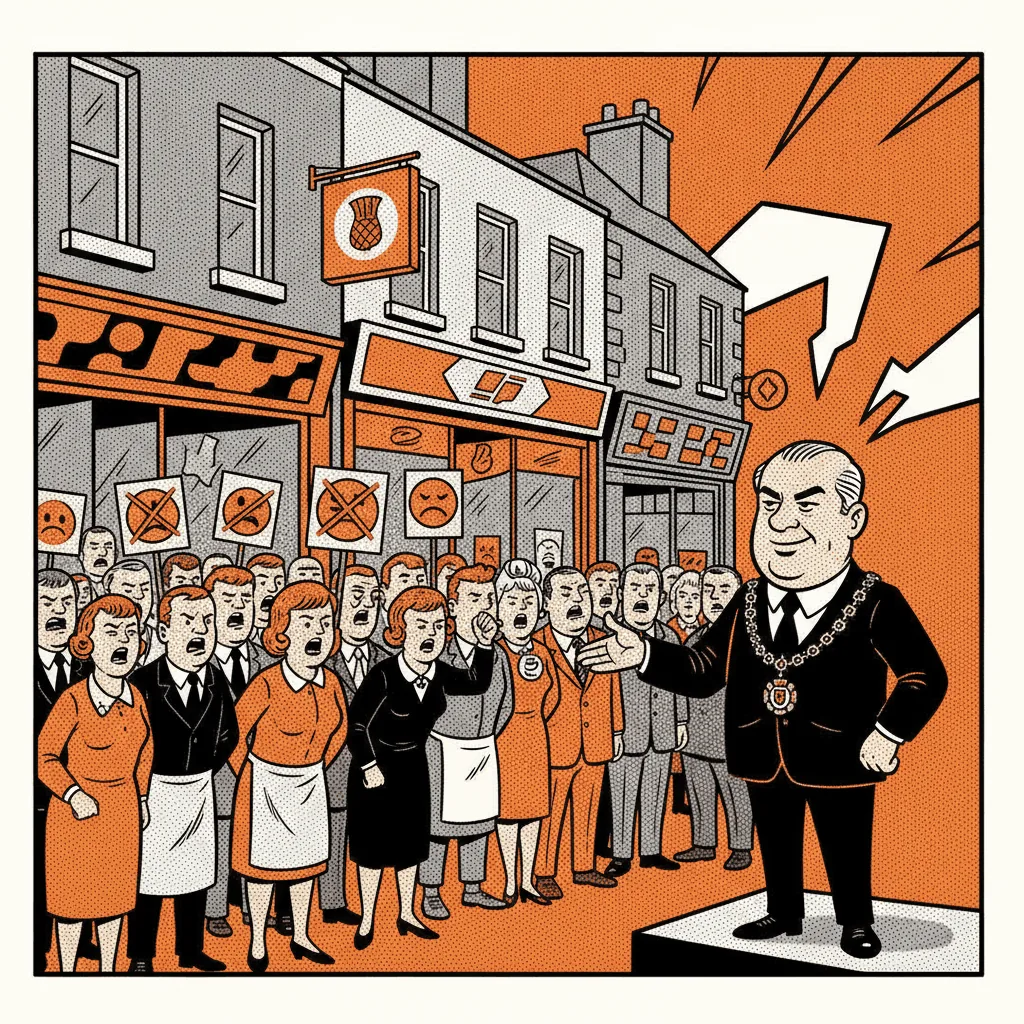
More than a dozen East Lothian town centre businesses have formally condemned their local Provost's backing of new parking charges, according to reporting by the Edinburgh Evening News. The opposition is organised, vocal, and growing, which tells you something important about how seriously local traders are taking this threat to footfall.
The core argument from business owners is straightforward: when you make it more expensive and more complicated to park, fewer people stop. They don't suddenly start walking or cycling. They drive to a retail park where parking is free, plentiful, and frictionless. Paid parking on a high street is rarely a revenue-neutral policy for the businesses that depend on passing trade. Research from the British Retail Consortium has consistently shown that footfall is acutely sensitive to parking cost and availability, particularly in smaller town centres that lack the critical mass of anchor stores to pull people in regardless.
The Provost's position, that residents are being heard and that the consultation process is working, will ring hollow to traders who feel the outcome has already been decided. That gap between official reassurance and ground-level reality is a familiar one. According to a 2023 report from the Scottish Retail Consortium, Scottish town centres are still fighting to recover post-pandemic footfall, with smaller burghs outside the central belt facing the steepest climb. Introducing charges into that environment is not a neutral act.
East Lothian's towns, including Haddington, Musselburgh, and North Berwick, have built genuine, distinctive high streets worth protecting. Musselburgh in particular sits close enough to Edinburgh's retail gravity that any friction added to local shopping makes the capital's supercentres more attractive by comparison. Independent businesses there are not competing on price; they compete on experience, convenience, and community. Parking charges erode exactly that convenience advantage.
The collective nature of the opposition here matters. Dozens of businesses acting together, publicly, signals this has moved past individual grumbling into coordinated pressure. Business Gateway and local chambers of commerce have tools and templates for exactly this kind of collective representation, and there is a well-trodden path from organised trader opposition to policy amendment in Scottish local authorities when the commercial case is made clearly and consistently. The question is whether East Lothian Council will move before the damage is done, or after.