

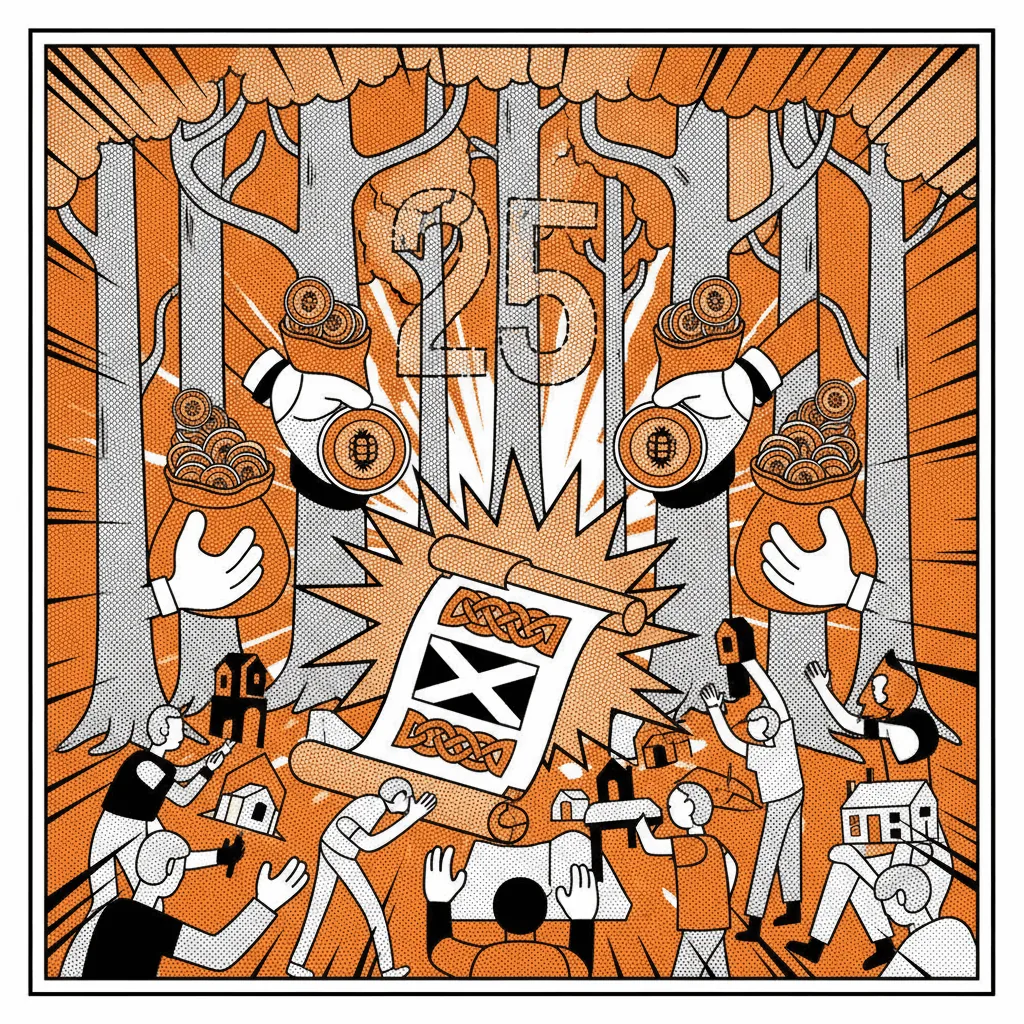
The Enchanted Forest has announced £134,044 in community grants for 2026, its largest single distribution since the Community Fund launched. The money is split across 36 organisations and projects in Highland Perthshire, ranging from local arts groups to community infrastructure. For a charity built on the back of a ticketed outdoor light-and-sound show in Pitlochry, that is a serious number.
The fund operates on a straightforward model: ticket revenue from the annual autumn event feeds a charitable pot, which is then distributed to the surrounding community through an open application process. According to the Enchanted Forest's own reporting, the programme has now channelled hundreds of thousands of pounds into Perthshire since its inception, making it one of the more productive examples of event-led philanthropy in rural Scotland. It is the kind of circular economy that Business Gateway and Scottish Enterprise have long pointed to as a template worth replicating.
The timing matters. Scotland's voluntary and community sector is under significant pressure. The Scottish Council for Voluntary Organisations (SCVO) noted in its 2024 State of the Sector report that many small charities and community groups face a funding cliff edge as pandemic-era support schemes wind down. Private and event-led community funds like this one are filling gaps that statutory funding is leaving open.
For cultural operators and event producers across Scotland, the Enchanted Forest model offers a clear lesson: structuring your event as a charitable or social enterprise from the outset creates a funding flywheel. The event generates income, the income funds community grants, the community grants build goodwill and local stakeholder support, and that support helps the event grow. Highlands and Islands Enterprise has previously highlighted this kind of community-anchored business model as central to its rural economic development strategy.
Thirty-six groups benefiting from a single fund round is also worth noting from a grants-strategy perspective. It suggests the fund is deliberately broad in its reach rather than concentrating money in a small number of large awards. For applicants, that typically means smaller individual grants but a higher chance of success. If you run a community project, arts initiative, or small organisation in Highland Perthshire, the 2027 round will open for applications in due course and the track record suggests it is worth the paperwork.