

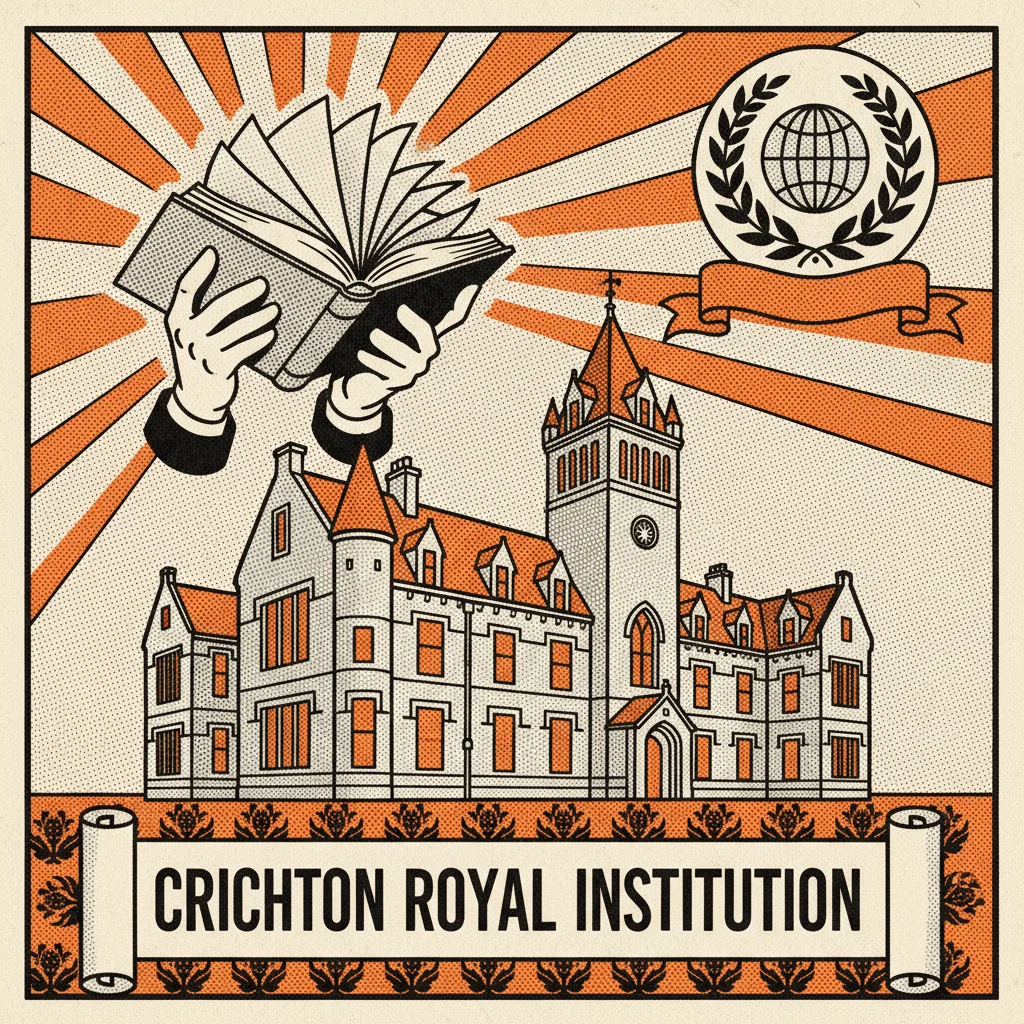
UNESCO's Memory of the World Register exists to protect documentary heritage of outstanding universal value. As of this month, Scotland has a new entry on it: the archive of the Crichton Royal Institution in Dumfries, a collection of records spanning nearly two centuries of psychiatric care that changed how the world thought about mental illness and the people living with it.
The Crichton Royal was founded in 1839 and became, under the direction of physicians including the influential Dr William Browne, a testing ground for what was then a radical idea: that people with mental illness deserved dignity, occupation, and community rather than chains and isolation. Browne's patients produced art, wrote for an in-house journal, and participated in what we would now recognise as occupational therapy. The archive documents all of it, in extraordinary detail. According to the Dumfries and Galloway NHS archive team, the collection includes patient case notes, photographs, artwork, and institutional records that collectively form one of the most complete pictures of psychiatric practice anywhere in the Victorian world.
UNESCO's Memory of the World programme, established in 1992, places documentary collections alongside sites like the Magna Carta and Anne Frank's diary. Scotland has entries, but they are not numerous. This addition, secured after years of work by archivists, historians, and NHS Dumfries and Galloway, puts a small Scottish town's institutional memory on a register that the British Library and the National Records of Scotland both contribute to. That is not a small thing.
The wider significance sits at the intersection of heritage, health, and public understanding. Mental health stigma has not vanished, and the historical record of how society has treated people in psychological distress remains genuinely contested territory. The Crichton archive is, among other things, evidence that compassionate, progressive care was possible long before the NHS existed, and that Scotland was at the forefront of it. The University of Glasgow's Centre for the Social History of Health and Healthcare has drawn on similar institutional records to show how Scottish medical institutions shaped UK-wide practice; the Crichton's story fits squarely into that tradition.
For anyone in Edinburgh or across Scotland with an interest in heritage, institutional history, or the long story of public health, the recognition is a prompt to look closer to home. Scotland's archives, from NHS records to local authority collections and university libraries, hold material of comparable depth and importance. UNESCO just reminded us that the world is paying attention.